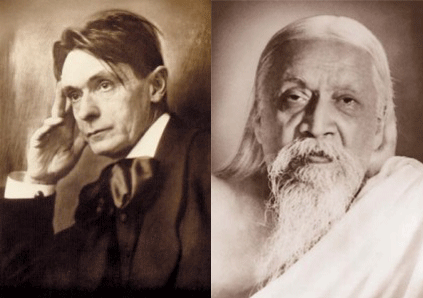
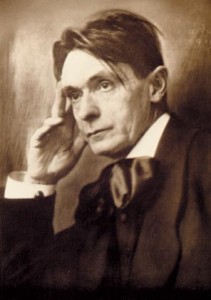
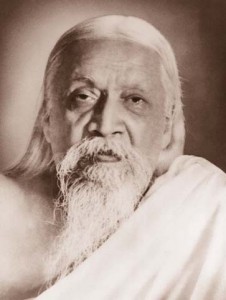
This longer essay summarizes the basic elements of the spiritual-cosmological worldviews of two of the most important modern, integrative spiritual thinkers: Rudolf Steiner and Sri Aurobindo. Upon this foundation a brief comparison is made between the two systems and the two men.
Thanks to John Elwyn Kimberfor pointing me to this webpage where Pavitra, a disciple of Sri Aurobindo, records her meetings with him (see pages 4 and 5 specifically). Pavitra and Aurobindo both say that they know some theosophists, and know of Steiner, and by Aurobindo’s responses I get the sense that he at least knew something about Steiner specifically. However, it seems that he is being treated primarily in the same vein as theosophy (which would make sense from the “outside”), and the references are pretty quick so there is no way to gauge from this site how deeply familiar he was with Steiner specifically, but it is good to have confirmation that he at least knew of him. Also in this text, Aurobindo states his sense that his vital plane corresponds with the theosophical astral plane, and gives his general impression of theosophy.
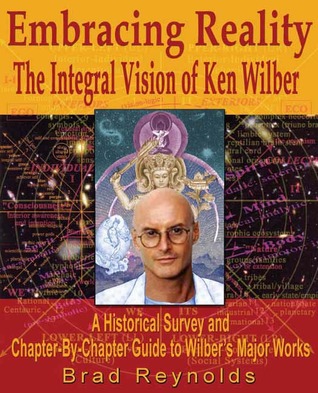
Embracing Reality offers two things, something of a semi-biographical contextualization of the development of Wilber’s thoughts and writings, and a series of more-or-less detailed summaries of those same works. For anyone who is not familiar with the different phases of Wilber’s thought, this is a nice reference work, and was most edifying for its picture of the development of Wilber’s thinking. I appreciated the detailed descriptions of some of his personal influences and struggles, but I couldn’t quite get over a kind of sticky feeling about the author’s undisguised near-worship of the man. It felt like the whole book was kind of an apology for Wilber’s work. There’s nothing wrong with this, of course, (particularly if the author presents it in this way, which isn’t the case here) but it doesn’t give me the feeling that I’m getting a balanced perspective on his work, as there is little to no criticism of him or his ideas in the whole book.
To help remedy this, if anyone is interested, here is a lengthy and equally unbalanced criticism of Wilber’s work by a very outspoken critic of his work, available as a free PDF download at http://www.normaneinsteinbook.com/ . These two offerings certainly don’t add up to a balanced perspective, but at least it fleshes out the field a little, and gives an idea of the kind of interactions that Wilber seems to spark, for any who wish to get involved in such a thing. Honestly for me, having skimmed and read about 2/3 of the Norman Einstein book, I’m both grateful for an alternate perspective and frustrated by the seeming lack of ability for coherent critical dialogue to take place between Ken Wilber and his critics.
On the one hand, and this characterizes what seems to be a pattern in general, I find acrimonious and personal criticisms between Ken and critics that is full of what strikes me very clearly as quite non-enlightened and non-integral type of communication from both sides. On the other hand it seems there are some criticisms that are simply ignored for whatever reason.
In any case, when I really try to get a sense for the gestalt of both Wilber and the communities that he inspires (both as ‘followers’, critics, and others), I am met with quite a variety of perceptions and feelings that it is hard to integrate into a coherent vision.
A few things stand out, however (all of these I completely accept as my personal experiences, which obviously reveal as much or more about me as they do of Wilber):
1) Wilber is unabashedly intellectual. Not a bad thing, by any means, in and of itself, but I actually mean this in part as a criticism. Something happens when one’s intellectual ideas move beyond themselves, and flow out naturally into the rest of the natural aspects of a human life: the feelings and the will. Try as I might, I have yet to find much evidence that satisfies my purely personal sense that this is the case for Wilber; I experience him much more as an enlarged head sitting atop a less developed torso and even less developed limbs, with some kind of blockage at his neck which both grants him great capacity for intellectual speech while stifling its ability to be infused with a balanced and integrative flow of feelings and a truly holistic basis in action. His actual physical visage reinforces this sensation, with his bald head, thick neck, prominent brows and thin lips, along with a physically well-developed lower body. Rudolf Steiner, whom I hold in the highest regard, mentions something very apropos to this point about the dynamic interrelationship between different aspects of the human being undergoing esoteric development, (from his book How to Know Higher Worlds, available free at http://wn.rsarchive.org/Books/GA010/English/GA010_c01.html):
“In all spiritual science there is a fundamental principle which cannot be transgressed without sacrificing success, and it should be impressed on the student in every form of esoteric training. It runs as follows: All knowledge pursued merely for the enrichment of personal learning and the accumulation of personal treasure leads you away from the path; but all knowledge pursued for growth to ripeness within the process of human ennoblement and cosmic development brings you a step forward. This law must be strictly observed, and no student is genuine until he has adopted it as a guide for his whole life. This truth can be expressed in the following short sentence: Every idea which does not become your ideal slays a force in your soul; every idea which becomes your ideal creates within you life-forces.“
I get the sense from Embracing Reality, which describes Wilber’s voracious appetite for intellectual works, as potentially problematic in leading to an overdevelopment of intellectual forces at the expense of a more coherent and balanced progression of all aspects of the human being. Of course, all this is meant in full awareness that the content of Wilber’s intellectual works (to some extent ironically, I feel) describe a somewhat similar perspective to the one Steiner mentions above.
2) Wilber seems to have a very large number of ‘followers’, many of whom emulate Wilber’s style and mannerisms, physically as well as in speech and patterns of thought. Emulation, as I understand it, does not fit very well into a path of esoteric development except in a very strict devotional type situation (which is increasingly rare, requiring the relinquishment of one’s ego in totality to a teacher, and which — I would argue — does not at all describe the vast majority of not all of Wilber’s followers, who tend to (with much variation) have very strong personal egos).
3) Perhaps because of this element of ego-enhancement (again, recognizing this as a personal judgment, on the basis of my interactions with a variety of people who to a greater or lesser extent embodied this characteristic, as well as through the admittedly not terribly comprehensive research regarding Wilber that I have done in my master’s program at JFKU and PhD program at CIIS (in both places there is no shortage of Wilber fans)), Wilber makes himself available to, and even incites quite strongly, polarization and criticism from a number of fronts, with equally staunch ‘defenders’. In the midst of the ensuing debates, because of the tendency for an increased need for interdifferentiation and the drawing of intellectual lines in the sand on behalf of both ‘sides’ (which will just get blown away by the first strong wind anyway), the pattern seems to be one that easily slides into confrontation, even actually inviting such. My sense is that some not insignificant portion of Ken’s ideas stem from the ongoing development of these types of confrontations, i.e. I get the feeling that definite portion of his thinking arises out of the smoldering ashes of a combative, polarizing milieu. I am, obviously, suggesting that the way in which a thought content comes to be represented in a human soul is not capable of being separated from the content itself. The process of the thinking that produced the thought has consequences for the thought itself. One could even, perhaps, speak of karma here, in the sense of actions which have lasting effects both in the world and for oneself.
4) I deeply admire Wilber’s principle that every system and perspective is “true but partial”. But this, in the context of the above criticisms, seems to lead him into a difficult situation (because true integration is generally born through suffering, it seems) where, lacking (I am open to discovering otherwise as I continue engaging with his work) a very… hygienic interdevelopment of the whole personality along with its capacities, he seems forced to rely upon the basis from which is strengths have flowed. For Wilber, this again lies squarely in the intellectual domain. It seems that the major path forward is one of continuous distinction and differentiation between and among concepts from the widest possible sources — but it keeps the flavor of distinction that remains powerful primarily in the conceptual realm due to the (relative) absence of a comprehensive integration of the feeling and the willing aspects with the intellectual.
These are difficult things to speak of, and who am I to make such sweeping judgments? I can only say that I am open to discovering otherwise, and that I feel that I am able to make this kind of criticism in part because Wilber is explicitly speaking about precisely the types of issues I am raising here (in Wilber-speak this would refer to lines, levels, states, stages, transcend/include, quadrants, etc.). As a willingly public figure who addresses the breadth and depth of material that Wilber does, and on the basis of the strength of various claims he makes (particularly in the realm of esoteric development), he expressly places himself in a position of inviting discussion of the extent to which he has directly and actually embodied the very principles he is espousing.
Reynolds takes some pains to provide what I consider to be a weak response to this criticism, which he brings up as variations on a single theme, (paraphrased): ‘Ken has meditated for x number of years and thus isn’t merely thinking about these things; he has experienced them directly’, i.e. his oft-cited satori event, his living in the continuous awareness of the non-dual, etc. I do not doubt the sincerity of his practice, or even (okay, I actually do have some doubts here, I’ll admit) his personal claims concerning his enlightenment experiences. However, this simply has no necessary bearing on the content of Wilber’s ideas. The question is whether or not, when the ideas were formed, and when they were written down, was the activity present in Wilber’s being one that was permeated through and through with the quality of the enlightenment experiences which are supposed to form the ‘practical’ foundations for his intellectual claims? The moral strength, in addition to the actual professed content that provides the bedrock out of which his thinking flows, changes dramatically as a result of the answer to this question.
My experience of concepts which flow dynamically from a human being who is in the midst of direct experience of the more subtle, spiritual worlds, is that their content serves the activity of their realization. That is to say, enlightened words about enlightenment serve to enlighten. I would even venture to say that with regards in particular to esoteric concepts, how the concepts come into being, and how they are communicated speaks more directly to their truth than their explicit content, which is the least important part of the whole interaction, taken from a spiritual perspective. Spiritually, the actual form of the words, and the concept itself, exists in us as a corpse of the living activity of the thinking that produced them. The very job of some paths of esoteric development is precisely to learn how to re-enliven these dead, outer concepts into concepts with awaken within is in a way that is directly imbued with the same spiritual source out of which the oringinal concepts were born. It is upon this basis that it becomes possible to evaluate their contente in a non-trivial way.
There is plenty more to say, including much praise for the synthesis of traditions that Wilber has done, along with the popularization (always a double-edged sword for non-exoteric content, but a double edged sword that nevertheless must be swung… just hopefully with skill) of integral concepts and at the very least a furthering of the discussion/thinking and actions based on an underlying idea of spiritual progress, inclusion of all levels of reality, the need to make distinctions in realms that often and easily turn into a new-age, unpalatable mishmash of ideas and practices from various places that dilute their potential effectiveness when taken so radically out of context. But this is already quite long, for which I apologize!
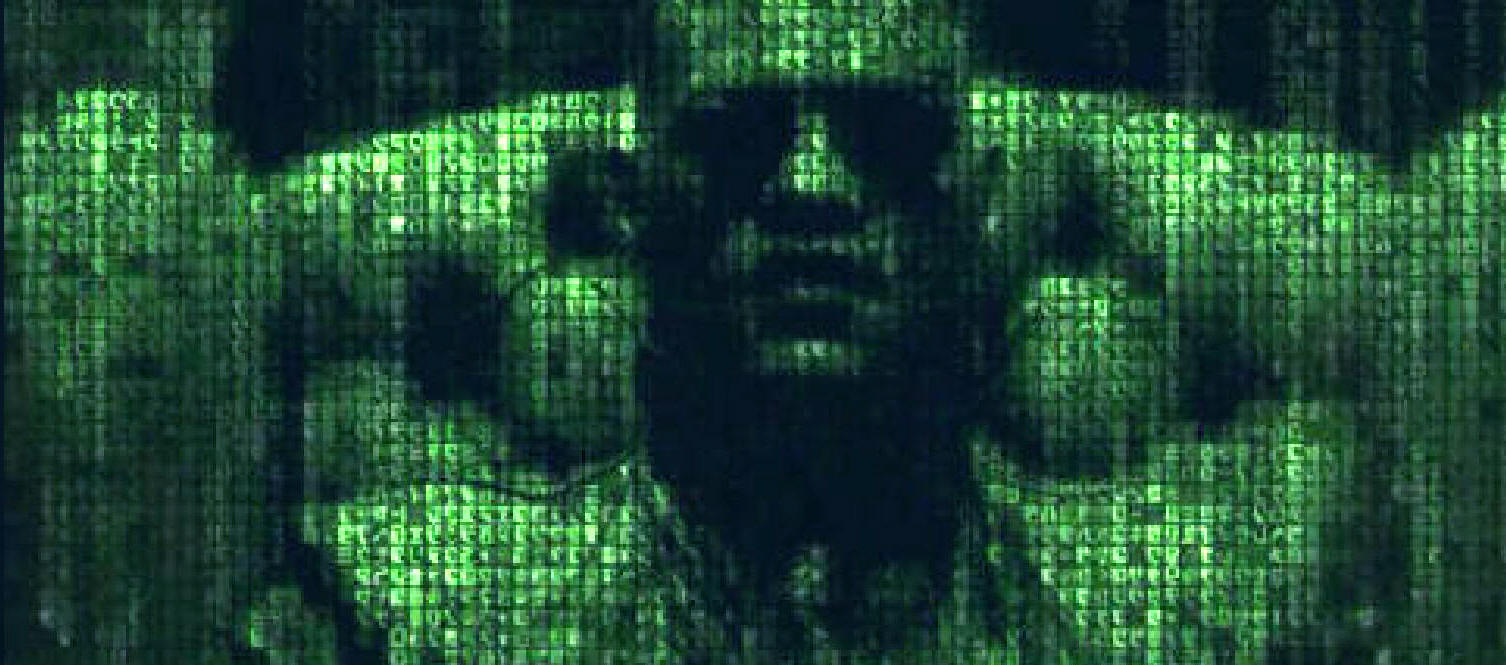
This lecture presentation was given at the East Bay Waldorf School in 2007 (see flyer below). It explores the Matrix trilogy of movies from the perspective of spiritual science. Close attention is paid to the actual events in the “text” of the movies, with an eye towards illuminating features concerning the major characters and plot elements in a coherent, symbolic, and mythological perspective. In particular the movies are shown to be uniquely understandable from the perspective of Steiner’s anthroposophical insights concerning human evolution.
The video is based upon this essay, but (particularly because of some very astute questions from the audience) also contains a number of details that I was unable to put into the original paper.
Frank Chester (find out about his initial work here, and read reviews of his work here) has just returned from a very well received presentation of his research on the Chestahedron at SunbridgeCollege in Spring Valley, New York. Many in the audience expressed disappointment afterwards that they had not notified their friends to attend these lectures because they did not realize that they would be witness to such an astonishing presentation.
Frank will be repeating these lectures this week in Fair Oaks at the Anthroposophia Conference as listed below. For those who wish to attend single lectures apart from the rest of the conference, the charge is $10 for students and $20 for adults
This is a good time to invite your friends and associates if they would like to hear about his discoveries, because Frank is planning on cutting back on his lecture schedule after this week so he can return to his research. You may download an attachment to this email, which provides some written information that may be helpful towards understanding what Frank’s work is about.
Frank will be presenting his work on the following dates:
Following on the last posts about language, I’m just going to go way out on a limb here and re-present a picture that Rudolf Steiner gives which, when you really take it in, can transform your whole sense of language. It is this:
Steiner points out how at the present time, humanity can only tap into the deep formative forces of creativity in an unconscious way, or in a sort of caricature of what is possible. So to give birth to another human being requires a certain kind of process in which our consciousness plays only a tiny role — all the ‘work’ of creation is done unconsciously (for US — quite consciously for… other beings).
Speech in Motion – Eurythmy
The place in the human being where we are beginning to find an entry into the realm in which this kind of creation–conscious creation–is possible can be found in the human larynx. Now, if you have a sense that there is a relationship between creative forces and the motions of the sounds that underlie speech, you begin to see that what speech is primarily today is only the merest possible shell of what is possible with regards to creation.
The sounds that I produce (or that you implicitly imagine, even unconsciously [MRI studies show this] if you are reading this) are capable of calling up within you an image, a picture… a feeling, evoked by my words. Not just the structure and grammar and so forth, but the actual sounds themselves are a part of this, and are not arbitrary (as I mentioned in the previous post).
Sounds are movement, and the larynx does what it does only as a mobile, dynamic organ of self-transformation. The larynx is doing a little dance, putting form into movement through time and interval. Alchemically this is all working with the Air element — reversal/polarity. The oscillations of the air itself happens through the polarity of compression and rarefaction, but even more: in order for my words to call up an image in you, you cannot remain the same — you must change. The way that you can allow my words to allow you to experience what lies behind the words — the experience of the one speaking — is only by going through a microcosm of a microcosm of a macrocosm.
The macrocosmic level is the process of life–>death–>life (i.e. reincarnation). The microcosmic process is awake–>sleep–>awake. The further microcosmic process is speaking—>listening—>speaking. In this last process, a part of you must go to sleep in order to dream through my words. Just as the continual process of dreaming is overshadowed by the entrance of day-waking consciousness, so too your ability to meet the images contained within the words of another’s speech is overshadowed by the holding on to and expression of elements of oneself and the temporary identity with one’s own images.
You must dream into my words as I actively speak them, just as I must do the same if I am to hear you through your words. Now, that’s all just background.
The real image is that in the future, rather than reproducing by the unconscious means that are the only ones presently available to humanity, we will learn how to reproduce consciously, and this will take place through the further development of what is now the human larynx, where we have the greatest connection to the creative forces–which now take the form of the ability to call up in another’s soul images that are produced in one’s own.
I hope the sense of this connection is clear. I recognize that this probably seems WAY out there, but I’d just like to share that such a way of thinking is possible, and that from a perspective that isn’t forced into materialistic boundaries, but which can consider the movement of processes in a wide variety of scales, such an imagination has considerable import.
This is all linked up with morality and how, as Bonnie points out, our speech is, in fact, a creative vehicle by which the world comes into being… So you can imagine that what we are doing right now in the exchange of ideas through words is a kind of proving ground and developmental platform on which we are expanding our ability to tap into something of the radical (root) nature of the creative forces, which are normally relegated to an unconscious realm.
One can, if one wishes, find this thread about speech all through the ages, as far back as you want to go. It is the root of the idea concerning the magical power of words; words as creative actions that are connected with the deepest sources of the universe.
As a philosopher and an educator, I enjoyed Wilshire’s book.Quite a number of his experiences parallel my own with regards to teaching and the self-reflective processing and mulling over the ‘educational act’.I felt very at home with a number of his statements, like “we arrive at the capital feature of the educating act: self-awareness, or self-reflexivity” (Wilshire, 1990, p.27), or my favorite, “The ultimate educating force is who I am” (Wilshire, 1990, p.31 – italics mine).
These two statements are old-hat for Waldorf teachers (of which I am one), and I found most of what Wilshire brought in regards to his educational analysis familiar territory — but this is a good thing, as the educational philosophy behind Waldorf education is to educate the whole child. Much modern education lacks an awareness of the importance of consciously developing not only an open face-to-face relationship with one’s students, but also — going much further than Wilshire — developing an open spiritual relationship as well, through contemplative practices.And of course we should also play with the above statements by Wilshire in a cybernetic context: the educating act calls forth self-reflexivity through its realization, whileself-reflexivity opens vast arenas of potential educability.Likewise, the force of education helps make us who we are, and who we are as educators.
I am grateful that Wilshire so adroitly points out the various cultural forces that worked to create the over-professionalization we have today — recognizing these causes is both enlightening and freeing.I especially appreciate his remark that “the organizing center of the university ought to be the organizing center of the developing human person” (Wilshire, 1990, p.85).In other words, I see Wilshire calling for the re-humanization of education, the recognition that education is not about knowledge, but about the development of human beings (Wilshire speaks of the returning the university to the “human scale” (Wilshire, 1990, p. 226)).
In this way, Wilshire parallels Rudolf Steiner’s view (as the originator of Waldorf education) that education is for the soul what medicine is for the body: a bringing to harmonic wholeness of diverse aspects.We are presently suffering from an overdevelopment — using the body metaphor that Wilshire favors — of the head.Specifically, we have brought education out of the realm of the heart and the hands, which have become atrophied, almost useless remnants when forced to squeeze themselves through the tight gates of academia.Education, to be a source of life, of passion, of deep inquiry and engagement, must explicitly and integrally include what in the body manifest as the rhythmic and metabolic realms.The techniques of much of modern education (I’m thinking here of grades, testing, quantitative reductionism, departmentalization, and so forth), from an alchemical perspective, are too heavy on the salt and too light on the sulfur, with almost NO mercury to be found.I won’t go on about these metaphors, although they are what we could call exact analogues.
Wilshire, in his language, points out the continual presence of ‘archaic’ forces, while showing how the university lacks awareness of the process of ‘mimetic engulfment’ and its concomitant effects on the thoughts and actions of both the professors and the students.And of course he continually relates both these aspects to the willfully obfuscated sense of the self as a ‘body-self’, with all the unrecognized or semi-recognized purification rituals which subersively accompany the imbalance:
“The failure to grasp the concept of body-self means the failure to grasp the utter inability of seventeenth-century psycho/physical dualism to grasp the nature of knowledge and the knower, the reality of the human situation” (Wilshire, 1990, p. 183).
We could just as easily point out the same drama via the polarity of Apollo/Dionysus (Wilshire mentions this in passing on p. 225 and p.230), nervous/metabolic, salt/sulfur, male/female, contraction/expansion, centric/peripheral.In every case what is missing is the third aspect: Eros, rhythm, mercury, the universal human,and the dynamic, responsive and evolving membrane; Wilshire speaks of the ‘reciprocating field’ (Wilshire, 1990, p. 224), a physicist might talk about entanglement, and Western esotericist the Cosmic Christ.
That “education is basically a moral relationship between persons devoted to truth” (Wilshire, 1990, p.229) is a much more sane approach than what presently passes for education is without much doubt for those of us who have experienced both sides of the screen, as it were.His call to reclaim, following Wordsworth, the “feeling intellect” (Wilshire, 1990, p.231) is a call put forth much more directly and strongly in regards to education by Steiner almost a hundred years ago.He recognized that education must fit the reality of the developing human being, not vice-versa, and partly for this reason included practical arts as well as aesthetic arts in addition to more intellectual topics — all of which were presented in time to work with whatever stages of body, soul, and spirit growth the child was experiencing.Steiner also embodied and presented the model of the educator as model, in which the presence of the educator is more educating for life than any specific verbalization of concepts, even if those concepts are about life.
Wilshire’s last chapter on Reclaiming the Vision of Education: Redefining Definition, Identity, Gender was the most juicy for me.I appreciate his delving into the need to reframe the discussion in a way that includes the feminine aspects of the situation.His suggestion (following Dinnerstein) that male and female parents take a nearly equal hand in raising children (Wilshire, 1990, p.271) is probably a bit oversimplistic, although I’d love to see it happen!!!A crucial aspect, as he points out, is that we desperately need “examples of meaningful human lives, [which] must be provided first and foremost in person” (Wilshire, 1990, p.230).By human, I presume, he means human qua human universalis, or perhaps human archetypus, for the central mystery of the archetype is that it is both universal and particular, both dynamically evolving and homeostatic… just like us.