It's Elemental

Category: Education

  • Transformative Learning

    Transformative Learning

    “What is the connection between a transformative learning approach and the sense of one’s own spirituality? In what way does transformative learning nurture the spirit any more than any other learning style does?”

    There are many styles of transformative learning. In general, however, one key aspect of transformative learning the explicit recognition that learning is not an activity that only takes place at a specified time and place built specifically for “learning”. Rather, learning is understood to be a life activity, and as such should be connected to all aspects of life in an integral way. The old, medieval style of education based on disciplinary structures that still dominates Western culture is fraying at the edges — thankfully.

    Much of traditional academia is dominated by approaches where one learns “about” topics and ideas. In transformative learning, one learns “with” and “through” ideas by embodying them outside the classroom, in one’s daily life and work. The best transformative learning closes the loop by reciprocally inviting one’s outside activities into the classroom. This sets up a recursive relationship that helps unlock avenues for creative, integral inquiry that otherwise get stifled by a need to fit within an established epistemology, such as the kind implicit in most traditional educational offerings.

    Transformative learning styles nurture the spirit because room is made both implicitly and explicitly for what we could call the appearance of the unknown. What you know limits your knowing, and making space for the arising of what is beyond one’s current understanding is central to any transformative process. You can’t fill a cup that is already full, and transformative learning styles take advantage of this wisdom directly by integrating opportunities for unknowing. What is spiritual in the human being is nurtured more by unknowing than by the addition of data to an already established way of being. Transformation occurs not when we change our ideas, but when we change how we know. Learning styles that are transformative in nature utilize this principle directly.

    “Is there a place in the workforce for transformative learning? In what way might it be applied on the job?”

    What we have to realize is that transformative learning is not just another system of facts and ideas that can be “applied on the job” without a recursive feedback effect on the business itself. It’s not like you can go to work and have an isolated “moment of transformative learning” to fulfill that week’s quota — transformative learning is more like an attitude than a specific system of ideas or practices, and as such it bleeds beyond borders. Most of the techniques and methods used in transformative learning approaches are designed to loosen us from our habitual ways of being in the world. They recognize, for example, that pretty much all the interesting stuff happens at the boundaries. This is where the juice is: where systems, ideas, events, and (most importantly) people meet and interact. Providing avenues for a greater diversity of interactions yields far more than a directed process where the outcome is dictated in advance. That’s good for building widgets, but not so good for the spirit. This has been known in some education circles (like Waldorf education) for about a century: play is not an activity for recess, but a core mode of learning that is, by its nature, transformative. A stick becomes a magic wand, a tent-pole, a sword, a sand-writing tool, and so forth in a dynamic flow. Only the adults, stuck with their more rigid, non-experimental epistemologies, see “just a stick”.

    My father, who has been a business consulting psychologist for 25 years with the top management of major corporations like Best Buy, summed up his entire job to me recently by saying that his most important function has been to help his clients learn how to learn. This is an explicit recognition of the difference between the first-order concept of “learning” and the second-order concept of “learning how to learn”, which Gregory Bateson identified decades ago as a key to understanding complex goal-directed systems. In second-order learning, the snake bends back to bite its own tail and in so doing initiates a process of self-digestion. This self-digestion is a part of what is necessary to create the space for something new to arise, and is a stage on the way to an “adult” way of playing that is called “creative inquiry” and “transdisciplinarity” in academic circles.

    Transformative learning invites higher-order transformation: not simply a change in what we think and do, but in how we think and how we carry out our actions. More businesses are starting to recognize the value of spaces (both physical and metaphorical spaces) that are not already locked into a pre-defined form, but which invite modification and multiplicity. This is a way of calling attention to and allowing human beings to bring forth the parts of themselves that get excited and passionate when they are simply given the space to be so. Some places, like Google, MIT, and other “big names” consciously utilize principles of transformative learning as a way to nurture diversity, openness, interaction, experimentation, and transformative involvement at various levels. The next level is when businesses begin to re-humanize their practices with the attitude that every “worker” or “employee” is first and foremost a whole human being. But to get there our whole understanding of business will have to transform as well…
  • Workshop – Elemental Transformation: Changing How We Work with Change

    Workshop – Elemental Transformation: Changing How We Work with Change

    Unfortunately, the workshop has been cancelled.
    It will be rescheduled this Summer; keep an eye out here for the announcement!

    Form / Re-Form / In-Form / Trans-Form

    Elemental Transformation: Changing How We Work with Change

    A hands-on/minds-on workshop with Frank Chester and Seth Miller

    Saturday, March 20th
    9 am – 5 pm
    Live Oak Charter School Petaluma, CA

    Pre-registration is required.
    All workshop materials provided. Cost: $100

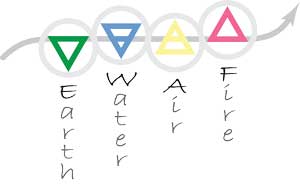
    This all-day workshop will combine hands-on geometry with dynamic presentations and experiential exercises designed to help you deepen your relationship with transformation.  You will leave this workshop with a physical form of your own creation and a more subtle and complex understanding of how transformation unfolds according to the archetypal patterning of the four elements: Earth, Water, Air, and Fire. Our goal is to inspire you and enliven your own everyday transformative work.  This workshop is perfect for parents, teachers, therapists, social workers, and anyone interested in transformation. There will be a one hour period for lunch. You can bring your own lunch or drive off-site for lunch.

    Frank Chester is an artist, sculptor, geometrician, and teacher based in San Francisco.  He has been working with the four elements for over 10 years, having used them as an integral part of the research that led him to the discovery of a brand-new seven-sided form that has deep connections to the human heart. Frank travels widely, giving dynamic presentations connecting form, geometry, and spirit.

    Seth Miller has taught physics and many other subjects in Waldorf schools across the West.  With a Master’s degree in consciousness studies, he is passionate about bringing forth tools for transformation; his specialty is the alchemy of the four elements. He is currently developing this work in a PhD dissertation, which weaves together alchemy, cybernetic epistemology, Goethean phenomenology, and anthroposophy.

  • Waldorf Educators: A Light on the Path

    The world has problems; LOTS of them.  But as long as there are people like my friend Nancy, who devote their lives and love to one of the most important and practical callings on the planet, education of our young, I have hope for the future.

    Let me give you a picture, in her own words, of what I mean, as an example of how Waldorf education tries to meet the challenging tasks of our time.  This is but a tiny picture of what is possible–today– for education:

    My class went to our auditorium today and entered in the dark.  The room was covered in pine boughs in the shape of a spiral path.  In the center of the path was one large glowing candle that sat upon a tree trunk covered by a blue cloth with gold stars on it.  It smelled like a pine forest.  The students entered in silence and proceeded to a semi-circular row of chairs to sit down.  Two women, playing penny whistle, violin, and cello began playing various musical selections.

    The first child approached me.  I was standing by a table filled with red apples, each holding a slim candle in a hole carved into it.  Then, one by one, each child took the spiral walk into the center where the light glowed.  Lighting their own small candle from that big central light, they each turned and began walking back out from the center.  At some place of their own choosing along the path, they each picked a spot to place their little light.

    When the last child had gone, I took my candle filled apple and walked the path among the little lights, to the center.  After lighting my own candle, I found a place along the way to place my own light among the others.  It was an extraordinary experience for us all.  The metaphors were flooding my mind as I watched each of these students proceed on this path.  When they were little, their kindergarten teacher or parent held their hand on the way.  Now, they seemed to have grown so tall, only third graders, yet I marveled at how they had gotten so big.

    As I looked at them, a veil was drawn back for me and I could see much more than I could usually see.  Everything was revealed to me in a moment.  It seemed to me, as they walked, that I could sense them as younger children, as who they were now, and even who they were going to one day become.  In the darkness, I really felt I could see their future before my physical eyes.

    When my turn came, I realized that in the last two years of first and second grade, I always had walked the advent spiral first – before they did – so that they could see how to do it again.  This time, they walked confidently alone without my example.  This time, I followed their example.  As I passed by each one of the lights on my way into the middle, I felt as if I were floating along in the starry heavens, each star one of these students of mine that I hold so dear.  Each star lighting my way into the center.  I was so humbled to place my small light, no bigger or smaller than the others, down on the path to join in lighting the room.  I could also feel how profound it was for the students to see their teacher walk this inward path.

    With each eye intently and silently upon me, I felt the connection, the gravity, the grace, the sacredness of the responsibility I carry on their behalf, but also I felt, “I am the so-called teacher this time, but I am really only one of you.  You, who have been my teachers, who will be my teachers in the future.”  What a privilege to live in such light.  Blessings on us all.

  • Coros Institute meditative retreat: The Great Passage

    Coros Institute meditative retreat: The Great Passage

    I had the good fortune to attend a Coros Institute meditative retreat: The Great Passage with Dennis Klocek on Whidbey Island a few years ago with my mother.  It was an amazing event, full of profound wisdom, practical exercises, and excellent company.  I would highly recommend it, not just for those who are thinking about the Great Passage for themselves or a loved one, but as a complement to any who are interested in the spiritual connections between the living and the dead.

    Dennis, as usual, offers living pictures that are not like the kind of popular new-age stuff on the bookshelves at your local bookstore.  He has a way of speaking and interacting that makes it very clear that his wisdom is a developed wisdom, brought forth on the basis of years and years of contemplative, artistic, and scientific work.  The best part is that because he knows HOW he developed his own experience, he can be of explicit help to others who wish to deepen their own spirituality.

    If you can make this retreat, DO IT!  You won’t be disappointed.

  • The Matrix and Anthroposophy video

    The Matrix and Anthroposophy video

    This lecture presentation was given at the East Bay Waldorf School in 2007 (see flyer below).  It explores the Matrix trilogy of movies from the perspective of spiritual science. Close attention is paid to the actual events in the “text” of the movies, with an eye towards illuminating features concerning the major characters and plot elements in a coherent, symbolic, and mythological perspective. In particular the movies are shown to be uniquely understandable from the perspective of Steiner’s anthroposophical insights concerning human evolution.

    The video is based upon this essay, but (particularly because of some very astute questions from the audience) also contains a number of details that I was unable to put into the original paper.

    httpv://www.youtube.com/watch?v=MAobTuY08Vg

  • On “The Moral Collapse of the University” by Bruce Wilshire

    As a philosopher and an educator, I enjoyed Wilshire’s book. Quite a number of his experiences parallel my own with regards to teaching and the self-reflective processing and mulling over the ‘educational act’. I felt very at home with a number of his statements, like “we arrive at the capital feature of the educating act: self-awareness, or self-reflexivity” (Wilshire, 1990, p.27), or my favorite, “The ultimate educating force is who I am” (Wilshire, 1990, p.31 – italics mine).


    These two statements are old-hat for Waldorf teachers (of which I am one), and I found most of what Wilshire brought in regards to his educational analysis familiar territory — but this is a good thing, as the educational philosophy behind Waldorf education is to educate the whole child. Much modern education lacks an awareness of the importance of consciously developing not only an open face-to-face relationship with one’s students, but also — going much further than Wilshire — developing an open spiritual relationship as well, through contemplative practices. And of course we should also play with the above statements by Wilshire in a cybernetic context: the educating act calls forth self-reflexivity through its realization, while self-reflexivity opens vast arenas of potential educability. Likewise, the force of education helps make us who we are, and who we are as educators.


    I am grateful that Wilshire so adroitly points out the various cultural forces that worked to create the over-professionalization we have today — recognizing these causes is both enlightening and freeing. I especially appreciate his remark that “the organizing center of the university ought to be the organizing center of the developing human person” (Wilshire, 1990, p.85). In other words, I see Wilshire calling for the re-humanization of education, the recognition that education is not about knowledge, but about the development of human beings (Wilshire speaks of the returning the university to the “human scale” (Wilshire, 1990, p. 226)).


    In this way, Wilshire parallels Rudolf Steiner’s view (as the originator of Waldorf education) that education is for the soul what medicine is for the body: a bringing to harmonic wholeness of diverse aspects. We are presently suffering from an overdevelopment — using the body metaphor that Wilshire favors — of the head. Specifically, we have brought education out of the realm of the heart and the hands, which have become atrophied, almost useless remnants when forced to squeeze themselves through the tight gates of academia. Education, to be a source of life, of passion, of deep inquiry and engagement, must explicitly and integrally include what in the body manifest as the rhythmic and metabolic realms. The techniques of much of modern education (I’m thinking here of grades, testing, quantitative reductionism, departmentalization, and so forth), from an alchemical perspective, are too heavy on the salt and too light on the sulfur, with almost NO mercury to be found. I won’t go on about these metaphors, although they are what we could call exact analogues.


    Wilshire, in his language, points out the continual presence of ‘archaic’ forces, while showing how the university lacks awareness of the process of ‘mimetic engulfment’ and its concomitant effects on the thoughts and actions of both the professors and the students. And of course he continually relates both these aspects to the willfully obfuscated sense of the self as a ‘body-self’, with all the unrecognized or semi-recognized purification rituals which subersively accompany the imbalance:


    “The failure to grasp the concept of body-self means the failure to grasp the utter inability of seventeenth-century psycho/physical dualism to grasp the nature of knowledge and the knower, the reality of the human situation” (Wilshire, 1990, p. 183).


    We could just as easily point out the same drama via the polarity of Apollo/Dionysus (Wilshire mentions this in passing on p. 225 and p.230), nervous/metabolic, salt/sulfur, male/female, contraction/expansion, centric/peripheral. In every case what is missing is the third aspect: Eros, rhythm, mercury, the universal human, and the dynamic, responsive and evolving membrane; Wilshire speaks of the ‘reciprocating field’ (Wilshire, 1990, p. 224), a physicist might talk about entanglement, and Western esotericist the Cosmic Christ.


    That “education is basically a moral relationship between persons devoted to truth” (Wilshire, 1990, p.229) is a much more sane approach than what presently passes for education is without much doubt for those of us who have experienced both sides of the screen, as it were. His call to reclaim, following Wordsworth, the “feeling intellect” (Wilshire, 1990, p.231) is a call put forth much more directly and strongly in regards to education by Steiner almost a hundred years ago. He recognized that education must fit the reality of the developing human being, not vice-versa, and partly for this reason included practical arts as well as aesthetic arts in addition to more intellectual topics — all of which were presented in time to work with whatever stages of body, soul, and spirit growth the child was experiencing. Steiner also embodied and presented the model of the educator as model, in which the presence of the educator is more educating for life than any specific verbalization of concepts, even if those concepts are about life.


    Wilshire’s last chapter on Reclaiming the Vision of Education: Redefining Definition, Identity, Gender was the most juicy for me. I appreciate his delving into the need to reframe the discussion in a way that includes the feminine aspects of the situation. His suggestion (following Dinnerstein) that male and female parents take a nearly equal hand in raising children (Wilshire, 1990, p.271) is probably a bit oversimplistic, although I’d love to see it happen!!! A crucial aspect, as he points out, is that we desperately need “examples of meaningful human lives, [which] must be provided first and foremost in person” (Wilshire, 1990, p.230). By human, I presume, he means human qua human universalis, or perhaps human archetypus, for the central mystery of the archetype is that it is both universal and particular, both dynamically evolving and homeostatic… just like us.

  • Waldorf and Montessori – a tiny perspective

    There is often confusion about the differences between Waldorf and Montessori methods of education.  Having been a Waldorf teacher for six years certainly puts me in a biased position, but potentially one that can also offer some perspective on the matter.

    The Waldorf pedagogy recognizes that how one approaches the child is keyed closely to the developmental stages that naturally occur as the child grows, including a conscious awareness of not just the physical but also the life-body (etheric), desire/sense-body (astral), and ego realms.  It is a major tenet of the Waldorf method that these developmental stages are not either random or completely individualistic, but partake of physical and spiritual patterns that have to do with the wider picture of the evolution of the human being in general.  In other words, Waldorf pedagogy has a deeply spiritual background, and views education as a therapeutic, health-producing activity.  The health in this case is produced not simply in the physical realm (although of course education works here too), but addresses the underlying growth-forces, the emotional, the intellectual, and the moral realms as well.

    To give you an example of how Waldorf might differ from Montessori, a Waldorf educator (particularly regarding early childhood / kindergarten / first few grades) would see that the level to which Montessori educators allow ‘free reign’ of the children’s predelictions can potentially be harmful, because this brings in aspects of the child’s astral body (life of desire) too early, which can result in the hampering of the development of the child’s sense of interconnectedness, feelings of social responsibility, and sense of humility.  In contrast, the Waldorf educator provides a robust curricula that addresses a wide array of inner potentials that the child may not be conscious of, let alone would choose to exercise, but which need care and environmental response to come to fruition.

    The child cannot be asked to take on these aspects of self-development in a conscious, self-reflective way, because this requires the benefit of a well-formed and integrated ego which they can only enjoy once the education has taken effect!  In other words, the educators are the ones which must provide for an environment which is conducive to the all-around present and future health of the growing child.  Providing such environments is the art of educating, and it is important that what is presented to the child find deep resonance in the particular experiences that accompany the child’s inner life as they grow from year to year.

    The pegagogical background of Waldorf education is geared towards identifying how the various aspects that make up the growing human being (physical, etheric, astral, ego) uniquely manifest themselves at different stages of development, so that educators can craft potential experiences which meet their changing needs–many of which the child is not able to consciously recognize or express, but whose recognition by the educator is essential if they are to be met in a healthy and integrated way.

    You can think of it a bit like this: if you plant a seed in the soil, you wouldn’t want to do so at the wrong time of the year.  You also wouldn’t treat the seed in the same way as you would a grown plant, or a plant that is about to produce fruit.  Each stage of the plant’s growth requires (and is evolutionarily keyed to) specific environmental potentials, and it is the processual, rhythmically experienced flowing from stage to stage, environmental condition to environmental condition, that nurtures the overall health of the plant as a whole, over its entire life-cycle.

    Montessori education can (of course this depends on the specific conditions under consideration, including the particular child) serves to maximize particular potentials of the child, which can work against the overall development of the child if allowed to proceed too strongly or for too long.  It’s like giving too much fertilizer to a young plant, which cannot process the nutrient efficiently or quickly enough, resulting in stunted growth, overgrowth, or other imbalances.

    Of course, when speaking of children, we are talking about things like developing a sense of community, of fairness, of warmth of soul, of enjoyment of diversity, of respect for otherness, and so forth.  Montessori does an excellent job of promoting individuality, and the availability of the arts is fantastic and a terribly under-represented realm of human experience in education.  Long term Montessori students may be more likely to find themselves in a particular realm of experience–one that they have chosen, yes–but which may rigidify their soul forces so that they have a harder time appreciating other realms of human experience and effort.

    Creativity should not be too linked to personal desire, because the deepest source of creativity is–in the end–always found beyond the part of ourselves that initiates desire.  It is rather about balance, or better yet harmony between structure and freedom, contraction and expansion, the inner and the outer.  If we do not pay attention to the subtle shifts in the inner life of the developing child, we will miss the opportunities made possible by meeting the associated needs with the appropriate challenges and experiences, or we may alternately overdevelop and underdevelop specific patterns that take place in the child’s soul life.

    See also:

    http://www.steinerstorehouse.com/blog/archives/206 (an article written by someone who has been a teacher in both educational systems)

    http://www.jnorth.net/mindmaps/personal/parenting/parenting%20research/Waldorfvs.Montesorri.html

    http://www.mothering.com/discussions/showthread.php?t=199390

    Felted Alphabet