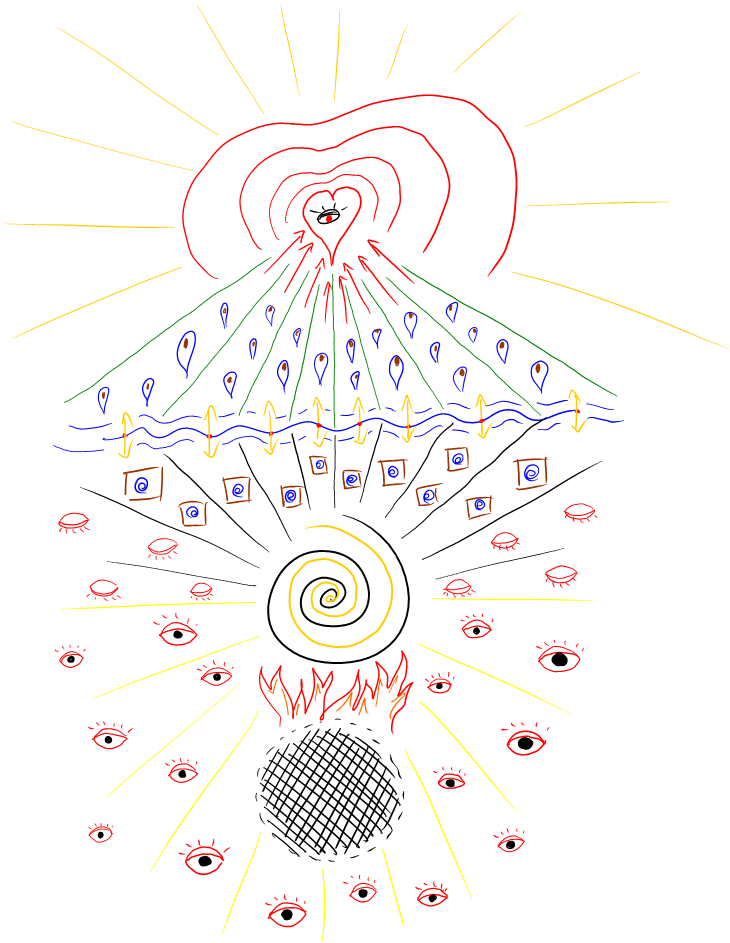
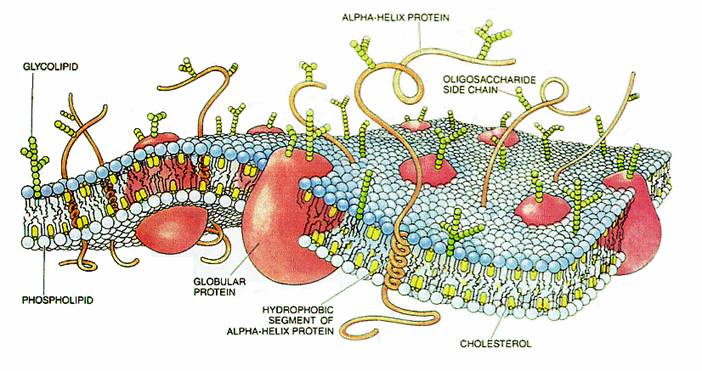
We are ecologies within ecologies within ecologies. Complex processes, such as inflammatory responses, span multiple systems as multivalent expressions of dynamic self organization. Within constant interlaced boundaries provided by the dual and complementary forces of growth and decay, life becomes possible; we become possible. Interactivity, specialization, contextual adaptation, flexibility, utilization of ‘randomness’ and dynamic flow are parameters by means of which the game of life yields autopoesis and apoptosis. The dance of advancing and receeding energies, the undulating glissando of electromagnetic interactions reverberating between hydrophilc and hydrophobic ends of phospho-bilipid layers, reveal a chorus of dynamic forces meeting in miniscule harmonies that literally embody and mirror the complexities of life all the way up.
If you are not awed and humbled by this cosmic-microcosmic dance, this alchemical transformation of matter into forms that inform, then you have lost your ear for poetry:
I’ve been thinking about the co-existence of multiple descriptions of reality lately. In particular, as someone who has taught high-school physics, I run up against a philosophical quandary when I’m presenting, say Newton’s laws of motion. Am I presenting a lie to the students, because quantum mechanics and general relativity replaced the Newtonian physics?
On the one hand, we can argue that classical physics is flat-out wrong in its basic foundations, and thus that all of the subsequent predictions of it’s theories are equally (and absolutely) wrong as well. For example, take the prediction of a cannonball’s trajectory. Classically this follows a simple parabolic curve… but there are a number of non-Newtonian complexifications to this story that are required for a ‘truer’ description of the event. First you have the non-linear, chaotic effects of friction, then you have general relativistic corrections (changes in space-time curvature vary with distance to the mass of the Earth, thus changes in momentum, and even the mass of the cannonball, plus time dilation and other flying pink elephants), and then quantum corrections (virtual particle interactions, uncertainty limits, kryptonite fragments).
But, as evidenced by the crumbling city walls, the cannonball hits them anyway, whether or not we take these things into account (well, friction is really pretty important, but that’s why things in physics-world are always frictionless to begin with). In other words, even though, in an abstract and theoretical sense, classical physics is complexly wrong, it is also simply correct. It will get you to the moon just fine, thank you, no relativistic corrections needed.
The issue may require some consideration of the shifting between an epistemological stance and an ontological stance (that confounded relationship again!).
Ontologically we must say that Newton’s physics provides only an approximation of more fundamental principles. We can thus think of the classical principles as “wrong” because if we are to look at the phenomenon in its more complete ontological situation, other principles are required. However, when we don’t look in this way, the classical principles are arguably just as “right” as the more fundamental principles that need to be introduced when you look at the situation more completely. In other words, questions about ontology can be taken in-situ, and not, as most philosophers would have it, absolutely. This is a big faux-pas, as it undermines the common meaning of ‘ontology’, which refers to the essence or real being of a phenomena.
But if we our queues from Whitehead, we realize that the idea of being may no longer require some kind of Parmenidean, unalterable and unchangeable essence that is just itself for all eternity. Essence-being-may rather have existence only as a process, as an ongoing creation, subject always to the bursting through of novelty.
Somewhat ironically, if we took this, rather than the Newtonian assumptions as a starting point, then it would not be problematic to see that Newton’s physics can indeed have an equivalent ontological status in certain circumstances as the relativistic and quantum laws do in other circumstances. There may be no ontological need to posit relativistic effects unless such effects create differences that impinge upon classically-based predictions.
Of course, the fact that just this does occur in some situations is exactly why people had to come up with relativity and quantum mechanics! But the establishment of new ‘laws’ may not obviate the ontological status of earlier laws when we don’t arbitrarily discount the importance of the evolving context within which any ontological consideration arises in the first place.
The situation becomes more apparent when we are no longer considering simple physical systems, but try to account for more complex phenomena: life, emotion, healing, consciousness, social effects, etc. In these cases, the ‘laws’ of physics are simply completely and utterly inadequate to the phenomena; they explain only a tiny fraction of each phenomenon. New ‘laws’, and other principles are required to make sense of these different realms. These laws may or may not be ultimately reducible to known physical laws, but that may not even matter!
What ‘exists’ for a given way of approaching a complex, embedded, extended, and recursive system may change on the basis of how that system is approached, i.e. by the ‘question’ that is asked of it. Which of course leads us to the insight, offered by Bohr, that just this is how the universe works: it answers questions (is something for us) by virtue of the questions asked of it, which is another way to say “How you pay attention changes what comes to your attention.”
Classical physics will never ‘go away’, unless human experience changes so radically as to no longer require its principles for explanation (this is highly unlikely). We should be careful of the classical assumptions about ontology, and of projecting an absoluteness onto ‘being’ that is not sensitive to the human act of in-situ knowing. To declare, because the fundamental principles of chemistry can be reduced to physical principles, that “chemistry is not needed” would be a folly; chemical principles, when unreduced, still operate in an ontologically satisfying way – for the chemist. The fact that those behaviors can be thought of in ‘more fundamental’ terms does not automatically privilege the more fundamental understanding in an ontological sense.
This does not lead to ‘state-specific sciences’ (ala Charles Tart), which are radically separate, in which every question may have its own unique ontology and epistemology. It appears that the universe doesn’t quite work this way, because principles from one realm don’t stay put; they leak out into other, seemingly unrelated disciplines, where they may find fruitful soil, even taking over the previous assumptions at times. The universe doesn’t seem to split itself up quite the way we do. In other words, we cannot hold onto an ontology that abstracts itself indefinitely, but we cannot also completely de-reify ontological considerations (the mistake of much of post-modernism) in favor of purely ‘constructed’ ontologies.
We are thus lead to consider an epistemology – an embedded, flexible, transformable epistemology – may be go hand-in-hand with a companion ontology – a process-oriented, non-reductive, complex ontology. The ontology is thus capable of shifting on the basis of epistemological concerns, but is not reducible to them. The epistemology is likewise capable of transforming on the basis of ontological considerations, but cannot be completely enslaved to them. Rather, the epistemology and the ontology co-exist in a creative dance of becoming, mutually reinforcing each other and destroying each other in a complex cybernetic loop.
Projective geometry offers a window into the human soul — not as a mere analogy, but directly: projective geometric processes are manifestations of the same archetypes that work through and within human experience.
Doing projective geometry is to move your soul in accordance with these archetypes, and in so doing you start to train your soul so that it can begin to perceive the movement of these archetypes both in your own soul and in the world-processes around you. In effect, projective geometry offers a path towards the development of organs of perception that operate not primarily in a physical way like your eyes or ears, but in a more subtle realm. The development of these soul-organs opens up new realms to your perception, just as if you were in a dark room and then someone turned on a light: now you can see depth, color, and form, where before these were literally non-existent for you.
In this spirit, I offer the following sequence of drawings that illustrate one process in projective geometry: that of Harmonic Points. I suggest, before looking further, that you examine and follow the constructions on your own in this post:
Once you have sufficient experience with the above, feel free to examine the following drawings. Note the context given in this post and the above linked post, and see if you can discern, as an exact soul-perception, the moving gesture that accompanies the sequence, paying special attention to the ‘unique’ moments of the transformation. Feel free to reply in comments to this post about your experience!
Note: the drawings have been placed on a separate page, so that they can be presented unencumbered by the limitations of the blog theme.
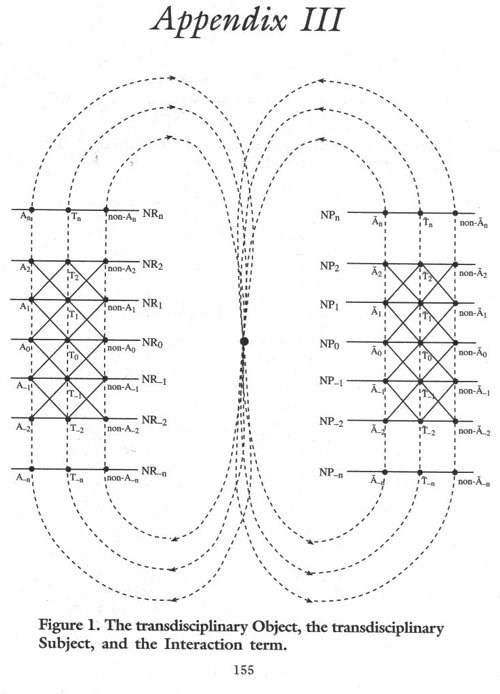
Basarab Nicolescu is a physicist and proponent of transdisciplinarity. In the book of the same name (which he edited), he speaks of multiple “levels of Reality”, which are accompanied by multiple “levels of perception”. These two complementary duals form, on the one hand, what he calls the “transdisciplinary object” and on the other the “transdisciplinary subject”. These are united by a flow of “nonresistance to experience” he calls the sacred, which moves through all the levels. See the picture from his book below:
Transcendent Object/Subject and Sacred
Although this view is a bit schematic, one of the things that Nicloescu includes which is often very lost in modern discussions about these sorts of things is the necessity for a corresponding “level of perception” when encountering various levels of reality.
Specifically, this is something verifiable in my own experience: that it actually takes not just some kind of intellectual shift to see things from a new perspective, but rather the rhythmic development of new organs of perception in order to perceive new realities. I’m speaking of ‘organs of perception’ because they are strictly analogous to real organs like our eyes and ears, but without physicality — they are, if you will, organs made ‘on the fly’ in the soul, which are capable of resolving details in a situation that otherwise would be lost. Their constituency relies entirely upon the way in which they are themselves created — they form in the image of what they can thus perceive. For example, a Waldorf teacher I know has developed in her contemplative work with children a soul-organ which can perceive movements of ‘warmth’ in ways that offer specific and practical information and actions regarding individuals — this is something experienced as eminently real and subtle, which would be lost on anyone who hadn’t done the same rhythmic work to create the relevant capacity for experience to hold that kind of perception.
It seems we often expect that such perceptions should be contingent upon a primarily intellectual shift in understanding — and an understanding of outer phenomena in particular — as if it were only a question of having the right ideas about things that would allow us to perceive newly. I think this is an error; that kind of change is only preparation and accompaniment, but cannot fully constitute the necessary basis for actual perception of new realms.
I wonder about the extent to which dichotomous thinking is either hard-wired or at least dependent on completely non-social forces. It seems almost to be a thermodynamic question, that is, a question of trying to optimize the amount of energy spent in thinking for a given situation. Thinking is a very expensive activity, physiologically speaking – it is essentially a catabolic process which relies upon the breakdown of molecules for their energy.
Evolution isn’t usually needlessly extravagant – in fact it’s kind of lazy, if you don’t mind the anthropomorphism. It seems that in a broad sense, there is a sort of law of diminishing returns for the energy investment required for thinking. In other words, if you encounter a situation in which some kind of action or distinction is called for, you get the most bang for your buck by quickly assessing things according to an either/or model. Identify one aspect, which automatically calls up some kind of opposite, and make a determination on the basis of this division. It’s quick, dirty, and effective for generating actions, feelings, and new thoughts. If the feelings, actions, etc. that result from this distinction are ‘good enough’ then there is little reason/pressure to continue the act of thinking about it in a way that calls into question the basic assumptions of the underlying duality. In other words, it’s easy to make and maintain the most basic of distinctions, those of duality.
So it seems to me that it is largely social factors that mitigate this tendency. Trying to think through the layers and layers and layers of connection that inevitably describe EVERY situation is simply not practical energy-wise, and thus requires very significant counter-pressure for its activation. We must run into situations in which our original duality is experientially shown to be inadequate for there to be a commitment to another round, or three or ten, of thinking over and through a given situation. At some point things seem to just get too complex and we give up, and the point at which we abandon the process relates to the level of depth and complexity we are able to experience.
This is why I really like Kwame Anthony Appiah’s appeal to respectful experience with people not like us, i.e. through conversation: “Conversation doesn’t have to lead to consensus about anything, especially not values; it’s enough that it helps people get used to one another” (Appiah, 2006, p.85). At a very basic level, time spent with others presents us with countless variations on the experience of discovering that our implicit or explicit distinctions are not always shared. This presents (often, but maybe not often enough?) a kind of social pressure to go through a second round of thinking about our primary distinctions, the effect of which at least sets up a greater likelihood that we can ‘get used to’ differences which before were causes for anxiety.
In any case, it seems that there is a certain amount of ‘going against the biological grain’ required to produce people like Morin, Bernstein, or Appiah. Luckily it’s not all biology! Of course, applying this little analysis to itself, I should be wary of relying upon the duality of biology/sociality, because, following Morin, ‘it isn’t quite that simple’. Round 1 over.
Dennis Klocek is holding a Coros Institute meditative retreat on April 3rd – 5th (Palm Sunday Weekend) at Walker Creek Ranch in Petaluma, CA.
Topics will include:
· Death of the spirit in the material world as a source of unconscious anxiety.
· Working on the essential steps of separating the soul forces in the process of self-development.
· Re-uniting effectively the soul forces and forging new insights into dreams, destiny and karma.
If you have never heard Dennis or worked with him before, you are in for a real treat. He walks his talk, and offers a very unique approach and vision of personal transformation. It’s not just theory, but well-honed advice that weaves together decades of personal meditative work, phenomenological study, and repeated application. You don’t want to miss it!
Attached is a PDF flier that you can print and mail in to register: do it before you come up with some lame excuse to stay home and keep your life static and unchanging!
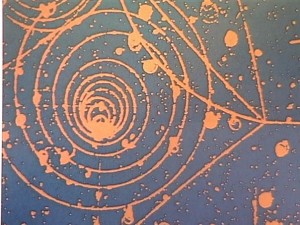 On the one hand, we can argue that classical physics is flat-out wrong in its basic foundations, and thus that all of the subsequent predictions of it’s theories are equally (and absolutely) wrong as well. For example, take the prediction of a cannonball’s trajectory. Classically this follows a simple parabolic curve… but there are a number of non-Newtonian complexifications to this story that are required for a ‘truer’ description of the event. First you have the non-linear, chaotic effects of friction, then you have general relativistic corrections (changes in space-time curvature vary with distance to the mass of the Earth, thus changes in momentum, and even the mass of the cannonball, plus time dilation and other flying pink elephants), and then quantum corrections (virtual particle interactions, uncertainty limits, kryptonite fragments).
 The situation becomes more apparent when we are no longer considering simple physical systems, but try to account for more complex phenomena: life, emotion, healing, consciousness, social effects, etc. In these cases, the ‘laws’ of physics are simply completely and utterly inadequate to the phenomena; they explain only a tiny fraction of each phenomenon. New ‘laws’, and other principles are required to make sense of these different realms. These laws may or may not be ultimately reducible to known physical laws, but that may not even matter!
 We are thus lead to consider an epistemology – an embedded, flexible, transformable epistemology – may be go hand-in-hand with a companion ontology – a process-oriented, non-reductive, complex ontology. The ontology is thus capable of shifting on the basis of epistemological concerns, but is not reducible to them. The epistemology is likewise capable of transforming on the basis of ontological considerations, but cannot be completely enslaved to them. Rather, the epistemology and the ontology co-exist in a creative dance of becoming, mutually reinforcing each other and destroying each other in a complex cybernetic loop.