It's Elemental

Author: Seth

  • Rethinking Subversion, a response to Sixty Minute’s Kroft on behalf of Julian Assange

    Rethinking Subversion, a response to Sixty Minute’s Kroft on behalf of Julian Assange

    What Julian Assange COULD have said to 60 Minutes’ host Steve Kroft’s question: “Are you a subversive?

    Assange: Am I a subversive?  Not at all; in fact, you can say that I’m a superversive.  Do you know where the word “subversive” comes from?  It’s from the Latin sub + vertioSub means “underneath” or “below”, and vertio means both “to turn around” and “to understand and upset”.  Hence the meaning is usually given as “to overthrow” or “destroy”.

    The key to subversion is that it is carried out underneath, in secret, below the radar.  The real subversion is the act of keeping important truths hidden.  By hiding important information concerning corrupt practices, corporations, governments, and individuals cannot be held accountable for their actions.  In this sense, it is precisely the corrupt practices of such entities that can rightfully be called subversive, because they turn around, rout, and overthrow the public’s ability to respond to their behavior.  Keeping corrupt practices secret subverts our consciousness by putting forth a façade that is not commensurate with the actual behavior.  This is the tactic almost universally employed by corrupt organizations, governments, and individuals: to maintain (more…)

  • The Spiritual Matrix – Transformation on Mobil Ave

    The Spiritual Matrix – Transformation on Mobil Ave

    —————————————————-
    Hello!
    I’m a huge fan of your lecture/insights re: the Matrix Trilogy.  Can you PLEASE explain to me why after executing his feeling with the result that the sentinels must desist at the end of the second film, neo wakes up (at the start of the 3rd film) in that “parallel” universe with Sati, et al?
    Kind regards,
    Dave

    —————————————————-

    Dave,
    Thanks for this good question. I don’t have any kind of definitive answer, just some thoughts. This was the moment of transformation from “The One” into “Neo” – you could call it an initiation process. All initiation processes (that are worth their salt) involve an expansion/reconfiguration of consciousness into areas that used to be unconscious. In other words, initiation is a way of integrating unconscious aspects into consciousness directly.

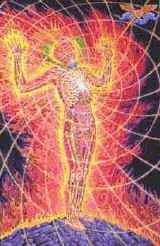
    Heart Opening - Alex GrayIn the “old” days, initiation required a loosening of the life (etheric) body from the physcial body, which had the effect of letting consciousness awaken into the spiritual world. This was usually accomplished with the help of a guide/hierophant. The most expedient and direct way of making this transition involved, believe it or not, a conscious approach to death. This is meant in the literal sense: initiates would be buried alive, or would fast, or would be drowned (this is what baptism was originally!). The goal was to force the etheric body to release its hold on the physical, so that the astral body and Ego would no longer be overwhelmed with the physical body’s sensory inputs, in order to allow the more subtle effects from the spiritual world become apparent. This happens normally at death, but the technique of initiation used this relationship in a conscious and purposeful way to achieve spiritual sight.

    In Matrix 2, “The One” had to go through a second initiation process in order to get to the stage of being able to work on his own etheric body with consciousness (in Matrix 1 his initiation process (again, involving a death) awakened him to his astral body). The One had no hierophant for this (more…)

  • Transformative Learning

    Transformative Learning

    “What is the connection between a transformative learning approach and the sense of one’s own spirituality? In what way does transformative learning nurture the spirit any more than any other learning style does?”

    There are many styles of transformative learning. In general, however, one key aspect of transformative learning the explicit recognition that learning is not an activity that only takes place at a specified time and place built specifically for “learning”. Rather, learning is understood to be a life activity, and as such should be connected to all aspects of life in an integral way. The old, medieval style of education based on disciplinary structures that still dominates Western culture is fraying at the edges — thankfully.

    Much of traditional academia is dominated by approaches where one learns “about” topics and ideas. In transformative learning, one learns “with” and “through” ideas by embodying them outside the classroom, in one’s daily life and work. The best transformative learning closes the loop by reciprocally inviting one’s outside activities into the classroom. This sets up a recursive relationship that helps unlock avenues for creative, integral inquiry that otherwise get stifled by a need to fit within an established epistemology, such as the kind implicit in most traditional educational offerings.

    Transformative learning styles nurture the spirit because room is made both implicitly and explicitly for what we could call the appearance of the unknown. What you know limits your knowing, and making space for the arising of what is beyond one’s current understanding is central to any transformative process. You can’t fill a cup that is already full, and transformative learning styles take advantage of this wisdom directly by integrating opportunities for unknowing. What is spiritual in the human being is nurtured more by unknowing than by the addition of data to an already established way of being. Transformation occurs not when we change our ideas, but when we change how we know. Learning styles that are transformative in nature utilize this principle directly.

    “Is there a place in the workforce for transformative learning? In what way might it be applied on the job?”

    What we have to realize is that transformative learning is not just another system of facts and ideas that can be “applied on the job” without a recursive feedback effect on the business itself. It’s not like you can go to work and have an isolated “moment of transformative learning” to fulfill that week’s quota — transformative learning is more like an attitude than a specific system of ideas or practices, and as such it bleeds beyond borders. Most of the techniques and methods used in transformative learning approaches are designed to loosen us from our habitual ways of being in the world. They recognize, for example, that pretty much all the interesting stuff happens at the boundaries. This is where the juice is: where systems, ideas, events, and (most importantly) people meet and interact. Providing avenues for a greater diversity of interactions yields far more than a directed process where the outcome is dictated in advance. That’s good for building widgets, but not so good for the spirit. This has been known in some education circles (like Waldorf education) for about a century: play is not an activity for recess, but a core mode of learning that is, by its nature, transformative. A stick becomes a magic wand, a tent-pole, a sword, a sand-writing tool, and so forth in a dynamic flow. Only the adults, stuck with their more rigid, non-experimental epistemologies, see “just a stick”.

    My father, who has been a business consulting psychologist for 25 years with the top management of major corporations like Best Buy, summed up his entire job to me recently by saying that his most important function has been to help his clients learn how to learn. This is an explicit recognition of the difference between the first-order concept of “learning” and the second-order concept of “learning how to learn”, which Gregory Bateson identified decades ago as a key to understanding complex goal-directed systems. In second-order learning, the snake bends back to bite its own tail and in so doing initiates a process of self-digestion. This self-digestion is a part of what is necessary to create the space for something new to arise, and is a stage on the way to an “adult” way of playing that is called “creative inquiry” and “transdisciplinarity” in academic circles.

    Transformative learning invites higher-order transformation: not simply a change in what we think and do, but in how we think and how we carry out our actions. More businesses are starting to recognize the value of spaces (both physical and metaphorical spaces) that are not already locked into a pre-defined form, but which invite modification and multiplicity. This is a way of calling attention to and allowing human beings to bring forth the parts of themselves that get excited and passionate when they are simply given the space to be so. Some places, like Google, MIT, and other “big names” consciously utilize principles of transformative learning as a way to nurture diversity, openness, interaction, experimentation, and transformative involvement at various levels. The next level is when businesses begin to re-humanize their practices with the attitude that every “worker” or “employee” is first and foremost a whole human being. But to get there our whole understanding of business will have to transform as well…


  • Goethean Studies Notebook

    Goethean Studies Notebook

    Goethean-Studies-1999-2000-Notes-by-Seth-MillerPDF: Goethean Studies Notebook (40mb)

    PDF: Higher quality, print version (180mb)

    This notebook was created as a personal record of the 1999-2000 Goethean Studies program at Rudolf Steiner College. This unique course, conceived of and taught primarily by Dennis Klocek, is still being offered — it is now called Consciousness Studies. When I took the course, which was seven months long and met for about three hours every weekday, I liked to call it “Being Human 101”, because it offered some basic perspectives about being human that spanned the spiritual, psychological, and physical worlds in a very deep and coherent way.

    There are certainly errors contained herein: it was often simply not possible to record more than the merest fragments of the vast pictures that awakened in the little Emerson classroom and flowed like honey across our minds. This record is like a six year old’s crayon rendition of a Michelangelo: it may contain something recognizable, but is no substitute for the real thing, which I encourage everyone to experience.

    It is likely that the only people who will see this document are those already familiar with the course in one of its various incarnations. For you I hope that it re-awakens a commitment and enthusiasm for the hard and necessary work of spiritual transformation by connecting you to the feeling you had sitting in the uncomfortably cold room on uncomfortable chairs, listening to another mind-blowing morning lecture by Dennis: the feeling that you were exactly where you needed to be and wouldn’t trade it for anything.

    For those who have not been able to take the course, this gives a tiny taste of some of the content that was presented in its 1999-2000 incarnation, and will hopefully inspire you to research the current, more highly refined and potent version.

    For those who have found this page but have no idea what I’m talking about even though you’ve read this far, just flip through it like it was you long-lost friend’s photo album and see what tickles your fancy as you skim on by.

  • Levels of Dreaming and the Makeup of the Human Being: The Spiritual Ontology of Dreams

    Levels of Dreaming and the Makeup of the Human Being: The Spiritual Ontology of Dreams

    By Seth Miller

    Full PDF

    DreamerEveryone dreams, but few people find sufficient interest in their dreams to move beyond mere curiosity at their strange contents.  Even many who work with dreams as a part of a transformative practice usually concentrate on their content, and only more rarely question their form, ontology, and origins. Exploring these aspects, however, can help provide a context that helps orient dreamers to some of the esoteric underpinnings of dream etiology (their meaningful origins), and can help enliven dream-based transformative practices. This article is an attempt to show how a spiritually-oriented understanding of the makeup of the human being gives a context for understanding different types of dreams, their origins, and some associated consequences for dreamwork.

    The language of spiritual science, also called anthroposophy (human wisdom) will be of help in this endeavor, because it maintains its cogency across multiple phenomenal realms (such as those of sleeping and waking), and because it has as its aim the ability to make clear and coherent processes which work within the physical realm but have their source beyond it, in the spiritual worlds.  Fundamental anthroposophical terminology will not be explained in this article for reasons of space, and neither will the basic anthroposophical view of dreaming in general.  For a brief introduction, I highly recommend that readers peruse this article: Sleep and Dreams in Anthroposophy, which provides the context (more…)

  • Book Review: Supersizing the Mind by Andy Clark

    Book Review: Supersizing the Mind by Andy Clark

    When Minds Won’t Stay Put:

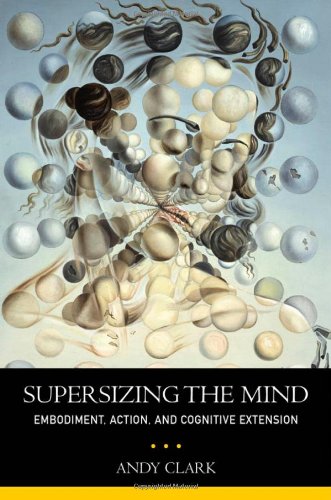
    A Review of Andy Clark’s Book Supersizing the Mind: Embodiment, Action, and Cognitive Extension

    by Seth Miller

    supersizing-the-mind

    Ask your neighbor: “If you had to locate your mind, where would you point?”  In all likelihood, the overwhelming response will be a finger on the cranium.  Ask Andy Clark, a professor of Philosophy in the School of Philosophy, Psychology, and Language Sciences at Edinburgh University in Scotland, and you might see him point to his mouth, his hands, and even occasionally to objects in the world such as pencils and notebooks.  By way of explaining this seemingly odd behavior, Clark might shrug and hand you his newest book, Supersizing the Mind: Embodiment, Action, and Cognitive Extension (Clark, 2008).

    In this work (StM), Clark attempts to flesh out (pardon the pun) the thesis that (more…)

  • Inception: Dreams, Waking, and Epistemology

    Inception: Dreams, Waking, and Epistemology

    inception-movie
    The movie Inception is the best “question reality” movie since the Matrix (ultimately the Matrix is better, in my opinion), and it raises many fascinating questions having to do with the differences between the two primary states of consciousness available to humans today: waking and dreaming.

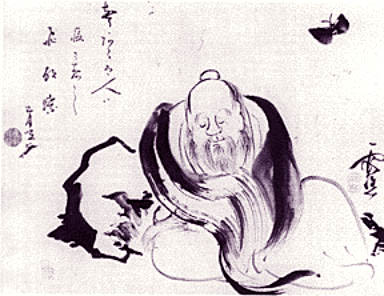
    This issue has been around for about as long as recorded history, and has formed a central piece of some very detailed philosophical considerations.  It shows up in the 4th Century B.C.E. in the famous Taoist Zuangzi’s “butterfly dream”:

    Butterfly-Dream_Zhuangzi“Once Zhuangzi dreamt he was a butterfly, a butterfly flitting and fluttering around, happy with himself and doing as he pleased. He didn’t know he was Zhuangzi. Suddenly he woke up and there he was, solid and unmistakable Zhuangzi. But he didn’t know if he was Zhuangzi who had dreamt he was a butterfly, or a butterfly dreaming he was Zhuangzi. Between Zhuangzi and a butterfly there must be some distinction! This is called the Transformation of Things.”

    It also forms a central part of Indian philosophy, especially advaita vedanta,  which explores cosmological questions through the exploration of (more…)