Edgar Morin, who calls for a transdisciplinary way of thinking, wrote an amazing short essay entitled “A New Way of Thinking”. (A New Way of Thinking.pdf) One of the principles of this new way of thinking involves recognizing that wholes and parts are mutually interactive: “properties emerge from the organization of a whole and may have a retroactive effect on the parts”
Consider water. Water is commonly thought to be the simple combination of two hydrogen atoms with an oxygen atom. We say “H2O” like we know exactly what we mean, and usually what we mean is something like H2O = H + H + O.
But this way of thinking is wrong; something fundamental is missing from this thinking. We cannot conceive of water as a simple addition, because in the process of coming together, the very nature of the individual pieces is changed.
A hydrogen atom in a water molecule is NOT THE SAME as a hydrogen atom in isolation. It’s very structure changes, precisely because it is now in a relationship, or rather, we could say, a continual process of relating, and this relational process has consequences for both the hydrogen and the oxygen (and the other hydrogen!).
“Water” is thus a picture of a certain ongoing relationship between hydrogen and oxygen in a complex way. The emergent properties of water coincidently retroact on the process of this relation. The properties of water are both more and less than the sum of the individual parts.
An alchemical understanding of water jives with this understanding from the realm of transdisciplinarity. Water, alchemically, can be considered “process”. It is the substantive manifestation of the principle of relation. The alchemists understood that relationship always had a transformative effect, whether on a physical substance or a soul-substance.
Dissolution was thus a phase of the Great Work; the bringing together of disparate elements via a liquid phase served to lessen the tendency to interpret the individual elements individually, as separate and isolated bits. This occurs through the careful application of heat. This ‘phase-transition’ set the stage for a further transformation, in which substances dissolved in solution could be further refined through an additional application of warmth, driving off the more volatile substances that were invisibly suspended in solution, while simultaneously the less volatiles substances precipitated out of solution and became an ash, which itself had to be purified so it could later come back into a completely new relationship with the volitalized elements.
Alchemy embodied the holographic principles held as foundations for transdisciplinarity by Morin: the whole in the part, the part in the whole, with retroactive effects and emergent effects as a consequence.
Following on the last posts about language, I’m just going to go way out on a limb here and re-present a picture that Rudolf Steiner gives which, when you really take it in, can transform your whole sense of language. It is this:
Steiner points out how at the present time, humanity can only tap into the deep formative forces of creativity in an unconscious way, or in a sort of caricature of what is possible. So to give birth to another human being requires a certain kind of process in which our consciousness plays only a tiny role — all the ‘work’ of creation is done unconsciously (for US — quite consciously for… other beings).
Speech in Motion – Eurythmy
The place in the human being where we are beginning to find an entry into the realm in which this kind of creation–conscious creation–is possible can be found in the human larynx. Now, if you have a sense that there is a relationship between creative forces and the motions of the sounds that underlie speech, you begin to see that what speech is primarily today is only the merest possible shell of what is possible with regards to creation.
The sounds that I produce (or that you implicitly imagine, even unconsciously [MRI studies show this] if you are reading this) are capable of calling up within you an image, a picture… a feeling, evoked by my words. Not just the structure and grammar and so forth, but the actual sounds themselves are a part of this, and are not arbitrary (as I mentioned in the previous post).
Sounds are movement, and the larynx does what it does only as a mobile, dynamic organ of self-transformation. The larynx is doing a little dance, putting form into movement through time and interval. Alchemically this is all working with the Air element — reversal/polarity. The oscillations of the air itself happens through the polarity of compression and rarefaction, but even more: in order for my words to call up an image in you, you cannot remain the same — you must change. The way that you can allow my words to allow you to experience what lies behind the words — the experience of the one speaking — is only by going through a microcosm of a microcosm of a macrocosm.
The macrocosmic level is the process of life–>death–>life (i.e. reincarnation). The microcosmic process is awake–>sleep–>awake. The further microcosmic process is speaking—>listening—>speaking. In this last process, a part of you must go to sleep in order to dream through my words. Just as the continual process of dreaming is overshadowed by the entrance of day-waking consciousness, so too your ability to meet the images contained within the words of another’s speech is overshadowed by the holding on to and expression of elements of oneself and the temporary identity with one’s own images.
You must dream into my words as I actively speak them, just as I must do the same if I am to hear you through your words. Now, that’s all just background.
The real image is that in the future, rather than reproducing by the unconscious means that are the only ones presently available to humanity, we will learn how to reproduce consciously, and this will take place through the further development of what is now the human larynx, where we have the greatest connection to the creative forces–which now take the form of the ability to call up in another’s soul images that are produced in one’s own.
I hope the sense of this connection is clear. I recognize that this probably seems WAY out there, but I’d just like to share that such a way of thinking is possible, and that from a perspective that isn’t forced into materialistic boundaries, but which can consider the movement of processes in a wide variety of scales, such an imagination has considerable import.
This is all linked up with morality and how, as Bonnie points out, our speech is, in fact, a creative vehicle by which the world comes into being… So you can imagine that what we are doing right now in the exchange of ideas through words is a kind of proving ground and developmental platform on which we are expanding our ability to tap into something of the radical (root) nature of the creative forces, which are normally relegated to an unconscious realm.
One can, if one wishes, find this thread about speech all through the ages, as far back as you want to go. It is the root of the idea concerning the magical power of words; words as creative actions that are connected with the deepest sources of the universe.
(Note, the Blackfoot people have a process-oriented language, which is much more strongly verb-based, while English and most other languages are object/noun based.)
Blackfoot Indian Brave
A friend of mine asked:
Do the Blackfoot people go through a phase where they need to have conceptual boxes, and then learn to transcend the need to reify these artificial demarcations, or do they simply use a different process all together from the very start? So much of western development theory assumes that moving beyond nice neat conceptions is a phase that we can move beyond, but assumes it is a necessary phase; perhaps it is only necessary for those who are raised to think in a linear fashion?
Which prompted the following response:
I have this feeling that on a macrocosmic scale, humanity does have to “go through” a stage of categorical reification and abstraction in order to develop certain potentials relating to our “task” if you will, of becoming beings of freedom and love. However, this doesn’t mean that every single human being has to do this, or in the same way (ex: the West has played such a huge role in this particular part of the human drama, while other areas have different things to bring to the play).
I imagine that it would be possible to ‘use different processes from the start’, and while there will be similarities in developmental stages, these won’t always match up exactly depending upon what is being brought forth by the language, culture, and individual elements, and so forth. It’s not like a Blackfoot can’t identify ‘a chair’ if they don’t want to… it’s just that doing so is a reduction or rather abstraction from a different way of understanding, just like if I were to reduce you to a particular image I had of you that came from one specific interaction, and then communicated only this aspect of you when I spoke about you to others or thought of you myself.
Both the ‘objective’ or reified view of we weirdo Westerners, AND the process or time-sensitive view of people like the Blackfoot are ‘correct’. The question is more, to me, about the overall appropriateness of each view given microcosmic and macrocosmic pictures of individual and collective development. Sometimes, identifying “this chair” as a completely abstracted and separate, non-evolving object is appropriate. Sometimes, seeing the flow of events that entwine themselves into the constantly becoming activity and relations that make up the chair through time is more appropriate.
BUT, the imporant thing is that we develop the capacity to have both these (and other) options open to us, so we aren’t locked in by our habits of perception. We — humanity as a whole — has won the capacity to objectify the world through a long and arduous and pain-filled path. It is something that we shouldn’t abandon — rather we need to learn how to use this capacity responsibly, ultimately in service to the development of our freedom to become beings who can love not by virtue of a given nature (this would describe an angel), but through what has come to us only by virtue of the path we have walked, i.e. in freedom.
Does this mean there is no universal developmental stages that we each pass through simply due to the fact that we are all human? What are the underlying strata, the ground upon which both these explicate perspectives emerge? What is the implicate order regarding human development?
Prompting the response:
As for universal developmental stages… yes and no. I guess I would point to the process of recapitulation. You, as a physical being, go through stages in development which are a unique recapitulation of stages that have individually been achieved over vast timescales. But, as modern beings, because what was achieved so long ago by (or rather ‘with’ and ‘through’) our ancestors (going ALL the way back, here) no longer requires the same kind of attention that it did when the developments were being worked out, we speed through these stages without any cognizance. We also don’t have to experience the full drama of the development of those stages; we only get something like the form of an image of those stages, more like a hint or better a ‘gesture’ of those past stages. The result is that instead of, say, having to develop anew the ability to breath air from scratch, we simply find ourselves with a capacity for breathing.
The particular capacities we are thus ‘given’ are not “universal” in the absolute sense that ALL beings do this. But it is close to universal when considering humans. We are the ongoing unfolding of our past — all of our past. And some capacities require more of us now than they will in the future, and others require less of us not than they did in the past. Thus, we are no longer challenged so much by the development of breathing, but have a more difficult time with upright walking. It is easier to have a mental picture than it is to dissolve a mental picture into nothing. It is easy to feel rage, but much more attention is required to feel compassion. These are tracings of past and future capacities, and we’re constantly in the flow of their development (and there is also a process of dissolution of capacities… but we’ll not go into that).
Physical Recapitulation
And there are always exceptions. Some people who are born now are actually working out dramas that the bulk of humanity dealt with eons ago, and others are born who are dealing with developing capacities that the bulk of humanity will likely encounter only in the future. So it’s not a simple question of everyone being equal. Diversity is everpresent.
Additionally, some of the capacities that have been given through our long history are only partially so. Or rather, their development has only proceeded to a certain stage, beyond which any development or progression depends upon actions taken here and now. The fulfillment of these capacities is not a given, but requires actual work on our part. For example the capacity for free ethical action that comes from within the individual; this is not something that just everyone ‘has’ — it requires a certain amount of work. So too the capacity to perceive accurately in the spiritual worlds requires individual work; it’s not yet capable of being given as an already-developed gift to the whole of humanity (like vision is) because the work required for that is still being done.
The upshot of all this is that the situation is very complex and intertwined with multiple streams, working from the past and (sorry for sounding weird) from the future. There is no ‘one-size-fits-all’ when it comes to these things, because we’re constantly dealing with a whole variety of interpenetrating levels and times. Nevertheless, there are ‘global’ patterns at work, which can be perceived if one knows how to look. David’s books very directly hint at this. Also examine Richard Tarnas’ book The Passion of the Western Mind. These are works in the popular domain which point to the sense of ongoing, non-random, directional development of consciousness and human beings. (Of course, one could find a much more direct treatment of this aspect if one has the desire to look into more esoteric sources, such as Steiner.) This is where you start to find a way into the question of the Implicate Order with respect to human development…
Evidence can be gained through a variety of means. Just as you would wish to use a sensitive detector of particular frequencies of light if you are doing x-ray crystallography, and not, say, an acoustic detector, so too we need to develop and use detectors that are appropriate to the realm in which we wish to gather evidence if we are to hope to gain any knowledge in that realm.
Thus, if we wish to develop knowledge of spiritual realms, we will need to develop organs of perception (for no material ‘device’ can do this for us) which are capable of perceiving in the realm of the spirit. Not only that, but those organs, like any physical detector, need to be sensitized, tuned, and placed in the proper experimental setup for good evidence gathering to be likely.
Of course, the basis for the spiritual organs of perception we are talking about here are rooted in our attention: it’s quality and rhythm. For example, we lay people can only talk about all the fascinating stuff coming out of quantum mechanics in a second-(or third)-hand way, because we have ourselves not done the experiments in question, and our judgments and opinions on the matters are derivative of the interpretations of these experiments by those who have done them and their interpreters. We would not expect an interested lay person to provide new information about quantum processes ex nihilo, but we can learn to conceptualize and come into closer relationship with those processes by virtue of our studies of what has been communicated about them by relative authorities.
The exact same holds for spiritual considerations: those that have developed capacities to perceive spiritual realms can interpret and communicate these results to those of us that don’t, and we can study and learn about realms which we may not otherwise have access to as a consequence. Moreover, just as we might, if we were really interested, take the necessary steps to learn the skills and concepts necessary to do research in quantum mechanics, so too we can take the steps necessary to learn the skills and concepts that allow one to do research in the spiritual worlds.
Or does all this sound completely far-fetched?
Unless we are scientific researchers in a particular field, we actually have very little direct evidence for our knowledge about quantum mechanical processes, chaos theory, and so forth; it’s almost completely anecdotal, yet we trust those that have done the research to provide us with a coherent and accurate picture of ‘what it is like’, and primarily on this basis we feel comfortable using the concepts and talking the talk.
I’m only writing this because I wanted to point out that the scientific method in no way whatsoever excludes the non-physical, and that it is possible to have a clear understanding of how that is so; i.e. such a thing as spiritual science is possible. Poor research is just as much of a problem in physical science as in spiritual science — and we must either rely upon ‘experts’ to let us know when this is the case or become an expert ourselves.
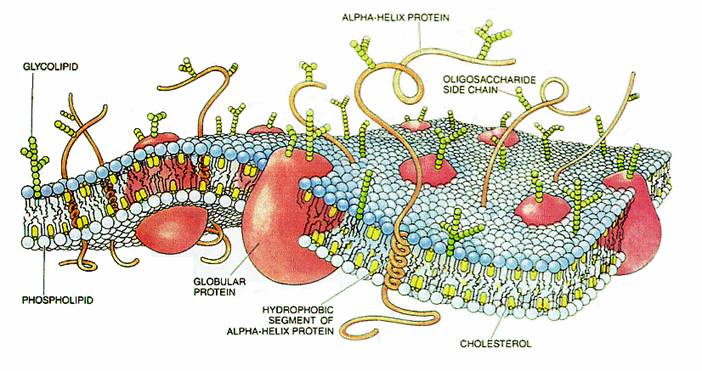
We are ecologies within ecologies within ecologies. Complex processes, such as inflammatory responses, span multiple systems as multivalent expressions of dynamic self organization. Within constant interlaced boundaries provided by the dual and complementary forces of growth and decay, life becomes possible; we become possible. Interactivity, specialization, contextual adaptation, flexibility, utilization of ‘randomness’ and dynamic flow are parameters by means of which the game of life yields autopoesis and apoptosis. The dance of advancing and receeding energies, the undulating glissando of electromagnetic interactions reverberating between hydrophilc and hydrophobic ends of phospho-bilipid layers, reveal a chorus of dynamic forces meeting in miniscule harmonies that literally embody and mirror the complexities of life all the way up.
If you are not awed and humbled by this cosmic-microcosmic dance, this alchemical transformation of matter into forms that inform, then you have lost your ear for poetry:
I’ve been thinking about the co-existence of multiple descriptions of reality lately. In particular, as someone who has taught high-school physics, I run up against a philosophical quandary when I’m presenting, say Newton’s laws of motion. Am I presenting a lie to the students, because quantum mechanics and general relativity replaced the Newtonian physics?
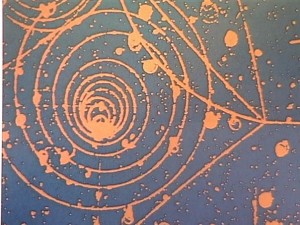
On the one hand, we can argue that classical physics is flat-out wrong in its basic foundations, and thus that all of the subsequent predictions of it’s theories are equally (and absolutely) wrong as well. For example, take the prediction of a cannonball’s trajectory. Classically this follows a simple parabolic curve… but there are a number of non-Newtonian complexifications to this story that are required for a ‘truer’ description of the event. First you have the non-linear, chaotic effects of friction, then you have general relativistic corrections (changes in space-time curvature vary with distance to the mass of the Earth, thus changes in momentum, and even the mass of the cannonball, plus time dilation and other flying pink elephants), and then quantum corrections (virtual particle interactions, uncertainty limits, kryptonite fragments).
But, as evidenced by the crumbling city walls, the cannonball hits them anyway, whether or not we take these things into account (well, friction is really pretty important, but that’s why things in physics-world are always frictionless to begin with). In other words, even though, in an abstract and theoretical sense, classical physics is complexly wrong, it is also simply correct. It will get you to the moon just fine, thank you, no relativistic corrections needed.
The issue may require some consideration of the shifting between an epistemological stance and an ontological stance (that confounded relationship again!).
Ontologically we must say that Newton’s physics provides only an approximation of more fundamental principles. We can thus think of the classical principles as “wrong” because if we are to look at the phenomenon in its more complete ontological situation, other principles are required. However, when we don’t look in this way, the classical principles are arguably just as “right” as the more fundamental principles that need to be introduced when you look at the situation more completely. In other words, questions about ontology can be taken in-situ, and not, as most philosophers would have it, absolutely. This is a big faux-pas, as it undermines the common meaning of ‘ontology’, which refers to the essence or real being of a phenomena.
But if we our queues from Whitehead, we realize that the idea of being may no longer require some kind of Parmenidean, unalterable and unchangeable essence that is just itself for all eternity. Essence-being-may rather have existence only as a process, as an ongoing creation, subject always to the bursting through of novelty.
Somewhat ironically, if we took this, rather than the Newtonian assumptions as a starting point, then it would not be problematic to see that Newton’s physics can indeed have an equivalent ontological status in certain circumstances as the relativistic and quantum laws do in other circumstances. There may be no ontological need to posit relativistic effects unless such effects create differences that impinge upon classically-based predictions.
Of course, the fact that just this does occur in some situations is exactly why people had to come up with relativity and quantum mechanics! But the establishment of new ‘laws’ may not obviate the ontological status of earlier laws when we don’t arbitrarily discount the importance of the evolving context within which any ontological consideration arises in the first place.
The situation becomes more apparent when we are no longer considering simple physical systems, but try to account for more complex phenomena: life, emotion, healing, consciousness, social effects, etc. In these cases, the ‘laws’ of physics are simply completely and utterly inadequate to the phenomena; they explain only a tiny fraction of each phenomenon. New ‘laws’, and other principles are required to make sense of these different realms. These laws may or may not be ultimately reducible to known physical laws, but that may not even matter!
What ‘exists’ for a given way of approaching a complex, embedded, extended, and recursive system may change on the basis of how that system is approached, i.e. by the ‘question’ that is asked of it. Which of course leads us to the insight, offered by Bohr, that just this is how the universe works: it answers questions (is something for us) by virtue of the questions asked of it, which is another way to say “How you pay attention changes what comes to your attention.”
Classical physics will never ‘go away’, unless human experience changes so radically as to no longer require its principles for explanation (this is highly unlikely). We should be careful of the classical assumptions about ontology, and of projecting an absoluteness onto ‘being’ that is not sensitive to the human act of in-situ knowing. To declare, because the fundamental principles of chemistry can be reduced to physical principles, that “chemistry is not needed” would be a folly; chemical principles, when unreduced, still operate in an ontologically satisfying way – for the chemist. The fact that those behaviors can be thought of in ‘more fundamental’ terms does not automatically privilege the more fundamental understanding in an ontological sense.
This does not lead to ‘state-specific sciences’ (ala Charles Tart), which are radically separate, in which every question may have its own unique ontology and epistemology. It appears that the universe doesn’t quite work this way, because principles from one realm don’t stay put; they leak out into other, seemingly unrelated disciplines, where they may find fruitful soil, even taking over the previous assumptions at times. The universe doesn’t seem to split itself up quite the way we do. In other words, we cannot hold onto an ontology that abstracts itself indefinitely, but we cannot also completely de-reify ontological considerations (the mistake of much of post-modernism) in favor of purely ‘constructed’ ontologies.
We are thus lead to consider an epistemology – an embedded, flexible, transformable epistemology – may be go hand-in-hand with a companion ontology – a process-oriented, non-reductive, complex ontology. The ontology is thus capable of shifting on the basis of epistemological concerns, but is not reducible to them. The epistemology is likewise capable of transforming on the basis of ontological considerations, but cannot be completely enslaved to them. Rather, the epistemology and the ontology co-exist in a creative dance of becoming, mutually reinforcing each other and destroying each other in a complex cybernetic loop.
 Consider water. Water is commonly thought to be the simple combination of two hydrogen atoms with an oxygen atom. We say “H2O” like we know exactly what we mean, and usually what we mean is something like H2O = H + H + O.


 On the one hand, we can argue that classical physics is flat-out wrong in its basic foundations, and thus that all of the subsequent predictions of it’s theories are equally (and absolutely) wrong as well. For example, take the prediction of a cannonball’s trajectory. Classically this follows a simple parabolic curve… but there are a number of non-Newtonian complexifications to this story that are required for a ‘truer’ description of the event. First you have the non-linear, chaotic effects of friction, then you have general relativistic corrections (changes in space-time curvature vary with distance to the mass of the Earth, thus changes in momentum, and even the mass of the cannonball, plus time dilation and other flying pink elephants), and then quantum corrections (virtual particle interactions, uncertainty limits, kryptonite fragments).
 The situation becomes more apparent when we are no longer considering simple physical systems, but try to account for more complex phenomena: life, emotion, healing, consciousness, social effects, etc. In these cases, the ‘laws’ of physics are simply completely and utterly inadequate to the phenomena; they explain only a tiny fraction of each phenomenon. New ‘laws’, and other principles are required to make sense of these different realms. These laws may or may not be ultimately reducible to known physical laws, but that may not even matter!
 We are thus lead to consider an epistemology – an embedded, flexible, transformable epistemology – may be go hand-in-hand with a companion ontology – a process-oriented, non-reductive, complex ontology. The ontology is thus capable of shifting on the basis of epistemological concerns, but is not reducible to them. The epistemology is likewise capable of transforming on the basis of ontological considerations, but cannot be completely enslaved to them. Rather, the epistemology and the ontology co-exist in a creative dance of becoming, mutually reinforcing each other and destroying each other in a complex cybernetic loop.