It's Elemental

Tag: Michelangelo

  • Goethean Studies Notebook

    Goethean Studies Notebook

    Goethean-Studies-1999-2000-Notes-by-Seth-MillerPDF: Goethean Studies Notebook (40mb)

    PDF: Higher quality, print version (180mb)

    This notebook was created as a personal record of the 1999-2000 Goethean Studies program at Rudolf Steiner College. This unique course, conceived of and taught primarily by Dennis Klocek, is still being offered — it is now called Consciousness Studies. When I took the course, which was seven months long and met for about three hours every weekday, I liked to call it “Being Human 101”, because it offered some basic perspectives about being human that spanned the spiritual, psychological, and physical worlds in a very deep and coherent way.

    There are certainly errors contained herein: it was often simply not possible to record more than the merest fragments of the vast pictures that awakened in the little Emerson classroom and flowed like honey across our minds. This record is like a six year old’s crayon rendition of a Michelangelo: it may contain something recognizable, but is no substitute for the real thing, which I encourage everyone to experience.

    It is likely that the only people who will see this document are those already familiar with the course in one of its various incarnations. For you I hope that it re-awakens a commitment and enthusiasm for the hard and necessary work of spiritual transformation by connecting you to the feeling you had sitting in the uncomfortably cold room on uncomfortable chairs, listening to another mind-blowing morning lecture by Dennis: the feeling that you were exactly where you needed to be and wouldn’t trade it for anything.

    For those who have not been able to take the course, this gives a tiny taste of some of the content that was presented in its 1999-2000 incarnation, and will hopefully inspire you to research the current, more highly refined and potent version.

    For those who have found this page but have no idea what I’m talking about even though you’ve read this far, just flip through it like it was you long-lost friend’s photo album and see what tickles your fancy as you skim on by.

  • A little presentation on the Golden Mean / Phi — for fun!!!

    A little presentation on the Golden Mean / Phi — for fun!!!

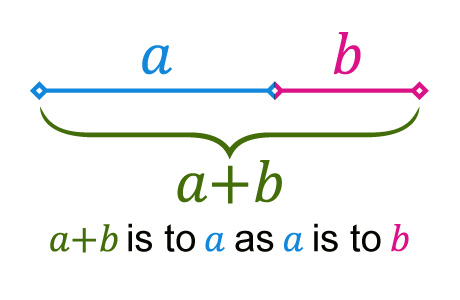
    A golden section is a geometric form constructed in a particular ratio of 1:1.618… (it’s an irrational number that goes on forever without repeating… I like the idea that the golden ratio is irrational).  Technically, the golden section is defined as the relation between two sections (a short and a long) on a line which divide the line in a homonic relation. The relation between the short and long section is the same as the relation between the long section and the whole line:  


    The simplest construction is a rectangle.  You are familiar with golden-ratio rectangles in the form of your credit cards:  

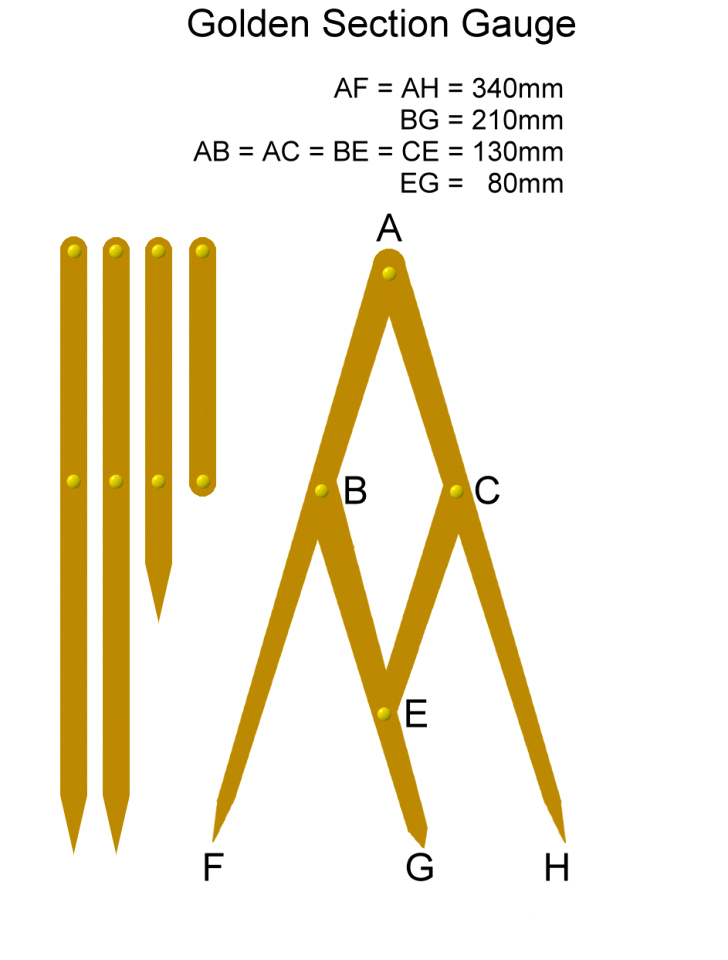
    Incidentally you can make your own golden section ratio device to discover how saturated the world is with these ratios or to follow along by using it with the images in this post.  It’s easy!  Just follow these instructions:

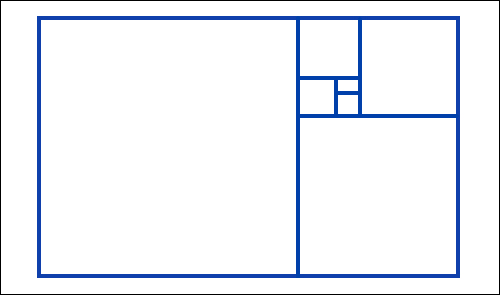
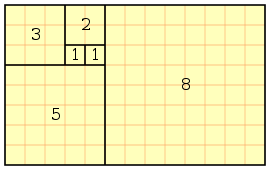
    Golden rectangles nest perfectly because of the ratio:  

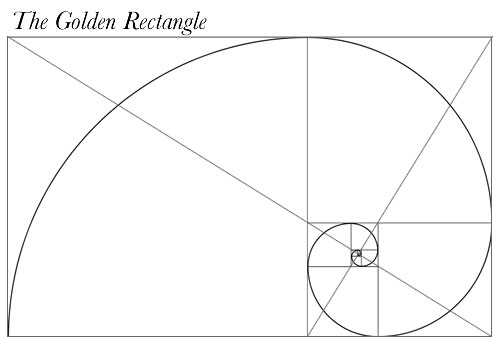
    You also have a golden spiral which is embedded in the nesting rectangles:  


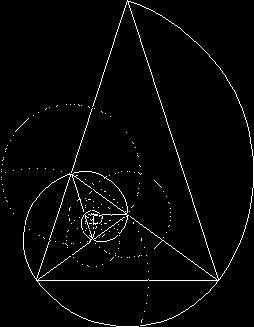
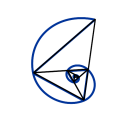
    This same spiral can be found with golden triangles too:  

    It’s known as a logarithmic spiral:  

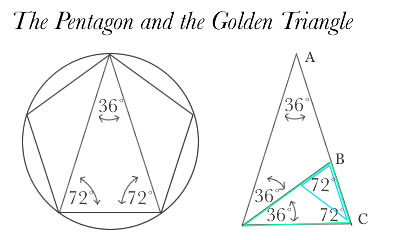
    And it relates to the pentagon/pentagram:  

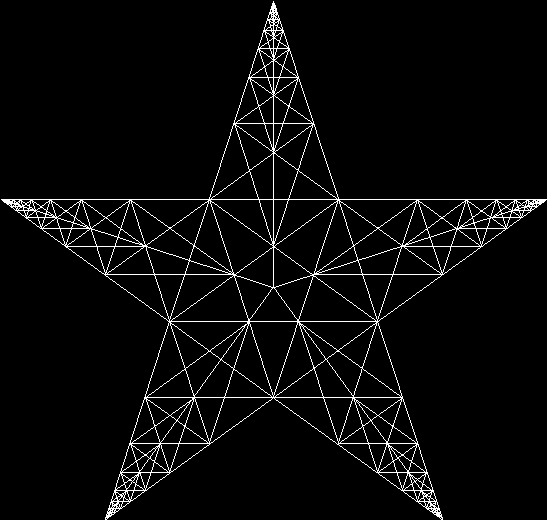
    The pentagram is built entirely of golden sections:  

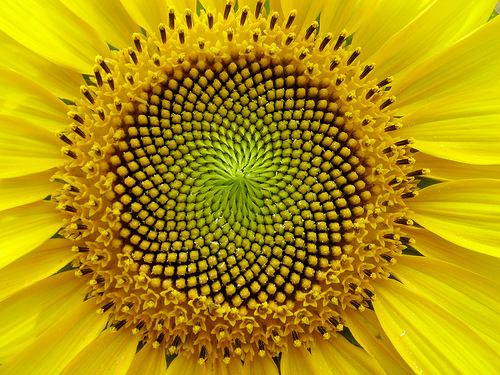
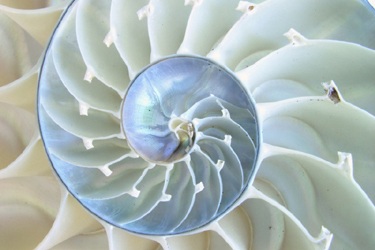
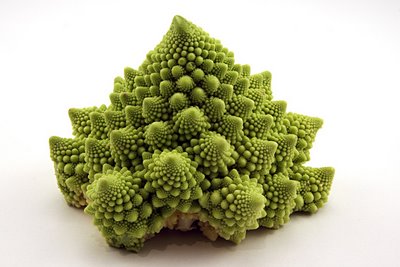
    The logarithmic spiral is an extremely efficient shape for biological growth, and is thus found all over the natural world, specifically in biology:  

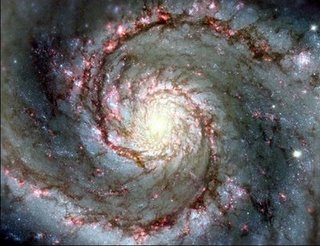
    But is also found in non-living things, like galaxies:  

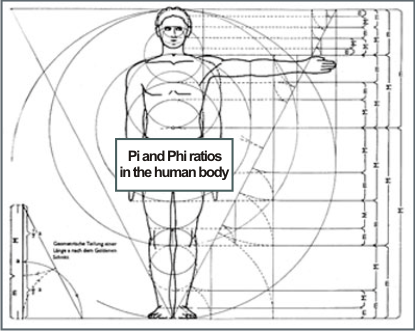
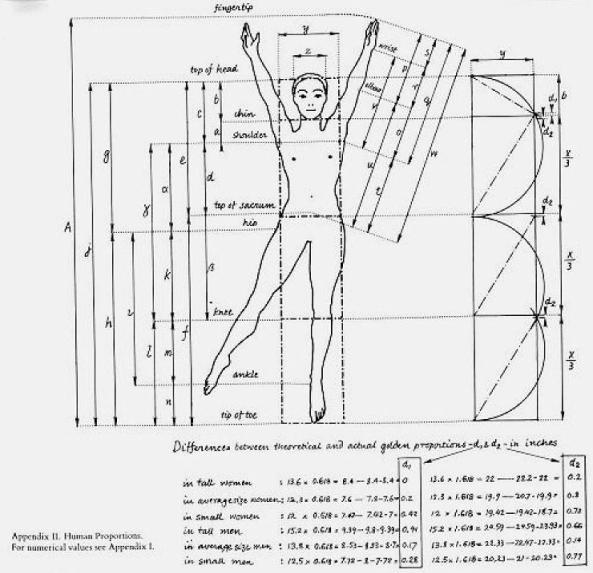
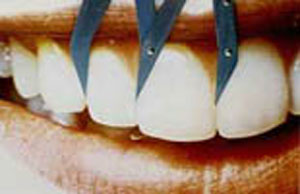
    Closest to home, however, it is found over and over in the human body.  In fact, as far as I am aware, the human body has more golden ratios than any other biological organism:  

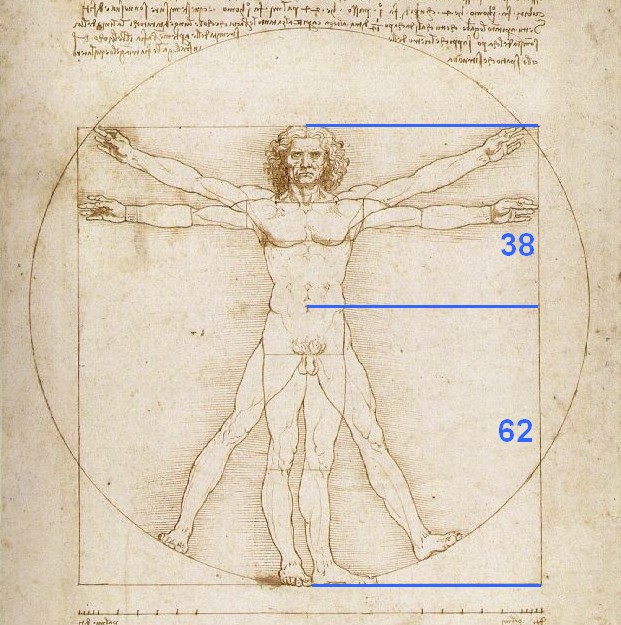
    Our good friend Leonardo concurs:  

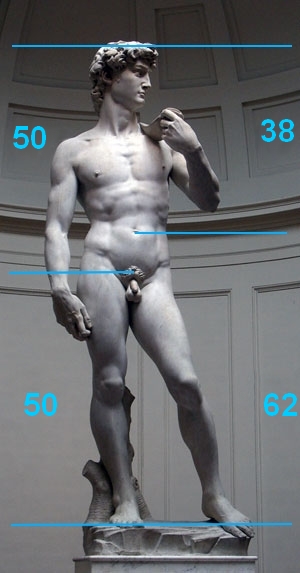
    So does his pal Michelangelo:  

    But here’s something more to chew on:  

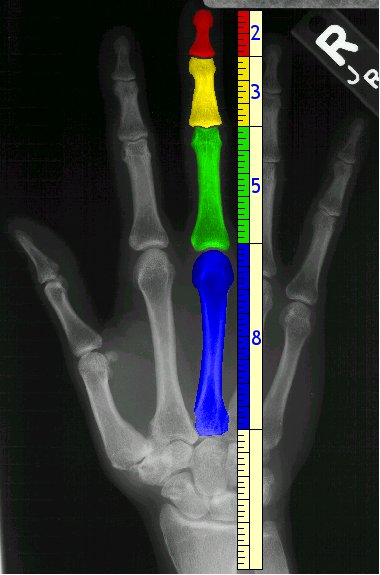
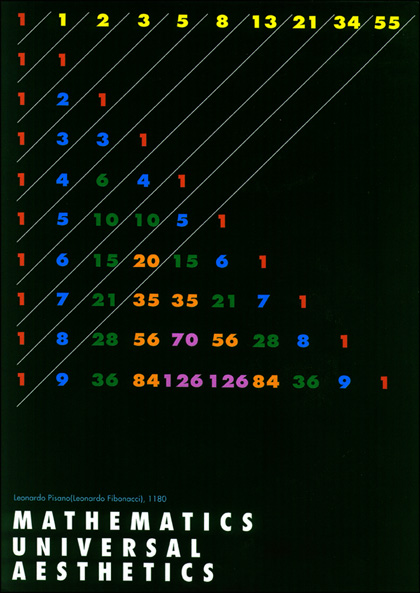
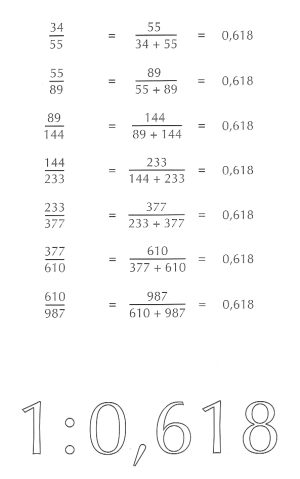
    If you start to MEASURE these ratios, you find that they have an interesting pattern:  

    The next number in the sequence that leads to the golden ratio ends up being equal to the sum of the previous two numbers:  

    This is called the Fibonacci sequence, after, um…  

    Yeah, that guy.  

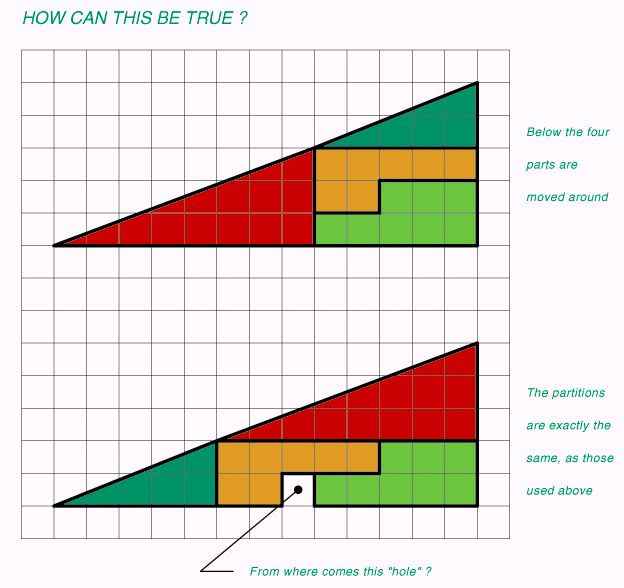
    BONUS:  I bet he would have been able to figure out the following conundrum: