It's Elemental

Category: Alchemy

  • Goethean Phenomenology, Soul Breathing, and Transformation

    Goethean phenomenology acts as a transformative bridge between the researcher and a topic of inquiry.  The method is unique not in that it attempts to work through the subject/object split, but rather in the WAY it attempts to do this.

    Doing Goethean phenomenological research requires that one be completely open to what presents itself, while at the same time recognizing that one’s perceiving is an active force with regards to the topic of inquiry; the topic changes researcher, and the researcher change the topic.

    The Goethean phenomenological method (GPM) asks that one address the topic in a complex way; it must be approached from many angles in order to gather as much potentially relevant data as possible.  The data are continually taken inward and addressed, particularly with attention to the sequencing, timing, and subtle morphological differences.  The goal is in part to be able to re-create, inwardly, an exact sensory imagination that moves with the same gesture as the phenomenon when observed ‘outwardly’.

    Normally, one takes as an ‘object’ of inquiry some outer phenomenon such as a plant species, a location, or a natural form or process.  This restriction is not required, however addressing the alternative does require the researcher to change somewhat the way in which the method has heretofore been conceptualized and practiced. It is possible to begin with a topic of inquiry that is not phenomenologically perceptible to the outer senses: love, for example, or relations between imaginary numbers.  All the same methods are used to work with the phenomenon, but different challenges arise when taking an ‘inward object’ as the focus of inquiry.

    The primary challenge arises due to the unequal stages of development of our outer and inner organs of perception.  My eyeball provides visual information in a way that is highly correlated with the way in which your eyeball provides you with visual information. Despite the variety of potential sensory differences, on the whole physical human sensory capacities share a high degree of correlation, especially when compared with more subtle (non-physical) senses.

    This is not as problematic as it may seem, because implicit in the GPM is a continual oscillation between the subject and the object, and likewise between conceptual and perceptual experience.  In fact, part of the goal of the GPM is to create the capacity (we could call it what it is: a soul-capacity) that allows our soul to move with the gesture of the unfolding phenomenon, as if from the inside-out… and then to come ‘back’ to oneself in order to become aware of that experience in a way that is not available when you are ‘in it’.  Dennis Klocek, a practitioner of this method, calls this process “soul-breathing.” which is a very accurate description of what is occurring. Indeed, the process of working phenomenologically in this way provides the very training necessary to develop one’s soul-capacities in a way that is commensurate with the phenomenon.  The practice of Goethean phenomenology is thus recursive; its practice changes how one can practice it. This recursivity forms a conceptual and perceptual loop which forms the basis for the development of the soul-organ of perception that is keyed to the particular phenomenon in question.

    Goethean phenomenology, as Goethe himself stated, is “delicate.” because the role of the inquirer is paramount in the endeavor; one cannot simply follow an established external protocol and expect results.  Rather, results arrive through a process of mutual interactivity between one’s own development and the simultaneous ‘unfolding’ of the phenomenon in question.

    This method, in many ways, embodies principles from participative inquiry, in that the method actually takes the ‘object’ as a ‘subject’, and treats it accordingly.  The researcher is not the ultimate authority on the phenomenon, but rather attempts to give the phenomenon voice.  We could actually say that the role of the researcher is to place him or herself in service to the unfolding nature of the phenomenon in all its complexity, so that it can live in an imagination that is exact with respect to the movement, transformation, and unfolding of the phenomenon (which is inseparable from the movement, transformation, and unfolding of the researcher); this allows the researcher to ultimately ‘speak for’ the phenomenon.  In a way, the researcher’s agenda is to give up the agenda in favor of the unfolding of the phenomenon.  This can only happen when the researcher becomes capable of perceiving in a way that is generally opposed to the dictates of normal human day-waking consciousness, which lives primarily in a constructed boundary called the “self” through which all experience is filtered.

    Goethean observation softens this boundary, makes it a semi-permeable membrane, and allows part of our soul to live through its inner movements into the unfolding of the other.  In this way, a real ‘dialogue’ begins to take place between the researcher and the phenomenon (rather than a purely self-relating inner dialogue where two aspects of oneself face each other, i.e. a monologue disguised as a dialogue).  It truly feels like one is dialoguing with the phenomenon, just as one would with another human being, but through an expanded language of gestures, tones, and subtle feeling-movements, rather than explicit words.  This allows for the creation of a shared ‘language’, consisting of inner soul movements that take the form of metamorphosing inner pictures (not simply visual, but tonal, gestural) which are exact analogues to the processes that the chosen ‘object’ of study move through.

    In this way, Goethean phenomenology requires and precipitates the transformation of the researcher. Indeed it is only through transformation that a researcher can learn to hear the continual whispering of what Goethe called nature’s ‘open secrets’.

  • Water through transdisciplinarity and alchemy

    Edgar Morin, who calls for a transdisciplinary way of thinking, wrote an amazing short essay entitled “A New Way of Thinking”. (A New Way of Thinking.pdf)  One of the principles of this new way of thinking involves recognizing that wholes and parts are mutually interactive:  “properties emerge from the organization of a whole and may have a retroactive effect on the parts”  

    Liquid dreamConsider water.  Water is commonly thought to be the simple combination of two hydrogen atoms with an oxygen atom.  We say “H2O” like we know exactly what we mean, and usually what we mean is something like H2O = H + H + O.  

    But this way of thinking is wrong; something fundamental is missing from this thinking.  We cannot conceive of water as a simple addition, because in the process of coming together, the very nature of the individual pieces is changed.  

    A hydrogen atom in a water molecule is NOT THE SAME as a hydrogen atom in isolation.  It’s very structure changes, precisely because it is now in a relationship, or rather, we could say, a continual process of relating, and this relational process has consequences for both the hydrogen and the oxygen (and the other hydrogen!).  

    “Water” is thus a picture of a certain ongoing relationship between hydrogen and oxygen in a complex way.  The emergent properties of water coincidently retroact on the process of this relation.  The properties of water are both more and less than the sum of the individual parts.   

    An alchemical understanding of water jives with this understanding from the realm of transdisciplinarity.  Water, alchemically, can be considered “process”.  It is the substantive manifestation of the principle of relation.  The alchemists understood that relationship always had a transformative effect, whether on a physical substance or a soul-substance.   

    Dissolution was thus a phase of the Great Work; the bringing together of disparate elements via a liquid phase served to lessen the tendency to interpret the individual elements individually, as separate and isolated bits.  This occurs through the careful application of heat.  This ‘phase-transition’ set the stage for a further transformation, in which substances dissolved in solution could be further refined through an additional application of warmth, driving off the more volatile substances that were invisibly suspended in solution, while simultaneously the less volatiles substances precipitated out of solution and became an ash, which itself had to be purified so it could later come back into a completely new relationship with the volitalized elements.  

    Alchemy embodied the holographic principles held as foundations for transdisciplinarity by Morin: the whole in the part, the part in the whole, with retroactive effects and emergent effects as a consequence. 


  • The creative potential of langage — or, attend to your speech, for it creates worlds

    Following on the last posts about language, I’m just going to go way out on a limb here and re-present a picture that Rudolf Steiner gives which, when you really take it in, can transform your whole sense of language.  It is this:

    Steiner points out how at the present time, humanity can only tap into the deep formative forces of creativity in an unconscious way, or in a sort of caricature of what is possible.  So to give birth to another human being requires a certain kind of process in which our consciousness plays only a tiny role — all the ‘work’ of creation is done unconsciously (for US — quite consciously for… other beings).

    Speech in Motion - Eurythmy
    Speech in Motion – Eurythmy


    The place in the human being where we are beginning to find an entry into the realm in which this kind of creation–conscious creation–is possible can be found in the human larynx.  Now, if you have a sense that there is a relationship between creative forces and the motions of the sounds that underlie speech, you begin to see that what speech is primarily today is only the merest possible shell of what is possible with regards to creation.

    The sounds that I produce (or that you implicitly imagine, even unconsciously [MRI studies show this] if you are reading this) are capable of calling up within you an image, a picture… a feeling, evoked by my words.  Not just the structure and grammar and so forth, but the actual sounds themselves are a part of this, and are not arbitrary (as I mentioned in the previous post). 

    Sounds are movement, and the larynx does what it does only as a mobile, dynamic organ of self-transformation.  The larynx is doing a little dance, putting form into movement through time and interval.  Alchemically this is all working with the Air element — reversal/polarity.  The oscillations of the air itself happens through the polarity of compression and rarefaction, but even more: in order for my words to call up an image in you, you cannot remain the same — you must change.  The way that you can allow my words to allow you to experience what lies behind the words — the experience of the one speaking — is only by going through a microcosm of a microcosm of a macrocosm. 

    The macrocosmic level is the process of life–>death–>life (i.e. reincarnation).  The microcosmic process is awake–>sleep–>awake.  The further microcosmic process is speaking—>listening—>speaking.  In this last process, a part of you must go to sleep in order to dream through my words.  Just as the continual process of dreaming is overshadowed by the entrance of day-waking consciousness, so too your ability to meet the images contained within the words of another’s speech is overshadowed by the holding on to and expression of elements of oneself and the temporary identity with one’s own images.

    You must dream into my words as I actively speak them, just as I must do the same if I am to hear you through your words.  Now, that’s all just background.

    The real image is that in the future, rather than reproducing by the unconscious means that are the only ones presently available to humanity, we will learn how to reproduce consciously, and this will take place through the further development of what is now the human larynx, where we have the greatest connection to the creative forces–which now take the form of the ability to call up in another’s soul images that are produced in one’s own.

    I hope the sense of this connection is clear.  I recognize that this probably seems WAY out there, but I’d just like to share that such a way of thinking is possible, and that from a perspective that isn’t forced into materialistic boundaries, but which can consider the movement of processes in a wide variety of scales, such an imagination has considerable import. 

    This is all linked up with morality and how, as Bonnie points out, our speech is, in fact, a creative vehicle by which the world comes into being… So you can imagine that what we are doing right now in the exchange of ideas through words is a kind of proving ground and developmental platform on which we are expanding our ability to tap into something of the radical (root) nature of the creative forces, which are normally relegated to an unconscious realm. 

    One can, if one wishes, find this thread about speech all through the ages, as far back as you want to go.  It is the root of the idea concerning the magical power of words; words as creative actions that are connected with the deepest sources of the universe.

  • What you don’t know about your cells will astound you.

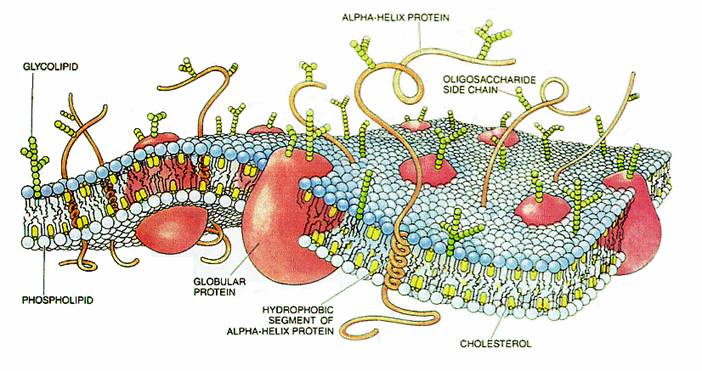
    We are ecologies within ecologies within ecologies.  Complex processes, such as inflammatory responses, span multiple systems as multivalent expressions of dynamic self organization.  Within constant interlaced boundaries provided by the dual and complementary forces of growth and decay, life becomes possible; we become possible.  Interactivity, specialization, contextual adaptation, flexibility, utilization of ‘randomness’ and dynamic flow are parameters by means of which the game of life yields autopoesis and apoptosis.  The dance of advancing and receeding energies, the undulating glissando of electromagnetic interactions reverberating between hydrophilc and hydrophobic ends of phospho-bilipid layers, reveal a chorus of dynamic forces meeting in miniscule harmonies that literally embody and mirror the complexities of life all the way up.

    If you are not awed and humbled by this cosmic-microcosmic dance, this alchemical transformation of matter into forms that inform, then you have lost your ear for poetry:

    http://multimedia.mcb.harvard.edu/anim_innerlife_lo.html

    The Cell Membrane - complex recursion in action
  • Coros Meditative Retreat: The Teachings of Isis: From Anxiety to Insight

    Dennis Klocek is holding a Coros Institute meditative retreat on April 3rd – 5th (Palm Sunday Weekend) at Walker Creek Ranch in Petaluma, CA.

    Topics will include:

    · Death of the spirit in the material world as a source of unconscious anxiety.
    · Working on the essential steps of separating the soul forces in the process of self-development.
    · Re-uniting effectively the soul forces and forging new insights into dreams, destiny and karma.

    If you have never heard Dennis or worked with him before, you are in for a real treat.  He walks his talk, and offers a very unique approach and vision of personal transformation.  It’s not just theory, but well-honed advice that weaves together decades of personal meditative work, phenomenological study, and repeated application.  You don’t want to miss it!

    Attached is a PDF flier that you can print and mail in to register: do it before you come up with some lame excuse to stay home and keep your life static and unchanging!

    The Teachings of Isis: From Anxiety to Insight

    Check out Dennis’ Coros Institute for more information: http://www.corosinstitute.org


  • Alchemy and narcissistic, reproductive, and creative learning

    Alfonso Montuori, one of my professors at CIIS, has identified three styles, or modes, of learning, which he calls the narcissistic, the reproductive, and the creative.

    From his article, The Quest for a New Education, From Oppositional Identities to Creative Inquiry, narcissistic learning is “an approach to education that sees the source of knowledge as inside the knower.  It focuses on the expression of the knower’s experience and interiority and his or her personal growth and transformation.” (Montuori, Quest: p5)

    Reproductive learning, by contrast, is “an approach to education that sees the source of knowledge as almost exclusively outside the knower, and focuses on the accurate reproduction of that knowledge by the knower.” (Montuori, Quest: p5)

    Creative learning is a middle path, “an approach that views inquiry as a creative process.” (Montuori, Quest: p5)

    I see a correspondence with Montuori’s categories and those of the alchemical tradition and the anthroposophical tradition.  Alchemically, what Montuori describes as reproductive, creative, and narcissistic learnings are embodied in the principles of Salt, Mercury, and Sulfur.  The Salt principle is one which is observable when you have a solution out of which a precipitate falls.  The process is ruled by Gravity and tends to result in innumerable discrete bits with a greater density than the original solution.  The precipitate literally ‘falls out’ of the continuously interconnected fluid mass to become something distinct, something identifiable and separate.  Alchemically, the Salt process produces forms which have Earth characteristics.  This describes the process of reproductive learning as an exact analogue: more of the same.  Specific bits of information carry the value in reproductive learning, to the detriment of the interconnectedness of the facts when they were ‘in solution’.  It is a strange irony that reproductive learning has most strongly co-opted the very metaphor that exemplifies the state of being inextricably contextually connected and turned it into its rally cry: “Solve!”  The word ‘solve’ actually means to loosen, but the Salt process of reproductive learning inverts the dynamic into one that requires a singular, discrete, and correct answer to the undifferentiated mass of the original ‘solution’ out of which a ‘solution’ is derived!  The Salt process densifies, separates, and agglomerates into ‘false’ wholes by virtue of external pressures while lacking inner coherence or connectivity.

    Taken to the other extreme, we end up in narcissistic learning, exemplified by the process known alchemically as Sulfur.  Here, learning ignites itself from within, taking its own substance as fuel.  Sulfur is ruled by the higher-order process of Levity, and is precisely what counteracts (in a polar-opposite way) the Gravity of the Salt process.  The Sulfur process tends towards the periphery, taking the facts in only inasmuch as they can be added fuel to the fire; i.e. Sulfur as a process is completely self-involved.  The particularity, the individuality, the singularity of the specific facts are burnt away exactly to the extent that they carry within them what relates to the particular mode of manifestation of the Sulfur process.  Everything else gets left behind as a char, an ash, devoid of (apparent) life (in fact, you may notice, the Salt and Sulfur processes always occur together in reciprocity, complementarity, or opposition).  Sulfur, like narcissistic learning, takes only itself as its object and contextualizes everything else around its own process.

    Creative inquiry embodies the Mercuric process.  Mercury is the process that links the Salt and Sulfur – it is the process that performs the alchemical ‘marriage’ between the Salt and the Sulfur.  The goal “to make the academic transformative and to ground the transformative in the academic” (Montuori, Quest: p5) is a way of saying that the transformative (Sulfuric) needs to ‘marry’ the academic (Salt) in order for a healthy learning to occur.  Montuori recognizes explicitly that the path of creative inquiry is one that exemplifies “a middle way, a spectrum of possibilities between extremes” (Montuori, Quest: p5).  The Mercuric process is the go-between, the walker of boundaries, the oscillator, the Messenger, the one who takes on the characteristics of the other while leading the other beyond itself.  It embodies aspects of both the Salt and Sulfur processes, by integrating them into a new form – a creative act – that is impossible without either the Salt or Sulfur.  Mercury’s/Herme’s caduceus, with its two entwined snakes, can be considered the alchemical Mercuric ideal of continuous interplay and harmonizing between the Salt and Sulfur processes, acted out in the being himself and carried as his most prominent symbol.

    Anthroposophically speaking, the Salt process is linked to a being known as Ahriman (a name taken from ancient Persia) while the Sulfur process is linked to a being known as Lucifer (whom I imagine you are all familiar with in some form).  The Mercury process – the middle way – is linked to the Christ being.  However, I won’t go into the details as this post has probably already put some people to sleep (another dual Salt/Sulfur process: part of you becomes a precipitate – your physical and life bodies – while another part of you expands to the periphery – your astral body and “I”; and in your dreams you embody Mercury…)

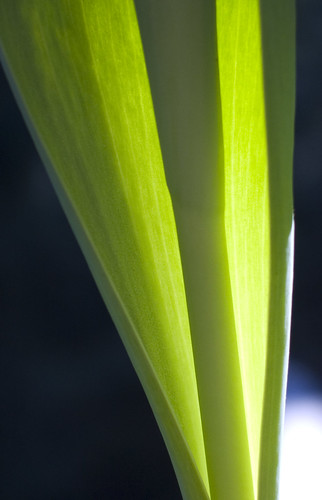
    Tulip-5


  • on destruction

    The role of destruction, and of the working out of polarities, is a subject that has been dealt with an the alchemical tradition for a very long time.  Alchemically, it is understood that the issue you are dealing with, in which you find yourself (the prima materia) MUST go through a process of putrefaction, of fermentation… the individual elements cannot by themselves produce a work of lasting value (a Great Work), but must be destroyed in order to be refined.  The refined elements then have the capacity to ‘marry’ the other elements to form a higher, more integrated, more complex and simple unity which ennobles and embodies the transformation of the worst parts of ‘the matter’.

    All diagnoses are misdiagnoses because they stay at the level of the overt fact, and do not take into account the necessary inclusion of relationshipreversal, and the whole.  The image of the fireweed and the pinecone are examples in nature of the aspect of the Fire element in which destruction is required for new life.  In this sense, the destruction is viewed not as a negative process but as a transformative one, in which the potentials of the lower state are realizable only through their passing away, and indeed, it is their very passing away which creates the space (Air element) into which the potential new state can flow, because room is made for it.

    The same pattern occurs in the human being all the time – we do not transform without the heat of the Fire, also known as the Will – but not a will directed towards a specific absolute (an Earth), but what is known as an ‘open will’, which is just the part which maintains itself by transforming itself through its own death into a new state…

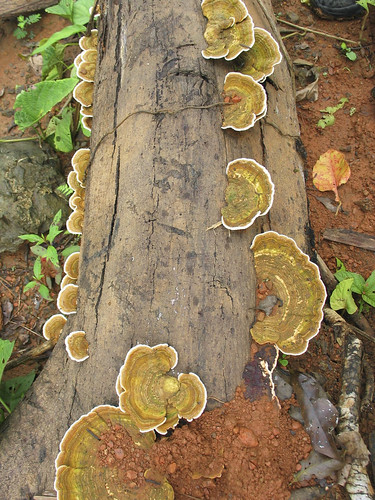
    20050601-img_3750