It's Elemental

Tag: Philosophy

  • Toward an Aesthetic Epistemology – Slideshow Overview

    Toward an Aesthetic Epistemology – Slideshow Overview

    In February 2014 I successfully defended my PhD dissertation, titled “Toward an Aesthetic Epistemology: Transforming Thinking through Cybernetic Epistemology and Anthroposophy.”

    The following is the abstract and a slideshow presentation that pulls out the crux of my arguments.

    Abstract

    The complexity, subtlety, interlinking, and scale of many problems faced individually and collectively in today’s rapidly changing world requires an epistemology—a way of thinking about our knowing—capable of facilitating new kinds of responses that avoid recapitulation of old ways of thinking and living. Epistemology, which implicitly provides the basis for engagement with the world via the fundamental act of distinction, must therefore be included as a central facet of any practical attempts at self/world transformation. We need to change how we think, not just what we think. The new epistemology needs to be of a higher order than the source of the problems we face.

    This theoretical, transdisciplinary dissertation argues that such a new epistemology needs to be recursive and process-oriented. This means that the thoughts about thinking that it produces must explicitly follow the patterns of thinking by which those thoughts are generated. The new epistemology is therefore also phenomenological, requiring the development of a reflexivity in thinking that recursively links across two levels of order—between content and process. The result is an epistemology that is of (and for) the whole human being. It is an enacted (will-imbued) and aesthetic (feeling-permeated) epistemology (thinking-penetrated) that is sensitive to and integrative of material, soul, and spiritual aspects of ourselves and our world. I call this kind of epistemology aesthetic, because its primary characteristic is found in the phenomenological, mutually fructifying and transformative marriage between the capacity for thinking and the capacity for feeling.

    Its foundations are brought forward through the confluence of multiple domains: cybernetic epistemology, the esoteric epistemology of anthroposophy (the spiritual science of Rudolf Steiner), and the philosophy of the implicit as developed by Eugene Gendlin.

    The practice of aesthetic epistemology opens new phenomenal domains of experience, shedding light on relations between ontology and epistemology, mind and body, logic and thinking, as well as on the formation (and transformation) of identity, the immanence of thinking in world-processes, the existence of different types of logic, and the nature of beings, of objects, and most importantly of thinking itself and its relationship to spirit.

    Keywords: anthroposophy, autopoiesis, cognition, cybernetic epistemology, distinction, epistemology, esotericism, logic, recursion, Rudolf Steiner, second-order cybernetics, spirituality, thinking

    Slideshow

    thetaPlease note that Slideshare translated the Greek letter Theta into the letter Q. This is unfortunate, because I used the Greek letter for its geometric shape, pictured correctly at left.

  • Embracing the paradox of Being: A relational view of epistemology, ontology, logic and difference.

    Embracing the paradox of Being: A relational view of epistemology, ontology, logic and difference.

    Let’s get right to it, shall we?

    With respect to ontology, let us say that there is no “it,” no independent reality that is exclusive of the observer.  This is a basic insight from second-order cybernetics: the observer must always be included in the observed.  Despite this, of course, we do have much talk and thinking about “it” that does not take the observer into account—we are very interested in the “what” of the universe, but have a fairly difficult time illuminating our own nature.  But this is okay, because ultimately the talk about “it,” the pointing to “it,” (not the thought of the “it” itself) is more fundamental to “it” than anything else, because it is the relations that are primary.  We can say that thingness is a subset of relatedness.  Following Eugene Gendlin’s (1997, p. 22) process-concept of “interaction-first,” we can conceive of relations not as forming between two already-existing “things,” but rather as being recursively self-generated between other relations.  In this sense, things are the precipitate of relations, a hardening out of a more fluid state.

    Elemental Cycle

    Going further than Gendlin, we can take a cue from the process-language of alchemy (Miller, 2008) to see how relations themselves are a precipitate of the tension between complementarily opposing potentials, made by a distinction out of the whole.  This corresponds to the recursive ontological alchemical sequencing of the elements from Fire (the whole) to Air (polarity) to Water (relation) to Earth (thing), to Fire (a new, transformed whole).  Relations are to opposing potentials of a distinction as things are to relations.  Opposing potentials are themselves a precipitate of the whole by virtue of distinction (of Fire by Fire), and work alongside each other within the whole simultaneously.  Each step from the whole is a kind of step-down transformation; ontologically we could say that beginning with level N, we move to level N-1.  Each level is pulled out of simultaneity by an act of distinction within the whole, of the whole, by the whole.  A cascading of levels of distinction thus yields the ontology of “things.” (more…)

  • First and Second-Order Epistemologies

    First and Second-Order Epistemologies

    Gregory Bateson (1991) famously said that we “cannot claim to have no epistemology. Those who so claim have nothing but a bad epistemology” (p. 178).  Bateson is calling for self-reflection in our epistemology.  He wants it to be recursive, so that in our production of knowledge we do not delude ourselves into thinking that the means of production is independent of what is produced.  Bradford Keeney, cybernetic epistemologist, family therapist, modern day New Orleans-style shaman, and student of Gregory Bateson, notes that recursive epistemology has roots in second-order cybernetics and the recognition (1983) that “any distinction drawn is drawn by an observer. … An observer observes by drawing distinctions. … The starting point of epistemology is therefore an observer drawing distinctions in order to observe” (p. 24). This leads us to a fundamental recursion or non-linearity at the very start of any epistemological endeavor. While non-recursive epistemologies try to mitigate this kind of loopiness, cybernetic epistemology embraces it as the very heart of knowing, using it as a creative generator of change and transformation. Working with a non-lineal epistemology leads to a different kind of knowing, one which “emphasizes ecology, relationship, and whole systems. In contrast to lineal epistemology, it is attuned to interrelation, complexity, and context” (Keeney, 1983, p. 107).

    The consequences of lacking a self-reflexive epistemology are dire, leading to real practical and ethical dilemmas.  The structure of the sequence often goes something like this:

    • Knowledge is produced on the basis of a non-reflexive epistemology (Bateson’s “bad” epistemology). Ex: You performed an act found to be illegal.
    • The knowledge produced is thus assumed to be “objective” and “true” (i.e. independent of the means of its production; ignorant of its genesis). Ex: It doesn’t really matter why you did what you did, you are beholden to the law as written.
    • This tends to have a psychologically limiting effect with respect to alternative knowledge and especially alternative modes of knowledge production.  One’s viewpoint becomes ossified. Ex: The judicial system limits its treatment of you as a whole human being only to what is allowable within the strictures that the law defines. You become identified with your act.
    • The unreflective assumption of the “truth” of the knowledge becomes justification for its projection, often forcefully, onto other people and processes in the environments surrounding the knower.  A sense of conviction that the world is “like this” leads to inflexible protocols in our institutions and in our modes of interaction with others.  In other words, outer processes are also ossified; they become sclerotic. Ex: Now, instead of being a whole human being who with a completely full and complex life that included the illegal act, your identity shifts to that of a criminal. Your identity shifts, and you are now identified with the label “criminal,” and the judicial system creates places called prisons designed largely to maintain this distinction of your new identity.

    The unintended effects of this kind of lineal process knowledge production could fill multiple volumes, from the most subtle aspects of daily life to world-historical events. But recursive epistemology is not in opposition to lineal epistemology; it is rather meant to be a way of maintaining complexity and subtlety (and ideally, wisdom) by calibrating the linearity of standard epistemological practices through higher-order recursion.

    Calibration and Self-Calibration.

    But what does it mean to have a self-reflexive epistemology?  The difference between the two types of epistemologies, non-self-relfexive and self-reflexive, can be described by the first and second order difference.  A non-self-reflexive epistemology is a first-order epistemology, a process of creating knowledge that operates in a linear fashion.  The knowledge it generates is not explicitly connected to the process of its generation, and thus does not act as a potential corrective to its mode of production.  Epistemology is a tool for knowing; but with a non-self-reflexive epistemology, the tool’s operation does not change the tool, so that no matter what job it is called to do, it re-instances any new creations in the manner and style of its past processes—regardless of what might be new in the situation it encounters.  The kind of newness that comes from a linear epistemology is (more…)

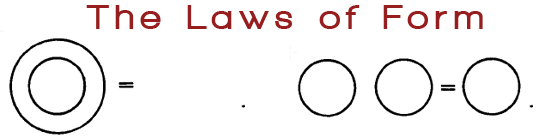
  • An Esoteric Guide to Spencer Brown’s Laws of Form #5

    An Esoteric Guide to Spencer Brown’s Laws of Form #5

    (New readers will want to start with the first installment.)

    We ended the last installment with a recognition that the Laws of Form naturally led GSB to an understanding of both the necessity and importance of the realm of imaginary numbers.  We will continue this elaboration.

    You are likely familiar with the paradoxical sentence: “This sentence is false.”  Is it false or true?  The answer is yes, and it depends on when you ask me.  It was this kind of paradox that drove Russell and Whitehead into creating their Theory of Logical Types, which was designed specifically to prevent this kind of thing from simply ever coming up in the first place.  GSB is not so limited, and understands the importance of formally including paradox in his calculus.  So how does he deal with this?

    He points out that we are driven to a higher order of logic, one that includes re-entry. In the first Esalen lecture, GSB states that (more…)

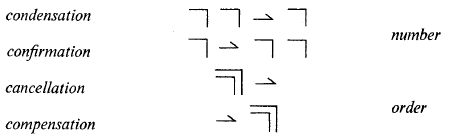
  • An Esoteric Guide to Spencer Brown’s Laws of Form #4

    An Esoteric Guide to Spencer Brown’s Laws of Form #4

    (New readers will want to start with the first installment.)

    We ended the last installment having come to realize something of the esoteric significance of the taijitu, or yin-yang, form, in something of an extended tangent. We return now to the text.

    GSB himself seemed to understand the importance of the Laws of Form, even if there were some of these more subtle specifics which were not apparent to him (or at least which he did not explicitly recognize).  Having reached this point (literally we are still on page 1 of LoF), the vast majority of the rest of the work in LoF is seen to be secondary.  Yet there are many valuable indications which deserve connection to esoteric principles, and the point of this exploration is to show that such connections are not arbitrary. So, to return to the actual content of LoF now, after this long but foundational detour, we can note that he says:

    LoF p. 5

    • Let any token [of the mark] be intended as an instruction to cross the boundary of the first distinction.

    That is, every mark is an invitation to cross it; every distinction is a call to make that distinction, not to simply point it out, but also to DO it, to MAKE the distinction.  In other words, the whole thing is ACTIVE, not passive, it is not descriptive but PRESCRIPTIVE.  Of course, the esoteric significance of this should be obvious, because precisely what distinguishes esoteric work from, say, philosophy or other disciplines, is (more…)

  • Musings on Paleolithic Art and Consciousness

    Musings on Paleolithic Art and Consciousness


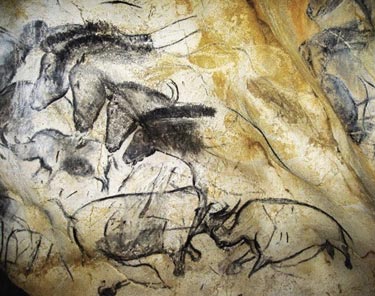
    Paleolithic Art 1
    Paleolithic Art 1

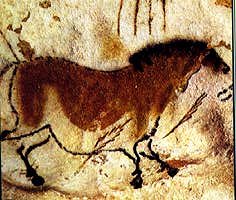
    I’m actually somewhat uncomfortable calling Paleolithic renderings “art” – not because they don’t meet some standard set of criterion, but because of the very nature of the ‘calling’ itself seems to go against the experience of the makers of the art.  See, there again, an assumption: “the makers of the art”, which includes a dichotomy between the producer and the produced.  Our modern language is so full of this type of construction that it is almost impossible to get away from, or to recognize its influence on the content and method of our thinking – which is particularly problematic (at least if unrecognized) when we attempt to consider something like the inner experience of the people in the cultures which produced the images on the rock walls so long ago.

    Paleolithic Art 2
    Paleolithic Art 2

    Van James, in his book Spirit and Art, paints a picture (in the consciousness of the reader) of the process by which the art was created, including its cultural context, indicating that it had to do with a shift from participatory consciousness to one that had the seeds of self-recognition, and thus self-abstraction, as an essential component.   I find this interesting because many artists throughout history, including today, mention something about the way in which one gets lost in the process of creating.  This experience of the space between “me” and “my art” asymptotically approaches zero, leaving the artist with an experience of creation without “A” creator.  Only retrospectively may an artist whose creating occurs in this state attribute the work rationally to some specific time period, place, and personality; but this knowledge does not need to be held in consciousness during the actual process of creation itself, and (as many artists know) may actively interfere with what might otherwise be brought forth.

    Paleolithic Art 3
    Paleolithic Art 3

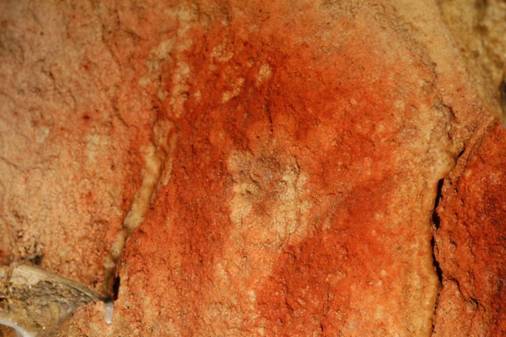
    So I wonder if this experience – or LACK of experience, as the case may be – which characterizes some part of the process of artistic creation even today, may be something that was the ‘cutting edge’ of consciousness in the Paleolithic period.  Jean Gebser’s “magic structure” (cf. The Everpresent Origin) speaks of this in a way similar to that of Van James, indicating that the art of this period was indicative of human beings waking up to themselves.  Before this stage, (Gebser’s “archaic”), it is not possible to really speak of art at all, of creations “of” humans, because the consciousness was in identity with the world.  It is only by transitioning to a consciousness of “unity” that art even becomes possible, because in “unity” is already contained the indication of multiplicity, as multiplicity is required in order for unity to be brought about (otherwise one simply has identity).  Thus Paleolithic art may exemplify this transition in consciousness from identity to unity, which gives expression to sensory and magical experience in a form that takes this experience even further, strengthening it recursively through the very act of its creation.  The painting of animals, of human figures, and of stenciled human hands may serve as a ‘catch’ for consciousness, by which it can step outside its mode of identity (akin to dreamless sleep) and into a mode which recognizes the beginning of division between the human being and the world (akin to dreaming sleep).

    Paleolithic Art hand
    Paleolithic Art hand

    So perhaps the pictures of animals and such on the cave walls are not really pictures “of”, but are rather more like techniques for transforming consciousness.  We moderns are taught to pay more attention to things rather than processes, so we tend to see the results of some activity as the most important ‘thing’ to consider, i.e. the art itself.  But maybe this was not always the case; maybe Paleolithic art was ‘something’ primarily in its making, in the process of its unfolding (such as in Tibetan sand mandalas, or Native American healing mandalas), and not so much in its product, the image on the wall.  But, recursively, the production of the images may lead one who views it but does not create it, into a different space of consciousness – a space which invites both a ‘connection to’ and a ‘disconnection from’ at the same time.  Maybe the Paleolithic viewer of Paleolithic art was both put into connection with the cultural significance of the art in an experience of magical unity with the forces identified by the culture, while also being called to experience the art in a way that called forth something from within that necessitated a concurrent experience of the without.  The very experience of one’s unity with the world perhaps awakened the first seeds of dis-unity, of separation between what would eventually be one’s “self” and “the world”.


  • Rudolf Steiner and Sri Aurobindo: A Beginning Comparison

    Rudolf Steiner and Sri Aurobindo: A Beginning Comparison

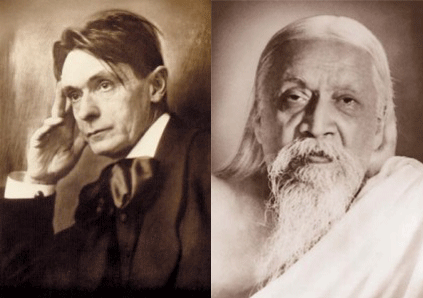
    Rudolf Steiner
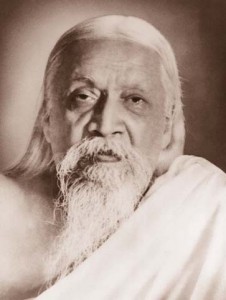
    Sri Aurobindo

    A cursory Google search (2009) didn’t turn up anything promising in regards to comparing Rudolf Steiner and Sri Aurobindo.  Hopefully this will help:

    Rudolf Steiner and Sri Aurobindo: A Beginning Comparison

    Summary:

    This longer essay summarizes the basic elements of the spiritual-cosmological worldviews of two of the most important modern, integrative spiritual thinkers: Rudolf Steiner and Sri Aurobindo. Upon this foundation a brief comparison is made between the two systems and the two men.

    See more of my work in the Articles Section of Elements.SpiritAlchemy.com.

    Special note:

    Thanks to John Elwyn Kimber for pointing me to this webpage where Pavitra, a disciple of Sri Aurobindo, records her meetings with him (see pages 4 and 5 specifically).  Pavitra and Aurobindo both say that they know some theosophists, and know of Steiner, and by Aurobindo’s responses I get the sense that he at least knew something about Steiner specifically.  However, it seems that he is being treated primarily in the same vein as theosophy (which would make sense from the “outside”), and the references are pretty quick so there is no way to gauge from this site how deeply familiar he was with Steiner specifically, but it is good to have confirmation that he at least knew of him.  Also in this text, Aurobindo states his sense that his vital plane corresponds with the theosophical astral plane, and gives his general impression of theosophy.