It's Elemental

Tag: Edgar Morin

  • Patterns in Process: Transdisciplinarity as a Background for Working with the Elemental Cycle of Transformation

    Patterns in Process: Transdisciplinarity as a Background for Working with the Elemental Cycle of Transformation

    Elemental Cycle Abstract

    This essay outlines connections between the Elemental Cycle as an archetype of transformation, transdisciplinarity, and  cybernetics.  A number of questions are addressed: the nature and importance of connecting these fields, an examination of resources and the dominant disciplinary discourses for the associated fields, and a critical examination of my assumptions, beliefs, and position.

    Introduction

    How often do we find ourselves in a position of not being able to see something unless it is first pointed out to us?  This happens all the time with the visual and other physical senses, but of course also occurs in our thinking; certain concepts seem to hide in plain sight, and unless we are cued into where and how to look for (or to think about) them, they slide on by as a part of the undifferentiated background of conceptual life.  Usually we are introduced to these sorts of concepts just like we are to new people, through a third party who is already familiar with each of us: “Seth, I’d like you to meet Recursion; Recursion, this is Seth.”  Often with this sort of introduction comes an experience: “Oh hello Recursion!  You know, I feel like you must hang out at some of the same coffee-shops as I do, but we’ve never been formally introduced.”  And so a relationship begins with a concept, and just as with human beings, you can become more intimate and familiar, get into fights, seek new levels of understanding, and go on adventures. (more…)

  • Water through transdisciplinarity and alchemy

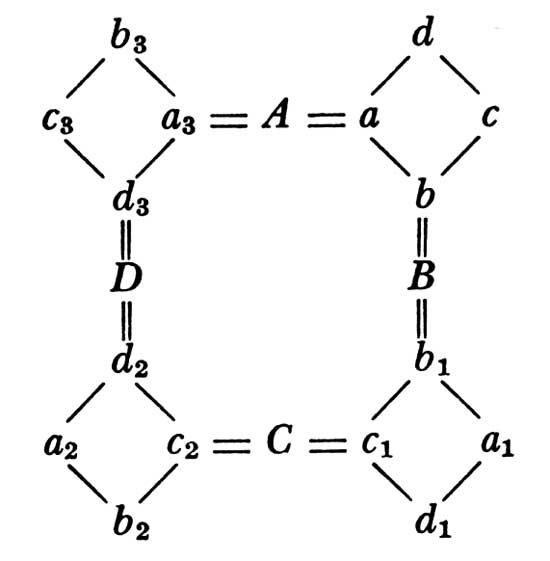
    Edgar Morin, who calls for a transdisciplinary way of thinking, wrote an amazing short essay entitled “A New Way of Thinking”. (A New Way of Thinking.pdf)  One of the principles of this new way of thinking involves recognizing that wholes and parts are mutually interactive:  “properties emerge from the organization of a whole and may have a retroactive effect on the parts”  

    Liquid dreamConsider water.  Water is commonly thought to be the simple combination of two hydrogen atoms with an oxygen atom.  We say “H2O” like we know exactly what we mean, and usually what we mean is something like H2O = H + H + O.  

    But this way of thinking is wrong; something fundamental is missing from this thinking.  We cannot conceive of water as a simple addition, because in the process of coming together, the very nature of the individual pieces is changed.  

    A hydrogen atom in a water molecule is NOT THE SAME as a hydrogen atom in isolation.  It’s very structure changes, precisely because it is now in a relationship, or rather, we could say, a continual process of relating, and this relational process has consequences for both the hydrogen and the oxygen (and the other hydrogen!).  

    “Water” is thus a picture of a certain ongoing relationship between hydrogen and oxygen in a complex way.  The emergent properties of water coincidently retroact on the process of this relation.  The properties of water are both more and less than the sum of the individual parts.   

    An alchemical understanding of water jives with this understanding from the realm of transdisciplinarity.  Water, alchemically, can be considered “process”.  It is the substantive manifestation of the principle of relation.  The alchemists understood that relationship always had a transformative effect, whether on a physical substance or a soul-substance.   

    Dissolution was thus a phase of the Great Work; the bringing together of disparate elements via a liquid phase served to lessen the tendency to interpret the individual elements individually, as separate and isolated bits.  This occurs through the careful application of heat.  This ‘phase-transition’ set the stage for a further transformation, in which substances dissolved in solution could be further refined through an additional application of warmth, driving off the more volatile substances that were invisibly suspended in solution, while simultaneously the less volatiles substances precipitated out of solution and became an ash, which itself had to be purified so it could later come back into a completely new relationship with the volitalized elements.  

    Alchemy embodied the holographic principles held as foundations for transdisciplinarity by Morin: the whole in the part, the part in the whole, with retroactive effects and emergent effects as a consequence.