It's Elemental

Tag: dreaming

  • Sleep, Dreams and Video Games

    Sleep, Dreams and Video Games

    How you use your attention in waking life has definite effects in your dreaming life.  The following is my distillation of some insights from anthroposophy in this regard, which I offer as one way of looking at this phenomenon, specifically around the issue of video games and dreaming.  This post should provide an appropriate background if necessary.

    If people are comfortable with the terms, we can talk about how the astral body (the subtle body that allows something outside to become something for us inwardly; i.e. the sense-body, which we share with animals) gains its content in large part by reflecting itself off of the etheric body (the less subtle body that keeps your body from becoming a corpse, which we share with the plant realm).

    When you spend hours of time focusing your senses on particular stimuli (i.e. a video game) your are patterning your etheric body through physiological repetitions: the movements of your eyes, hands, breathing, etc., and more importantly in the endocrine responses and other physiological changes that go along with the particular game experience.  Knowing why this is important needs a little background first.

    xbox-360-controller

    When you go to sleep, and you are no longer imposing your astral body on your etheric (i.e. choosing where to direct your attention and what sensations you will seek and avoid) your etheric body starts to (more…)
  • Levels of Dreaming and the Makeup of the Human Being: The Spiritual Ontology of Dreams

    Levels of Dreaming and the Makeup of the Human Being: The Spiritual Ontology of Dreams

    By Seth Miller

    Full PDF

    DreamerEveryone dreams, but few people find sufficient interest in their dreams to move beyond mere curiosity at their strange contents.  Even many who work with dreams as a part of a transformative practice usually concentrate on their content, and only more rarely question their form, ontology, and origins. Exploring these aspects, however, can help provide a context that helps orient dreamers to some of the esoteric underpinnings of dream etiology (their meaningful origins), and can help enliven dream-based transformative practices. This article is an attempt to show how a spiritually-oriented understanding of the makeup of the human being gives a context for understanding different types of dreams, their origins, and some associated consequences for dreamwork.

    The language of spiritual science, also called anthroposophy (human wisdom) will be of help in this endeavor, because it maintains its cogency across multiple phenomenal realms (such as those of sleeping and waking), and because it has as its aim the ability to make clear and coherent processes which work within the physical realm but have their source beyond it, in the spiritual worlds.  Fundamental anthroposophical terminology will not be explained in this article for reasons of space, and neither will the basic anthroposophical view of dreaming in general.  For a brief introduction, I highly recommend that readers peruse this article: Sleep and Dreams in Anthroposophy, which provides the context (more…)

  • Inception: Dreams, Waking, and Epistemology

    Inception: Dreams, Waking, and Epistemology

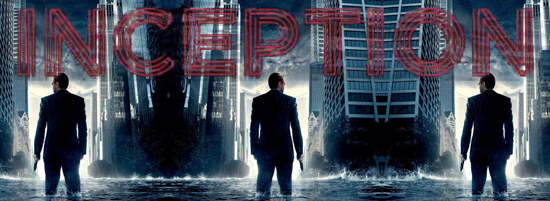
    inception-movie
    The movie Inception is the best “question reality” movie since the Matrix (ultimately the Matrix is better, in my opinion), and it raises many fascinating questions having to do with the differences between the two primary states of consciousness available to humans today: waking and dreaming.

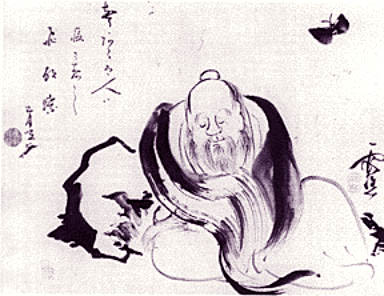
    This issue has been around for about as long as recorded history, and has formed a central piece of some very detailed philosophical considerations.  It shows up in the 4th Century B.C.E. in the famous Taoist Zuangzi’s “butterfly dream”:

    Butterfly-Dream_Zhuangzi“Once Zhuangzi dreamt he was a butterfly, a butterfly flitting and fluttering around, happy with himself and doing as he pleased. He didn’t know he was Zhuangzi. Suddenly he woke up and there he was, solid and unmistakable Zhuangzi. But he didn’t know if he was Zhuangzi who had dreamt he was a butterfly, or a butterfly dreaming he was Zhuangzi. Between Zhuangzi and a butterfly there must be some distinction! This is called the Transformation of Things.”

    It also forms a central part of Indian philosophy, especially advaita vedanta,  which explores cosmological questions through the exploration of (more…)