Maybe you’ve had this experience: You are thinking about an acquaintance that you haven’t thought about in a long time and at that moment the phone rings. “What are the odds that it’s Jerry?” you think to yourself. And when it IS Jerry on the other line it seems somehow magical, amazing, beyond mere chance. Was this ‘just’ a coincidence, or is there something meaningful about this admittedly unusual event? Hopefully this is something you’ve wondered about before. The whole ‘coincidence’ thing is a fascinating realm to explore, and how we address it says much about our paradigm. What is interesting to me is the debate, such as it is(‘nt), between those who have a mathematical/statistical approach and those who have a spiritual approach (not that these are the only two camps, just that they represent a the major polarity).
 For an excellent presentation of ideas about this very issue, listen to this RadioLab episode: Stochasticity. (If you have never met RadioLab before, you’re in for a treat!)
A mathematician will look at coincidence and point out how most people that find meaning in coincidence fail to understand the vastness of the potential field of events. In such a large set, not only is it not strange that coincidences occur, it is inevitable that they do; just a consequence of the numbers, nothing ‘special’.
But of course this completely misses the undeniable reality that such events ARE special by virtue of the fact that we actually experience them as such. What strikes me as unfortunately bizarre is that these two views, “just the numbers”/”full of meaning”, are CONTRASTED, when they are (obviously, it seems to me) complementary.
 I would agree with the mathy people that such events are bound to occur, and that it is easily possible to overstate the importance of coincidences in a psychological sense. In other words, we should be careful with how we subjectively responds to coincidences; we should never let coincidence substitute for other means of addressing a phenomenon, such as rational thinking, heart-sense, discussion with friends, etc.; it should ADD to those other means.
I would also agree with the ‘meaning’ people that just because coincidences are inevitable (which is kind of funny, given the meaning of the terms), does NOT provide a sufficient basis for discarding any potential meaning that such events might have. Humans are meaning-making creatures. We can choose to make the meaning of a coincidence “this coincidence is meaningless” or we can make any other meaning from it. In fact, the very stochastic nature of coincidences is a solid reason why we SHOULD ‘use’ them to make meaning.
 Take pendulum work, a popular modern divination technique. Here too we are looking at a stochastic system, which can vary within certain parameters… but the parameters are too delicate to be able to precisely control or predict, which is the point. Tiny hand tremors, gusts of wind, the rhythm of the pulse, and so forth, all can have effects on the non-linear motion of a pendulum. The fact that stochastic and physical processes underly and limit its potential motions (pendulums don’t usually point against gravity, for example) does not mean that the system is meaningless, because we–the human beings, meaning-makers–are always a part of the system. And this is the WHOLE POINT of divination, pendulums, and so forth: the taking of a stochastic process of sufficient simplicity and complexity that we can USE it to make meaning. Would any system of divination use a relatively non-variant process as its base? Not a chance. Systems in which differences can be maximized with little effort and within strict boundaries work best. With too few options the lack of variation doesn’t mesh well with the lived complexity of our experiences, (with the limiting case being a completely repetitive system that only gives one result, ex: “Will this rock fall upwards or downwards when released?”), while with too many options it becomes difficult to “find” meaning because we lose the basis for distinguishing between different states (too much ‘gray’ area, when the whole point of these kinds of techniques is to exit with some kind of new direction or idea that is clearly distinguishable from other options).
 Does all this mean that the meaning made is “really” meaningless? NO. This is the point that the mathy people don’t quite get, because they discount the OTHER processes (which they generally know next to nothing about) which are involved in meaning making. Such processes, which are VERY difficult to get a hold of (in my view because these processes involve more than what can be accounted for by manipulation of the physical world), are sacrificed on the alter of what can be held in the Mind of Reason.
It makes complete sense for humans to use stochastic systems as the basis for meaning-making, because they have just the right features to allow the meaning-making parts of ourselves to activate. Imagination, the capacity to think “what if…?”, and a heightened sensitivity to difference all accompany the emotional and mental ‘opening up’ that is a central aspect of any transformation.
The issue about this kind of thing usually rests in the term “really”. Is coincidence “really” meaningless, or “really” meaningful? In other words, the question is usually taken ontologically, rather than epistemologically (it’s much simpler to think ontologically, hence psychological “projection”, while contrastingly the process of individuation has strong epistemic roots).
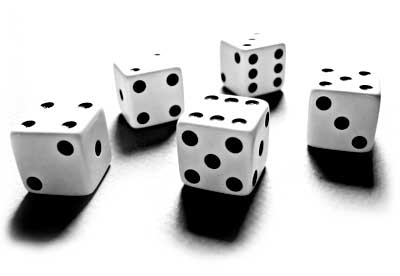 However, in regards to the ontological aspect of coincidence, it is simply not possible to “objectively” gather, using conventional means, an “answer”. The stochastic nature of the physical processes means that no individual coincidence can be actually predicted. Given a particular well-defined system, the fact that a certain individual coincidence willeventually occur with a specific probability can be known, but NOT when that coincidence will occur. The whole thing is very ‘quantum’ in this respect; there is always some inherent “fuzziness” beyond which we cannot penetrate directly, forcing us to rely upon stochastic (and other) techniques. This is precisely where the human being can enter the picture (“other techniques”), helping fill the gap that is left by the math, calling forth from us aspects of ourselves that prime us for change. As long as we don’t rely upon the techniques as substitutes for what otherwise requires harder thinking, they have a place. It is just as much a mistake to reify the meaning of such a system as it is its meaninglessness, ontologically speaking. If I throw some bones and then say “This is God’s Word for me”, and then psychologically close down all other options, I’m probably missing something, but if I use it to enhance the subtlety of my own meaning-making process, taking the ‘signs’ as spurs for my own development in the wider context of all the other meaning-making processes at work, then things probably won’t get out of hand.
Now, just because I am dodging the ontological question here doesn’t mean there is no ontological basis for “meaningful coincidence”. I’m just stating that (in my opinion) the vast majority of human beings don’t have access to the necessary capacities that would make this ontology available to consciousness; not that it can’t be. But my sense is that for those few individuals for whom such a capacity is awakened, it is precisely the divinatory techniques that are first abandoned, because much more direct (spiritual) routes to meaning-making are then available. In Steiner’s terminology this would be a transformation from Imagination to Inspiration and Intuition.
Coincidences can be BOTH stochastically necessary AND meaningful, in the full senses of both those terms.
