It's Elemental

Tag: Alchemy

  • Bifurcations, Chaos Theory, and Alchemy — oh, and YOUR LIVER

    Bifurcations, Chaos Theory, and Alchemy — oh, and YOUR LIVER

    Bifurcations are “splits” in the way a system develops from one state to the next.  Think of them as two roads diverging in a yellow wood; one leads to some unknown mystery.  The other leads to MILKSHAKES (stay tuned).

    My understanding is that bifurcations are always relative (did that paradox slip by you?); depending upon how you look at the system you my find quite ‘steady’ states, or at least steady states within limits (which are generally set by the way you look at the system).  Take a different look from a different perspective and you might find bifurcations going on at a different level while some OTHER level maintains its steadiness.  This is the whole “order is maintained through change” and “change is maintained by order” song and dance. (Not familiar? Welcome to CYBERNETICS.)

    Usually bifurcations occur when energy from ‘outside’ is introduced into the system.  Bifurcations don’t occur just because “time passes”, but that as time passes you typically get changes in the amount of energy available for a system.  The usual channels by which order is maintained through lower-level change can no longer handle the energy in the same old way… leading to a bifurcation where multiple new possible states result (but quite notably, NOT the ‘old state’–at least as far as I’m aware… Input anyone? Anyone? Beuller?).  But those new states are usually less stable and more sensitive to changes in energy or initial conditions; drive the energy up even a little more and you get bifurcations of the bifurcations… and so on.  But then, WHAM!  More and more and more chaos produces… not more chaos, but suddenly ORDER… a very FEW possible states that sort of ‘collapse’ all the previous activity into a limited set of possibilities.  WEIRD.  The upshot? Add energy/action/motivation/enthusiasm/motion to a system and things can get a lot more interesting… and FAST.  You know this because you have some friend who always takes things one step too far at parties.

    by Garrick Besterwitch

    Now this does not describe all chaotic systems, at least as far as I am aware, but does give a good picture of how chaotic systems can evolve in general.  Now a friend of mine was wondering (he’s not a normal guy; he’s WAY cooler, you can tell because his name is SNAKE) whether humanity as a whole is wasting a lot of time thinking about transforming when we should just take a cue from the caterpillar, who sets up a chrysalis and can just hang out, because transformation is just going to HAPPEN, without having to do anything to produce it.  Despite the fact that this is something of a bastardization of his point, it serves my purpose here.

    Now it would be nice if we could just sit back and watch humanity transform like a caterpillar into a beautiful soaring butterfly… but more likely if we sat back to watch the show we’d end up with some kind of oozing slime-mold, or “Twilight“.  Ummm, I could be wrong about the slime-mold thing, they are actually pretty awesome.  The POINT is that a caterpillar changing into a butterfly takes a LOT of energy; it’s not a ‘quiet, relaxing period’… but one where the caterpillar more or less EATS ITSELF (“Ouroboros, table for two, I mean one?”).  Have you ever tried to digest yourself?  Well you do every day.  Eat a big lunch and get the afternoon sleepies because your liver just got slammed with an order to break down a milkshake so it doesn’t end up in your blood, clogging your arteries. “Too much to do here!” says your liver to your consciousness. “You need to get outta here cause you are holding up my work.”  Zzzzzzzzzzzzzz.

    From your perspective you didn’t have to “do” anything to digest your lunch.  But on a systemic level we are talking serious amounts of activity… it’s just that the activity is occurring on the basis of processes that are not readily available to your consciousness (even if you remained awake).  The system as a whole is changing its state — bifurcating, if you will — because 720 calories of ice cream is a LOT of energy, which drives the system from its previous ‘steady’ state.

    Now we can eat milkshakes for lunch (for the record, I have… okay DEFINITELY done this before) and have the systemic relationships activate which result in our loss of ability to influence the system effectively, or to even be aware of where it is headed… Or we can maybe snack on some almonds (or at least eat a reasonable meal–from your liver’s perspective; THINK OF YOUR LIVER!!!) and help steer the context towards one that can more robustly handle the higher-level situations (boss yelling at you, papers to write, world peace and such), which you can’t do very well when your consciousness gets kicked out by your much more powerful digestive processes.

    There is some sort of dynamic harmony (not really BALANCE, which is too static) here; you need enough energy to keep the system from stagnation and ossification, but not too much energy that you drive it too fast, yielding bifurcations too quickly (cancer), which pushes the system into a new steady state by virtue of undesirable transformation (death).
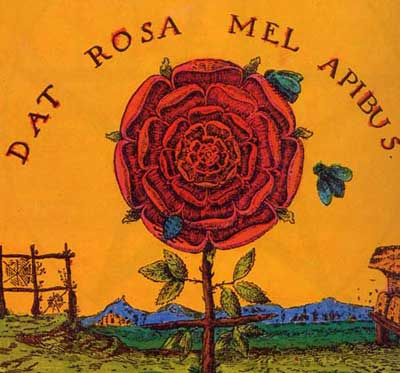
    As the Rosicrucians were fully aware, you can’t avoid death, BUT YOU CAN DIE BEFORE YOU DIE.  By consciously approaching these processes (rather than them approaching you–too late!), they discovered that we could have ‘little deaths’ that allow us to experience the world in a more engaged and subtle and effectively wise way.  This was a form of conscious suffering.

    And these sorts of processes DID have some order.  There were various stages, and it was VITALLY important not do to things out of order; this could ruin the whole work.  Alchemists discovered quite a few different processes (every “stage” is really a process), but to boil it all down and oversimplify it you have something like this:

    1) Undifferentiated unity (prima materia
    2) Differentiation into parts 
    3) Purification of parts 
    4) Integration of parts into a new unity (what I call a “differentiated unity”)

    And all of THAT can be summed up in one nice Greek word (perhaps coined by Paracelsus): Spagyrics, from spao, to tear open, + ageiro, to collect.

    So in terms of alchemical processes, the WHOLE THING can be understood as a big cycle of taking apart and putting together, with the purification of the parts implied by the fact that they can be put back together again.  Thus, at the very least, this is the most important and significant ‘order’ to any alchemical process.  All the other sub-processes are, shall we say, bifurcations of this large gesture into smaller and smaller sub-cycles.
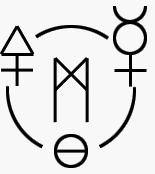
    Now if you want to get real alchemical about it, it might be worth pointing out that there were three basic ‘gestures’, which was another way to understand this process.  They were called Salt, Sulfur, and Mercury.

    The Salt corresponds to the taking apart, the Mercury to the purification, and the Sulfur to the re-integration.  You’ll find these three processes ALL OVER alchemy, precisely because they represent the WHOLE WORK.  These three physical substances exhibited properties–really qualitative transformations, which we usually call ‘processes’ because we like to think we are scientific–which embodied in the material realm the qualities that were found to describe essentially ANY transformation, and came to stand for the higher-level ‘gesture’ of a three-fold transformation of unity into unity.

    Simple, huh?

  • alchemical shirts…  because I can

    alchemical shirts… because I can

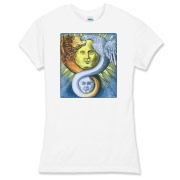
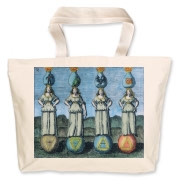
    There’s something amazing about alchemical imagery. Deep spiritual symbolism, specific practical advice about transformation, archetypal aspects, meditative visualizations, and esoteric mysteries can exist together all in ONE image. For how many other works of art can the same be said?

    In my opinion there is not enough alchemical imagery out in public on display, so to help remedy that situation I have made up some alchemical t-shirts and other products. Wear ’em and strike up a conversation about something unusual and profound.


  • Cybernetics of Cybernetics Button

    Cybernetics of Cybernetics Button

    I made this button for all those people out there who want to keep complexity complex, who understand that feedback is the name of the game, and that the main rule of the game is that the rules must continually be modified.  If you know about Calvinball, you know what I’m talking about: a recursive looping, a complex manifestation of manifestation, a new way of knowing, and a new way of knowing about knowing, which happens to be very, very old.


  • Rudolf Steiner and Sri Aurobindo: A Beginning Comparison

    Rudolf Steiner and Sri Aurobindo: A Beginning Comparison

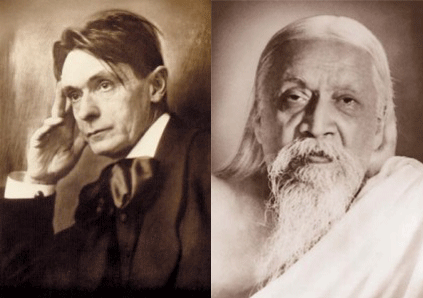
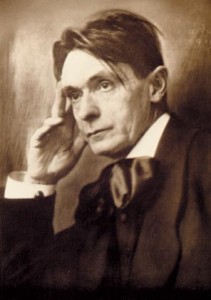
    Rudolf Steiner
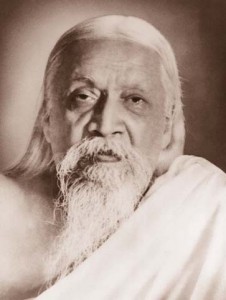
    Sri Aurobindo

    A cursory Google search (2009) didn’t turn up anything promising in regards to comparing Rudolf Steiner and Sri Aurobindo.  Hopefully this will help:

    Rudolf Steiner and Sri Aurobindo: A Beginning Comparison

    Summary:

    This longer essay summarizes the basic elements of the spiritual-cosmological worldviews of two of the most important modern, integrative spiritual thinkers: Rudolf Steiner and Sri Aurobindo. Upon this foundation a brief comparison is made between the two systems and the two men.

    See more of my work in the Articles Section of Elements.SpiritAlchemy.com.

    Special note:

    Thanks to John Elwyn Kimber for pointing me to this webpage where Pavitra, a disciple of Sri Aurobindo, records her meetings with him (see pages 4 and 5 specifically).  Pavitra and Aurobindo both say that they know some theosophists, and know of Steiner, and by Aurobindo’s responses I get the sense that he at least knew something about Steiner specifically.  However, it seems that he is being treated primarily in the same vein as theosophy (which would make sense from the “outside”), and the references are pretty quick so there is no way to gauge from this site how deeply familiar he was with Steiner specifically, but it is good to have confirmation that he at least knew of him.  Also in this text, Aurobindo states his sense that his vital plane corresponds with the theosophical astral plane, and gives his general impression of theosophy.

  • Water through transdisciplinarity and alchemy

    Edgar Morin, who calls for a transdisciplinary way of thinking, wrote an amazing short essay entitled “A New Way of Thinking”. (A New Way of Thinking.pdf)  One of the principles of this new way of thinking involves recognizing that wholes and parts are mutually interactive:  “properties emerge from the organization of a whole and may have a retroactive effect on the parts”  

    Liquid dreamConsider water.  Water is commonly thought to be the simple combination of two hydrogen atoms with an oxygen atom.  We say “H2O” like we know exactly what we mean, and usually what we mean is something like H2O = H + H + O.  

    But this way of thinking is wrong; something fundamental is missing from this thinking.  We cannot conceive of water as a simple addition, because in the process of coming together, the very nature of the individual pieces is changed.  

    A hydrogen atom in a water molecule is NOT THE SAME as a hydrogen atom in isolation.  It’s very structure changes, precisely because it is now in a relationship, or rather, we could say, a continual process of relating, and this relational process has consequences for both the hydrogen and the oxygen (and the other hydrogen!).  

    “Water” is thus a picture of a certain ongoing relationship between hydrogen and oxygen in a complex way.  The emergent properties of water coincidently retroact on the process of this relation.  The properties of water are both more and less than the sum of the individual parts.   

    An alchemical understanding of water jives with this understanding from the realm of transdisciplinarity.  Water, alchemically, can be considered “process”.  It is the substantive manifestation of the principle of relation.  The alchemists understood that relationship always had a transformative effect, whether on a physical substance or a soul-substance.   

    Dissolution was thus a phase of the Great Work; the bringing together of disparate elements via a liquid phase served to lessen the tendency to interpret the individual elements individually, as separate and isolated bits.  This occurs through the careful application of heat.  This ‘phase-transition’ set the stage for a further transformation, in which substances dissolved in solution could be further refined through an additional application of warmth, driving off the more volatile substances that were invisibly suspended in solution, while simultaneously the less volatiles substances precipitated out of solution and became an ash, which itself had to be purified so it could later come back into a completely new relationship with the volitalized elements.  

    Alchemy embodied the holographic principles held as foundations for transdisciplinarity by Morin: the whole in the part, the part in the whole, with retroactive effects and emergent effects as a consequence. 


  • Alchemy and narcissistic, reproductive, and creative learning

    Alfonso Montuori, one of my professors at CIIS, has identified three styles, or modes, of learning, which he calls the narcissistic, the reproductive, and the creative.

    From his article, The Quest for a New Education, From Oppositional Identities to Creative Inquiry, narcissistic learning is “an approach to education that sees the source of knowledge as inside the knower.  It focuses on the expression of the knower’s experience and interiority and his or her personal growth and transformation.” (Montuori, Quest: p5)

    Reproductive learning, by contrast, is “an approach to education that sees the source of knowledge as almost exclusively outside the knower, and focuses on the accurate reproduction of that knowledge by the knower.” (Montuori, Quest: p5)

    Creative learning is a middle path, “an approach that views inquiry as a creative process.” (Montuori, Quest: p5)

    I see a correspondence with Montuori’s categories and those of the alchemical tradition and the anthroposophical tradition.  Alchemically, what Montuori describes as reproductive, creative, and narcissistic learnings are embodied in the principles of Salt, Mercury, and Sulfur.  The Salt principle is one which is observable when you have a solution out of which a precipitate falls.  The process is ruled by Gravity and tends to result in innumerable discrete bits with a greater density than the original solution.  The precipitate literally ‘falls out’ of the continuously interconnected fluid mass to become something distinct, something identifiable and separate.  Alchemically, the Salt process produces forms which have Earth characteristics.  This describes the process of reproductive learning as an exact analogue: more of the same.  Specific bits of information carry the value in reproductive learning, to the detriment of the interconnectedness of the facts when they were ‘in solution’.  It is a strange irony that reproductive learning has most strongly co-opted the very metaphor that exemplifies the state of being inextricably contextually connected and turned it into its rally cry: “Solve!”  The word ‘solve’ actually means to loosen, but the Salt process of reproductive learning inverts the dynamic into one that requires a singular, discrete, and correct answer to the undifferentiated mass of the original ‘solution’ out of which a ‘solution’ is derived!  The Salt process densifies, separates, and agglomerates into ‘false’ wholes by virtue of external pressures while lacking inner coherence or connectivity.

    Taken to the other extreme, we end up in narcissistic learning, exemplified by the process known alchemically as Sulfur.  Here, learning ignites itself from within, taking its own substance as fuel.  Sulfur is ruled by the higher-order process of Levity, and is precisely what counteracts (in a polar-opposite way) the Gravity of the Salt process.  The Sulfur process tends towards the periphery, taking the facts in only inasmuch as they can be added fuel to the fire; i.e. Sulfur as a process is completely self-involved.  The particularity, the individuality, the singularity of the specific facts are burnt away exactly to the extent that they carry within them what relates to the particular mode of manifestation of the Sulfur process.  Everything else gets left behind as a char, an ash, devoid of (apparent) life (in fact, you may notice, the Salt and Sulfur processes always occur together in reciprocity, complementarity, or opposition).  Sulfur, like narcissistic learning, takes only itself as its object and contextualizes everything else around its own process.

    Creative inquiry embodies the Mercuric process.  Mercury is the process that links the Salt and Sulfur – it is the process that performs the alchemical ‘marriage’ between the Salt and the Sulfur.  The goal “to make the academic transformative and to ground the transformative in the academic” (Montuori, Quest: p5) is a way of saying that the transformative (Sulfuric) needs to ‘marry’ the academic (Salt) in order for a healthy learning to occur.  Montuori recognizes explicitly that the path of creative inquiry is one that exemplifies “a middle way, a spectrum of possibilities between extremes” (Montuori, Quest: p5).  The Mercuric process is the go-between, the walker of boundaries, the oscillator, the Messenger, the one who takes on the characteristics of the other while leading the other beyond itself.  It embodies aspects of both the Salt and Sulfur processes, by integrating them into a new form – a creative act – that is impossible without either the Salt or Sulfur.  Mercury’s/Herme’s caduceus, with its two entwined snakes, can be considered the alchemical Mercuric ideal of continuous interplay and harmonizing between the Salt and Sulfur processes, acted out in the being himself and carried as his most prominent symbol.

    Anthroposophically speaking, the Salt process is linked to a being known as Ahriman (a name taken from ancient Persia) while the Sulfur process is linked to a being known as Lucifer (whom I imagine you are all familiar with in some form).  The Mercury process – the middle way – is linked to the Christ being.  However, I won’t go into the details as this post has probably already put some people to sleep (another dual Salt/Sulfur process: part of you becomes a precipitate – your physical and life bodies – while another part of you expands to the periphery – your astral body and “I”; and in your dreams you embody Mercury…)

    Tulip-5