If you don’t know about the discovery of the Chestahedron, a volume with seven faces of equal area, you should check it out at New Forms Technology (shameless plug: I’m the webmaster).
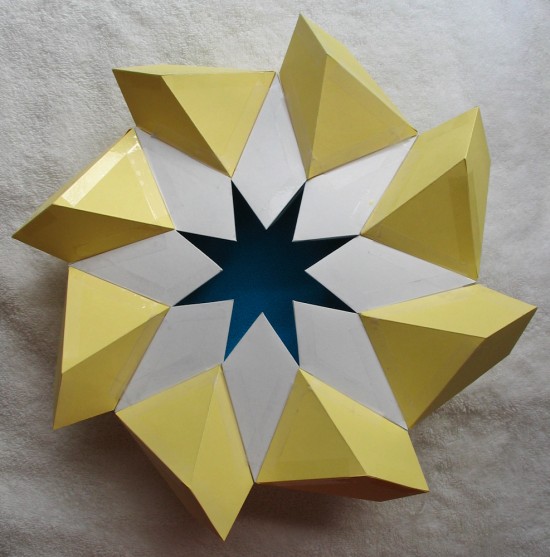
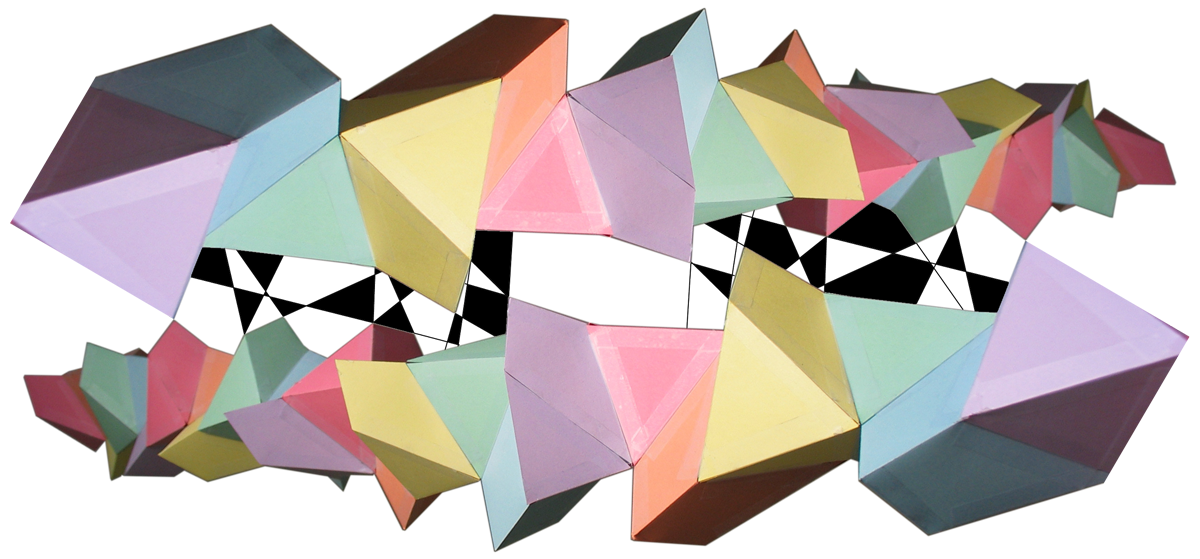
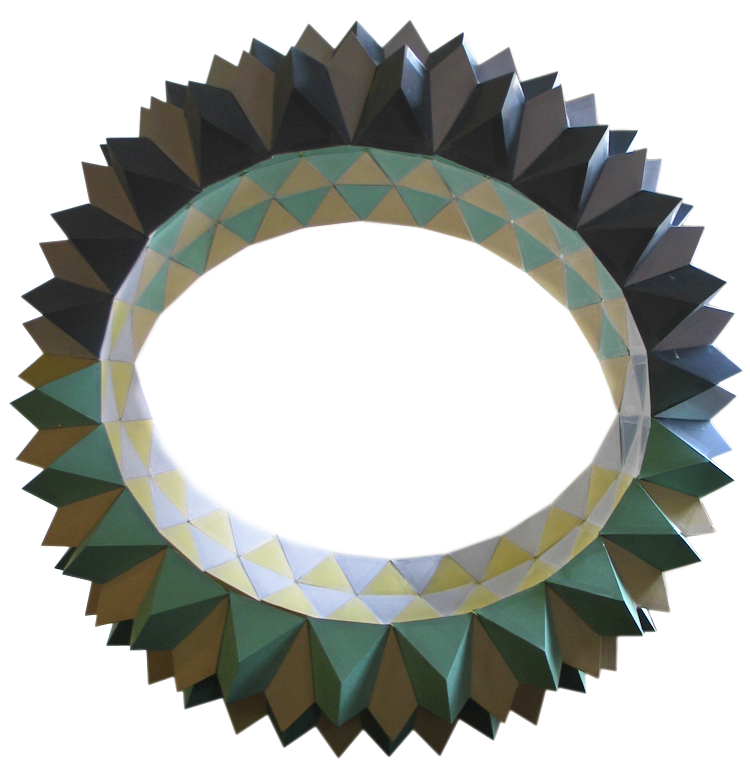
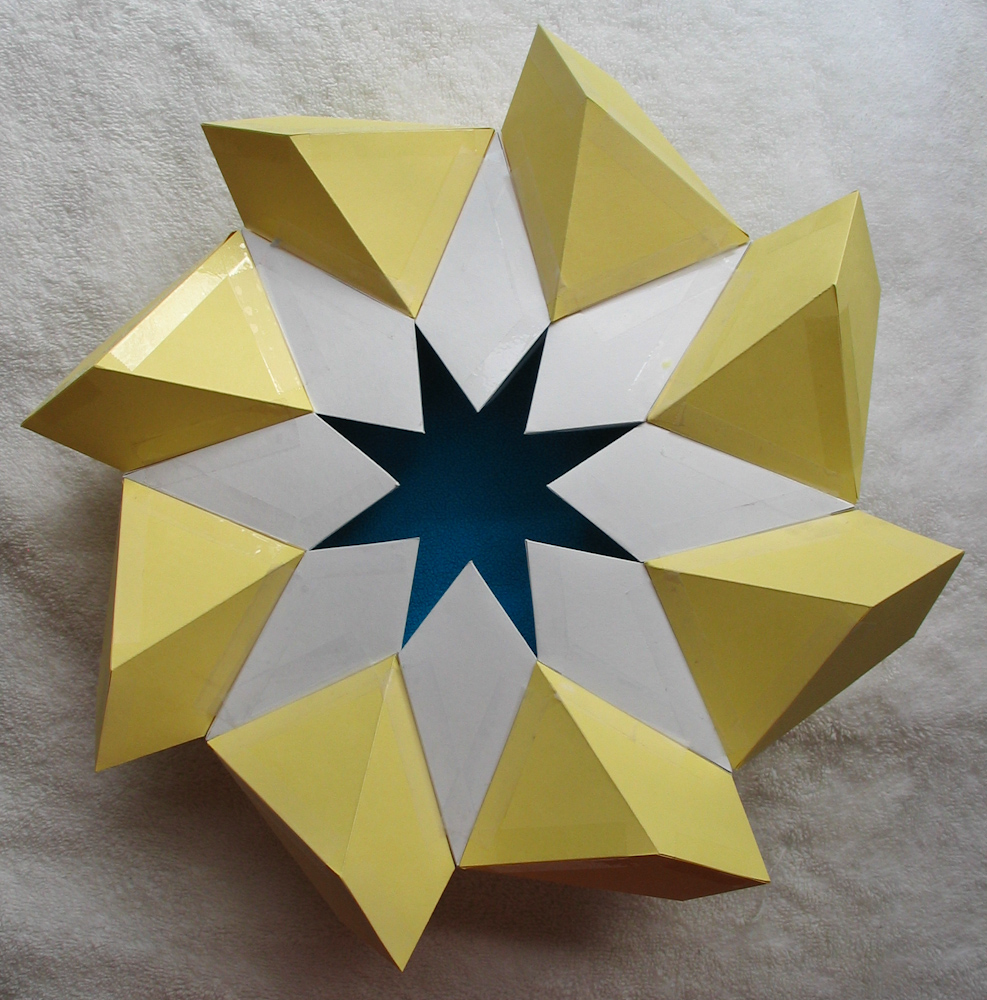
I have been experimenting with the form in its sculptural capacity, and have come up with some interesting designs that are featured on the site, which you can see here.
Below are a few samples of my work, click for larger:
do not think about this
it is not here for your pleasure
not waiting self-less
for some deathly embrace
as if it were not already perfect
and rising starkly, gently behind you
perusing the pages of your eyes
passing no judgment
straighten your back
and fly into the sunset
as you were meant to –
objectless, void, unsundered
by the sheer presence of its wings
will you be lifted
footprints trailing clouds
into what has always known you
pulling the threads of your heart
it makes your fists close hard
about what you can never grasp
the light to your shadow
a silence around your music
forgeless and forging
you become its thoughts
it is no it
I AM
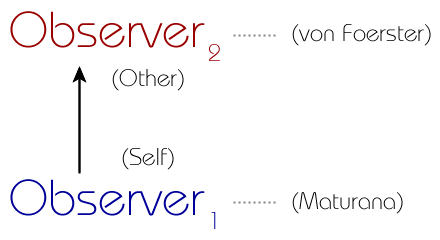
All epistemologies are observer-dependent; i.e. there is no single epistemology that applies to all possible observers, because every observer is unique in some way. The necessary inclusion of the observer in any description of the world is a deeply obvious and yet profound principle. It was neatly expressed in Heinz von Foerster’s article Cybernetics of Cybernetics, where he builds off of Humberto Maturana’s phrase “Anything said is said by an observer,” by indicating that “Anything said is said to an observer” (2003, p. 283) (figure 1). This is in contrast to the view that anything said is simply… said, as if into a vacuum. This older view, championed by the scientific revolution, took up the principle that statements could simply be true or false, and were about the world but not really of the world (the roots of these two views can be traced back to Plato and Aristotle). Cybernetic epistemology modifies this assumption by re-introducing the observer as a part of the world.
Figure 1. A cybernetics of description following Heinz von Foerster. There are two different observers involved in any description; observer 1 is the describer, and observer 2 is the one to whom the description is directed.
(Side note: it is important to indicate that perspectives on just what this word “observer” might mean can be helpfully explored also through esoteric methods. In an significant way a central—perhaps even the central—aspect of esoteric practice involves the closing of the loop of observation. Esoteric practice in general (always with caveats) can be thought of as the experiential exploration of the cybernetic epistemological injunction that no description of reality can be complete without an integration of the describer in the description.)
While von Foerster links the principle explicitly to the social realm (2003, p. 284) by distinguishing (more…)