The world has problems; LOTS of them. But as long as there are people like my friend Nancy, who devote their lives and love to one of the most important and practical callings on the planet, education of our young, I have hope for the future.
Let me give you a picture, in her own words, of what I mean, as an example of how Waldorf education tries to meet the challenging tasks of our time. This is but a tiny picture of what is possible–today– for education:
My class went to our auditorium today and entered in the dark. The room was covered in pine boughs in the shape of a spiral path. In the center of the path was one large glowing candle that sat upon a tree trunk covered by a blue cloth with gold stars on it. It smelled like a pine forest. The students entered in silence and proceeded to a semi-circular row of chairs to sit down. Two women, playing penny whistle, violin, and cello began playing various musical selections.
The first child approached me. I was standing by a table filled with red apples, each holding a slim candle in a hole carved into it. Then, one by one, each child took the spiral walk into the center where the light glowed. Lighting their own small candle from that big central light, they each turned and began walking back out from the center. At some place of their own choosing along the path, they each picked a spot to place their little light.
When the last child had gone, I took my candle filled apple and walked the path among the little lights, to the center. After lighting my own candle, I found a place along the way to place my own light among the others. It was an extraordinary experience for us all. The metaphors were flooding my mind as I watched each of these students proceed on this path. When they were little, their kindergarten teacher or parent held their hand on the way. Now, they seemed to have grown so tall, only third graders, yet I marveled at how they had gotten so big.
As I looked at them, a veil was drawn back for me and I could see much more than I could usually see. Everything was revealed to me in a moment. It seemed to me, as they walked, that I could sense them as younger children, as who they were now, and even who they were going to one day become. In the darkness, I really felt I could see their future before my physical eyes.
When my turn came, I realized that in the last two years of first and second grade, I always had walked the advent spiral first – before they did – so that they could see how to do it again. This time, they walked confidently alone without my example. This time, I followed their example. As I passed by each one of the lights on my way into the middle, I felt as if I were floating along in the starry heavens, each star one of these students of mine that I hold so dear. Each star lighting my way into the center. I was so humbled to place my small light, no bigger or smaller than the others, down on the path to join in lighting the room. I could also feel how profound it was for the students to see their teacher walk this inward path.
With each eye intently and silently upon me, I felt the connection, the gravity, the grace, the sacredness of the responsibility I carry on their behalf, but also I felt, “I am the so-called teacher this time, but I am really only one of you. You, who have been my teachers, who will be my teachers in the future.” What a privilege to live in such light. Blessings on us all.
I had the good fortune to attend a Coros Institute meditative retreat: The Great Passage with Dennis Klocek on Whidbey Island a few years ago with my mother. It was an amazing event, full of profound wisdom, practical exercises, and excellent company. I would highly recommend it, not just for those who are thinking about the Great Passage for themselves or a loved one, but as a complement to any who are interested in the spiritual connections between the living and the dead.
Dennis, as usual, offers living pictures that are not like the kind of popular new-age stuff on the bookshelves at your local bookstore. He has a way of speaking and interacting that makes it very clear that his wisdom is a developed wisdom, brought forth on the basis of years and years of contemplative, artistic, and scientific work. The best part is that because he knows HOW he developed his own experience, he can be of explicit help to others who wish to deepen their own spirituality.
If you can make this retreat, DO IT! You won’t be disappointed.
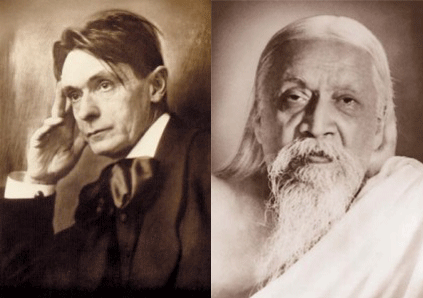
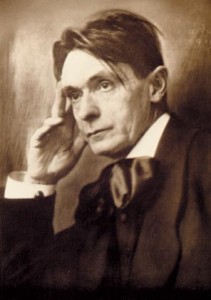
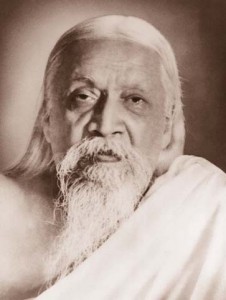
This longer essay summarizes the basic elements of the spiritual-cosmological worldviews of two of the most important modern, integrative spiritual thinkers: Rudolf Steiner and Sri Aurobindo. Upon this foundation a brief comparison is made between the two systems and the two men.
Thanks to John Elwyn Kimberfor pointing me to this webpage where Pavitra, a disciple of Sri Aurobindo, records her meetings with him (see pages 4 and 5 specifically). Pavitra and Aurobindo both say that they know some theosophists, and know of Steiner, and by Aurobindo’s responses I get the sense that he at least knew something about Steiner specifically. However, it seems that he is being treated primarily in the same vein as theosophy (which would make sense from the “outside”), and the references are pretty quick so there is no way to gauge from this site how deeply familiar he was with Steiner specifically, but it is good to have confirmation that he at least knew of him. Also in this text, Aurobindo states his sense that his vital plane corresponds with the theosophical astral plane, and gives his general impression of theosophy.
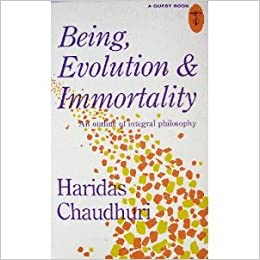
My general impression of this work was that Chaudhuri was writing in a very philosophical style about a topic which is far more than philosophical. The extent to which he took pains to delineate some various philosophical perspectives so that he could present the viewpoint of the integral yoga surprised me; I’m not sure exactly what I was expecting, but I kept feeling like I was back in my undergraduate philosophy program, reading and comparing different works. The intellectualism that accompanies the philosophical world has some excellent and unfortunate consequences.
In the case of this book, I felt that on the one hand it provided a strong case for the philosophical underpinnings of the integral yoga, which can be useful for those who work through and towards the difficult topics he discusses in an intellectual way. By doing this, it can be possible for the intellect to contextualize the various meanings and approaches to things like the Divine, to the Non-dual, Being, the Absolute, and so forth, in such a way as to allow the rest of the human being to begin to find a way of moving with the material at a different level. I find that sometimes the intellect, lacking this context or ability to engage, results in either an over or under-attachment to the real content that is attempting to be addressed through philosophical language. In other words, the philosophical nature of the presentation calls forth the part of ourselves that is capable of dealing with the concepts in a direct, wakeful, conscious manner, which helps to mitigate either sympathetic or antipathetic reactions which may otherwise arise in its absence.
On the other hand, presenting material like this through a philosophical standpoint also lessens its potential impact by restricting itself to a style of address whose major target is the mental part of the human being. This is true even if the content of the words include ideas like love, goodness, and so forth; what comes across is often only the shell of an experience, rather than words designed for the immediate evocation of the experience. This is not so much a criticism as just how things like this often go, because we can only write and express so much through words without seeming almost schizophrenic. It seems that Sri Aurobindo, the major synthesizer of Integral Yoga (in concert with The Mother) worked on both sides of this issue, writing both intellectually and poetically as the need arose.
In reading Being I felt like I was assuming the posture of a bird in flight, soaring over a vast landscape and beneath an even vaster sky. I had the sense of swooping down occasionally towards the Earth, or of straining my wings to fly ever higher… but never did I feel either truly connected to either the Earth or the Heavens, but rather somehow suspended in between, almost as if in a strange form of limbo. I really wanted Chaudhuri’s discussion to find much more direct and explicit contact with experiences and realities of daily life. There were a few moments where he began to speak along such lines, but I felt that he continually abandoned routes that would have put him in real connection with the “world”. This is to say that his language had a tendency to be either vague, general, or simply descriptive of classes (or classes of classes) rather than elements of classes. Take almost any paragraph as an example; these are pulled from a random 5 second search:
(Tending towards Heaven:) “Spiritual nondualism is inspired by the concept of the Absolute as supermind. The supermind is the sovereign dynamism of ultimate reality. it is the creative light of Being. It is the all-embracing consciousness, nondualistic in structure.” (p.60)
(Tending towards Earth:) “Immortality is an attribute of enlightened consciousness. All men therefore have the potentiality of immortality by virtue of their consciousness. When the personality of an individual is harmonized and integrated, he attains enlightenment. He gains insight into his existential oneness with the all-encompassing Being. The veil of ignorance and separative consciousness is lifted from his eyes. Feelings of fear and insecurity, anxiety and personal unworthiness, are overcome. There is an enlargement of Being and joyful participation in the life of the Infinite. In one word, an individual experiences immortality here and now.” (p. 139)
In the first case we have what may be the normal limit of intellectual presentation: pointing at the moon. Were he to go further he would likely need to adopt a completely different style, and for the purpose of a survey work, this may be too much to ask. In the second case, although Chaudhuri is speaking about experiences that concern the transformation of the human being from existing in an ‘everyday’ state to one that exists in constant transformation and unfolding in the light of the Divine, he never gives much more detail than is apparent here. It’s hard to describe, because it is difficult to have clear and exact words about vagueness, but I get the feeling that almost the entire bottom foundation of the integral yoga is just missing from this book. How exactly does one practice integral yoga? What does the student encounter along the way? What exactly is happening to the student when his or her consciousness begins to transform, from the perspective of the multidimensionality of the human being, and how does this relate to advancement along the path? In other words, having read this book, I do not feel I have any clear answers to these questions.
Not knowing the context around the genesis of this book, it’s hard to know why he chose to approach it as he did, but he must have had a particular audience in mind. I keep having to remind myself that this was written around 1967; I wonder how he would have approached the same central task today? Nevertheless, as a philosophical outline it succeeds admirably, and this is ostensibly (given the title) its major purpose, so I would definitely call this book a succes.
A friend of mine pointed out that Chaudhuri puts forth a certain strength in the presentation of ideas about things which are more than ideas, given an impression that “this is how it is”, with no room for argument. I have a sense of how this happens (although whether this describes Chaudhuri’s case I have no idea, I’m only providing this perspective as my own). It’s not so much that the often absolutist tone of the presentation is meant to discount or override any alternate conception so much as it is an expression of the minds inability to fully conceptualize the extent of the topic that it is dealing with. This results in the mind reaching its limits; our words too, reach their limits. The experiences that lie beneath the philosophical considerations, and which give rise to them, although having a ‘word-like’ nature (logos), are not words in the normal sense. Thus all philosophical expression, when placed in service of what lies forever beyond it, can only be a sort of veil that covers what is otherwise unknown. But in the process, the veil assumes a certain shape, and certain tendencies for motion, as it falls lightly or heavily across the Mystery. Good philosophical discourse will be like a supple silk, capable of shifting delicately in response to its wearer (the Divine, or Being in Chaudhuri’s case) without either falling off, being too transparent and thus difficult to see, or too thick as to obscure what lies beneath — all while remaining self-connected, strong, and breathable.
But once a fabric is chosen, certain limits are necessarily adopted. In other words, getting into the frame of mind in which the human being is pouring attention into the intellectual contextualization of spiritual topics leads the mind into areas that it would not otherwise go; it is creating a space and exploring it at the same time, on the one hand coming up against its own limitations while discovering its own movements through a kind of self-necessity (in the clearest cases, this is expressed as “logic”). (Re: p.48, “Thought is not a mere process of mirroring. It is a creative function. In distinguishing definable features of reality, it also creates them in a profound sense.) Once certain choices have been made as regards to the style of approach, much of the rest ‘falls out’ in a way that is unavoidable; when standing within the perspective it seems directly and manifestly obvious that specific conceptions require a certain kind of expression. It just seems natural. So we end up with things like: “[Ideas] are not unalterably fixed truths.” (p. 49) and “The truth is that Being is multidimensional.” Each statement is formed and expressed from a perspective which gives rise to the necessity of each, while taken together they indicate that the chosen approach is self-limited (for those of you that are familiar with Goedel’s incompleteness theorem, this is an example of how it occurs linguistically).
This post is already too long, but this gives some general impressions. There are many details that I have comments or questions about, but I’ll leave these aside. I can add in closing that the philosopher in me found this work engaging, and it invites much in the way of philosophical discussion. For example, he has a tendency to simply state, almost by fiat, that such and such divisions or dualisms expressed elsewhere are overcome or united within integral nondualism… but the philosophical details he gives to back up his claims are far less detailed and clear than I would like them to be. I suspect this also may be due to the introductory nature of the work, and he has others which hopefully fill this gap.
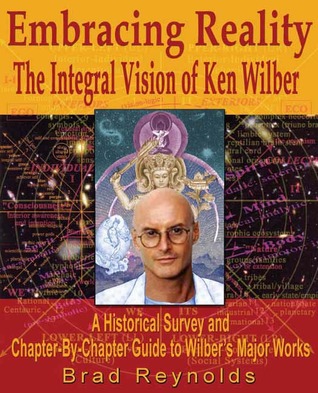
Embracing Reality offers two things, something of a semi-biographical contextualization of the development of Wilber’s thoughts and writings, and a series of more-or-less detailed summaries of those same works. For anyone who is not familiar with the different phases of Wilber’s thought, this is a nice reference work, and was most edifying for its picture of the development of Wilber’s thinking. I appreciated the detailed descriptions of some of his personal influences and struggles, but I couldn’t quite get over a kind of sticky feeling about the author’s undisguised near-worship of the man. It felt like the whole book was kind of an apology for Wilber’s work. There’s nothing wrong with this, of course, (particularly if the author presents it in this way, which isn’t the case here) but it doesn’t give me the feeling that I’m getting a balanced perspective on his work, as there is little to no criticism of him or his ideas in the whole book.
To help remedy this, if anyone is interested, here is a lengthy and equally unbalanced criticism of Wilber’s work by a very outspoken critic of his work, available as a free PDF download at http://www.normaneinsteinbook.com/ . These two offerings certainly don’t add up to a balanced perspective, but at least it fleshes out the field a little, and gives an idea of the kind of interactions that Wilber seems to spark, for any who wish to get involved in such a thing. Honestly for me, having skimmed and read about 2/3 of the Norman Einstein book, I’m both grateful for an alternate perspective and frustrated by the seeming lack of ability for coherent critical dialogue to take place between Ken Wilber and his critics.
On the one hand, and this characterizes what seems to be a pattern in general, I find acrimonious and personal criticisms between Ken and critics that is full of what strikes me very clearly as quite non-enlightened and non-integral type of communication from both sides. On the other hand it seems there are some criticisms that are simply ignored for whatever reason.
In any case, when I really try to get a sense for the gestalt of both Wilber and the communities that he inspires (both as ‘followers’, critics, and others), I am met with quite a variety of perceptions and feelings that it is hard to integrate into a coherent vision.
A few things stand out, however (all of these I completely accept as my personal experiences, which obviously reveal as much or more about me as they do of Wilber):
1) Wilber is unabashedly intellectual. Not a bad thing, by any means, in and of itself, but I actually mean this in part as a criticism. Something happens when one’s intellectual ideas move beyond themselves, and flow out naturally into the rest of the natural aspects of a human life: the feelings and the will. Try as I might, I have yet to find much evidence that satisfies my purely personal sense that this is the case for Wilber; I experience him much more as an enlarged head sitting atop a less developed torso and even less developed limbs, with some kind of blockage at his neck which both grants him great capacity for intellectual speech while stifling its ability to be infused with a balanced and integrative flow of feelings and a truly holistic basis in action. His actual physical visage reinforces this sensation, with his bald head, thick neck, prominent brows and thin lips, along with a physically well-developed lower body. Rudolf Steiner, whom I hold in the highest regard, mentions something very apropos to this point about the dynamic interrelationship between different aspects of the human being undergoing esoteric development, (from his book How to Know Higher Worlds, available free at http://wn.rsarchive.org/Books/GA010/English/GA010_c01.html):
“In all spiritual science there is a fundamental principle which cannot be transgressed without sacrificing success, and it should be impressed on the student in every form of esoteric training. It runs as follows: All knowledge pursued merely for the enrichment of personal learning and the accumulation of personal treasure leads you away from the path; but all knowledge pursued for growth to ripeness within the process of human ennoblement and cosmic development brings you a step forward. This law must be strictly observed, and no student is genuine until he has adopted it as a guide for his whole life. This truth can be expressed in the following short sentence: Every idea which does not become your ideal slays a force in your soul; every idea which becomes your ideal creates within you life-forces.“
I get the sense from Embracing Reality, which describes Wilber’s voracious appetite for intellectual works, as potentially problematic in leading to an overdevelopment of intellectual forces at the expense of a more coherent and balanced progression of all aspects of the human being. Of course, all this is meant in full awareness that the content of Wilber’s intellectual works (to some extent ironically, I feel) describe a somewhat similar perspective to the one Steiner mentions above.
2) Wilber seems to have a very large number of ‘followers’, many of whom emulate Wilber’s style and mannerisms, physically as well as in speech and patterns of thought. Emulation, as I understand it, does not fit very well into a path of esoteric development except in a very strict devotional type situation (which is increasingly rare, requiring the relinquishment of one’s ego in totality to a teacher, and which — I would argue — does not at all describe the vast majority of not all of Wilber’s followers, who tend to (with much variation) have very strong personal egos).
3) Perhaps because of this element of ego-enhancement (again, recognizing this as a personal judgment, on the basis of my interactions with a variety of people who to a greater or lesser extent embodied this characteristic, as well as through the admittedly not terribly comprehensive research regarding Wilber that I have done in my master’s program at JFKU and PhD program at CIIS (in both places there is no shortage of Wilber fans)), Wilber makes himself available to, and even incites quite strongly, polarization and criticism from a number of fronts, with equally staunch ‘defenders’. In the midst of the ensuing debates, because of the tendency for an increased need for interdifferentiation and the drawing of intellectual lines in the sand on behalf of both ‘sides’ (which will just get blown away by the first strong wind anyway), the pattern seems to be one that easily slides into confrontation, even actually inviting such. My sense is that some not insignificant portion of Ken’s ideas stem from the ongoing development of these types of confrontations, i.e. I get the feeling that definite portion of his thinking arises out of the smoldering ashes of a combative, polarizing milieu. I am, obviously, suggesting that the way in which a thought content comes to be represented in a human soul is not capable of being separated from the content itself. The process of the thinking that produced the thought has consequences for the thought itself. One could even, perhaps, speak of karma here, in the sense of actions which have lasting effects both in the world and for oneself.
4) I deeply admire Wilber’s principle that every system and perspective is “true but partial”. But this, in the context of the above criticisms, seems to lead him into a difficult situation (because true integration is generally born through suffering, it seems) where, lacking (I am open to discovering otherwise as I continue engaging with his work) a very… hygienic interdevelopment of the whole personality along with its capacities, he seems forced to rely upon the basis from which is strengths have flowed. For Wilber, this again lies squarely in the intellectual domain. It seems that the major path forward is one of continuous distinction and differentiation between and among concepts from the widest possible sources — but it keeps the flavor of distinction that remains powerful primarily in the conceptual realm due to the (relative) absence of a comprehensive integration of the feeling and the willing aspects with the intellectual.
These are difficult things to speak of, and who am I to make such sweeping judgments? I can only say that I am open to discovering otherwise, and that I feel that I am able to make this kind of criticism in part because Wilber is explicitly speaking about precisely the types of issues I am raising here (in Wilber-speak this would refer to lines, levels, states, stages, transcend/include, quadrants, etc.). As a willingly public figure who addresses the breadth and depth of material that Wilber does, and on the basis of the strength of various claims he makes (particularly in the realm of esoteric development), he expressly places himself in a position of inviting discussion of the extent to which he has directly and actually embodied the very principles he is espousing.
Reynolds takes some pains to provide what I consider to be a weak response to this criticism, which he brings up as variations on a single theme, (paraphrased): ‘Ken has meditated for x number of years and thus isn’t merely thinking about these things; he has experienced them directly’, i.e. his oft-cited satori event, his living in the continuous awareness of the non-dual, etc. I do not doubt the sincerity of his practice, or even (okay, I actually do have some doubts here, I’ll admit) his personal claims concerning his enlightenment experiences. However, this simply has no necessary bearing on the content of Wilber’s ideas. The question is whether or not, when the ideas were formed, and when they were written down, was the activity present in Wilber’s being one that was permeated through and through with the quality of the enlightenment experiences which are supposed to form the ‘practical’ foundations for his intellectual claims? The moral strength, in addition to the actual professed content that provides the bedrock out of which his thinking flows, changes dramatically as a result of the answer to this question.
My experience of concepts which flow dynamically from a human being who is in the midst of direct experience of the more subtle, spiritual worlds, is that their content serves the activity of their realization. That is to say, enlightened words about enlightenment serve to enlighten. I would even venture to say that with regards in particular to esoteric concepts, how the concepts come into being, and how they are communicated speaks more directly to their truth than their explicit content, which is the least important part of the whole interaction, taken from a spiritual perspective. Spiritually, the actual form of the words, and the concept itself, exists in us as a corpse of the living activity of the thinking that produced them. The very job of some paths of esoteric development is precisely to learn how to re-enliven these dead, outer concepts into concepts with awaken within is in a way that is directly imbued with the same spiritual source out of which the oringinal concepts were born. It is upon this basis that it becomes possible to evaluate their contente in a non-trivial way.
There is plenty more to say, including much praise for the synthesis of traditions that Wilber has done, along with the popularization (always a double-edged sword for non-exoteric content, but a double edged sword that nevertheless must be swung… just hopefully with skill) of integral concepts and at the very least a furthering of the discussion/thinking and actions based on an underlying idea of spiritual progress, inclusion of all levels of reality, the need to make distinctions in realms that often and easily turn into a new-age, unpalatable mishmash of ideas and practices from various places that dilute their potential effectiveness when taken so radically out of context. But this is already quite long, for which I apologize!
Following on the last posts about language, I’m just going to go way out on a limb here and re-present a picture that Rudolf Steiner gives which, when you really take it in, can transform your whole sense of language. It is this:
Steiner points out how at the present time, humanity can only tap into the deep formative forces of creativity in an unconscious way, or in a sort of caricature of what is possible. So to give birth to another human being requires a certain kind of process in which our consciousness plays only a tiny role — all the ‘work’ of creation is done unconsciously (for US — quite consciously for… other beings).
Speech in Motion – Eurythmy
The place in the human being where we are beginning to find an entry into the realm in which this kind of creation–conscious creation–is possible can be found in the human larynx. Now, if you have a sense that there is a relationship between creative forces and the motions of the sounds that underlie speech, you begin to see that what speech is primarily today is only the merest possible shell of what is possible with regards to creation.
The sounds that I produce (or that you implicitly imagine, even unconsciously [MRI studies show this] if you are reading this) are capable of calling up within you an image, a picture… a feeling, evoked by my words. Not just the structure and grammar and so forth, but the actual sounds themselves are a part of this, and are not arbitrary (as I mentioned in the previous post).
Sounds are movement, and the larynx does what it does only as a mobile, dynamic organ of self-transformation. The larynx is doing a little dance, putting form into movement through time and interval. Alchemically this is all working with the Air element — reversal/polarity. The oscillations of the air itself happens through the polarity of compression and rarefaction, but even more: in order for my words to call up an image in you, you cannot remain the same — you must change. The way that you can allow my words to allow you to experience what lies behind the words — the experience of the one speaking — is only by going through a microcosm of a microcosm of a macrocosm.
The macrocosmic level is the process of life–>death–>life (i.e. reincarnation). The microcosmic process is awake–>sleep–>awake. The further microcosmic process is speaking—>listening—>speaking. In this last process, a part of you must go to sleep in order to dream through my words. Just as the continual process of dreaming is overshadowed by the entrance of day-waking consciousness, so too your ability to meet the images contained within the words of another’s speech is overshadowed by the holding on to and expression of elements of oneself and the temporary identity with one’s own images.
You must dream into my words as I actively speak them, just as I must do the same if I am to hear you through your words. Now, that’s all just background.
The real image is that in the future, rather than reproducing by the unconscious means that are the only ones presently available to humanity, we will learn how to reproduce consciously, and this will take place through the further development of what is now the human larynx, where we have the greatest connection to the creative forces–which now take the form of the ability to call up in another’s soul images that are produced in one’s own.
I hope the sense of this connection is clear. I recognize that this probably seems WAY out there, but I’d just like to share that such a way of thinking is possible, and that from a perspective that isn’t forced into materialistic boundaries, but which can consider the movement of processes in a wide variety of scales, such an imagination has considerable import.
This is all linked up with morality and how, as Bonnie points out, our speech is, in fact, a creative vehicle by which the world comes into being… So you can imagine that what we are doing right now in the exchange of ideas through words is a kind of proving ground and developmental platform on which we are expanding our ability to tap into something of the radical (root) nature of the creative forces, which are normally relegated to an unconscious realm.
One can, if one wishes, find this thread about speech all through the ages, as far back as you want to go. It is the root of the idea concerning the magical power of words; words as creative actions that are connected with the deepest sources of the universe.
Does this mean there is no universal developmental stages that we each pass through simply due to the fact that we are all human? What are the underlying strata, the ground upon which both these explicate perspectives emerge? What is the implicate order regarding human development?
Prompting the response:
As for universal developmental stages… yes and no. I guess I would point to the process of recapitulation. You, as a physical being, go through stages in development which are a unique recapitulation of stages that have individually been achieved over vast timescales. But, as modern beings, because what was achieved so long ago by (or rather ‘with’ and ‘through’) our ancestors (going ALL the way back, here) no longer requires the same kind of attention that it did when the developments were being worked out, we speed through these stages without any cognizance. We also don’t have to experience the full drama of the development of those stages; we only get something like the form of an image of those stages, more like a hint or better a ‘gesture’ of those past stages. The result is that instead of, say, having to develop anew the ability to breath air from scratch, we simply find ourselves with a capacity for breathing.
The particular capacities we are thus ‘given’ are not “universal” in the absolute sense that ALL beings do this. But it is close to universal when considering humans. We are the ongoing unfolding of our past — all of our past. And some capacities require more of us now than they will in the future, and others require less of us not than they did in the past. Thus, we are no longer challenged so much by the development of breathing, but have a more difficult time with upright walking. It is easier to have a mental picture than it is to dissolve a mental picture into nothing. It is easy to feel rage, but much more attention is required to feel compassion. These are tracings of past and future capacities, and we’re constantly in the flow of their development (and there is also a process of dissolution of capacities… but we’ll not go into that).
Physical Recapitulation
And there are always exceptions. Some people who are born now are actually working out dramas that the bulk of humanity dealt with eons ago, and others are born who are dealing with developing capacities that the bulk of humanity will likely encounter only in the future. So it’s not a simple question of everyone being equal. Diversity is everpresent.
Additionally, some of the capacities that have been given through our long history are only partially so. Or rather, their development has only proceeded to a certain stage, beyond which any development or progression depends upon actions taken here and now. The fulfillment of these capacities is not a given, but requires actual work on our part. For example the capacity for free ethical action that comes from within the individual; this is not something that just everyone ‘has’ — it requires a certain amount of work. So too the capacity to perceive accurately in the spiritual worlds requires individual work; it’s not yet capable of being given as an already-developed gift to the whole of humanity (like vision is) because the work required for that is still being done.
The upshot of all this is that the situation is very complex and intertwined with multiple streams, working from the past and (sorry for sounding weird) from the future. There is no ‘one-size-fits-all’ when it comes to these things, because we’re constantly dealing with a whole variety of interpenetrating levels and times. Nevertheless, there are ‘global’ patterns at work, which can be perceived if one knows how to look. David’s books very directly hint at this. Also examine Richard Tarnas’ book The Passion of the Western Mind. These are works in the popular domain which point to the sense of ongoing, non-random, directional development of consciousness and human beings. (Of course, one could find a much more direct treatment of this aspect if one has the desire to look into more esoteric sources, such as Steiner.) This is where you start to find a way into the question of the Implicate Order with respect to human development…