sometimes you stand on the borders of things
waiting for that little nudge
just the thing you needed
for you to fly
sometimes you stand on the borders of things
waiting for that little nudge
just the thing you needed
for you to fly
There are some things about creativity that have been on my mind. I have been trying to hone in on the qualitative experience of the creative moment… what does it feel like to be creative? What kinds of qualities distinguish the feeling of being creative from other types of feelings, like the feeling of ‘producing’, ‘innovating’, and so forth? What makes a creative moment creative?
It seems to me that in the experience of the creative moment, there is always a place where knowing runs out… where consciousness finds itself in a state of openness, as if surrounded by space. In particular this feeling seems to be accompanied by the sense that the normal boundaries of the ego are loosened, expanded/expended, but not yet replaced or filled with anything. This is specifically true with respect to the actual genesis of the creative activity, while during the activity this sense can be replaced with a feeling which Mihály Csíkszentmihályi called ‘flow’.
In every case that I can think of (for myself, that is), creative moments are states of being characterizable by a sense of potential, of a sort of future-coming-into-the-present — but notably always without knowledge or specific anticipation. It is a very hard state to even think about because it seems that thinking itself — at least in the normal, ego-centered thinking of much of daily life — is suspended, as if in the air. And even in thinking ‘about’ the creative moment, there is almost a lacuna of consciousness around the creative moment itself, as if consciousness met a border that it could not cross with its normal configuration… so I have the feeling that it is as if some part of consciousness travels ‘underground’ or perhaps ‘above’, into the ‘sense of awaiting’ that permeates the surrounding ‘space’.
You can see that the normal tendencies of speech have a hard time when applied to a moment which seems to transcend encapsulation. One usage of languge serves to delineate, define, demarcate, depict, circumscribe, form, or otherwise pinpoint (alchemically this would be representative of the Earth element). My initial questions are, in a sense, Earth questions, with language leading towards and assuming this Earthy aspect. Yet by its very nature the object of the inquiry is perhaps unable to be Earthed – so I find a contradiction even in the asking of the question. Thus a paradox: if it were possible to actually describe in words the qualitative essence of a creative moment, the creative moment itself would necessarily remain undescribed, even de-described.
Therefore some questions:
Is language as evocative rather than descriptive enough of a tool to allow thinking about creativity to proceed?
Do all creative moments share some specific qualities, perhaps at a meta or meta-meta-level? Or is it impossible for creative moments to be bound at all by any possibile prescription?
With respect to the individual experiencing a creative moment, what kinds of processes occur qua the experienced sense of self/other? That is, what happens to the sense of self in such a moment?
Related: Are creative moments ever something that can be ‘mine’ in the same way that I can speak about (a perhaps naive) experience of ‘my’ pain, ‘my’ thoughts, and so forth?
Also related: To what extent do ‘others’ play a role in creative moments that ‘I’ experience?
Lastly: If we were seers, able to perceive the activities of the spiritual worlds, how would we describe what is experienced by a single human being in a creative moment?
Knowing is essential, so that we can unknow.
Finding a way is essential to losing the path.
Adding brick to brick is essential to knock the wall down.
Knocking down walls is essential to create materials for new walls.
Losing the path is essential to find a new way.
Unknowing is essential to find new knowing.
This is not circularity
it is iterativity on themes of becoming
the way and the unway are coincident(al)
the new blossoms through death
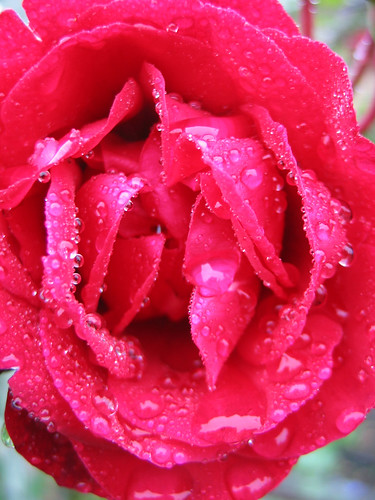
We must be capable BOTH of forming models AND of dissolving them. We shouldn’t either become model-less, nor bound by any model, including the one you are proposing.
Tensions must be maintained. Tensions must collapse. Tensions must be created.
Tensions are maintained. Tensions collapse. Tensions create.
Maintain tension. Collapse tension. Create tension.
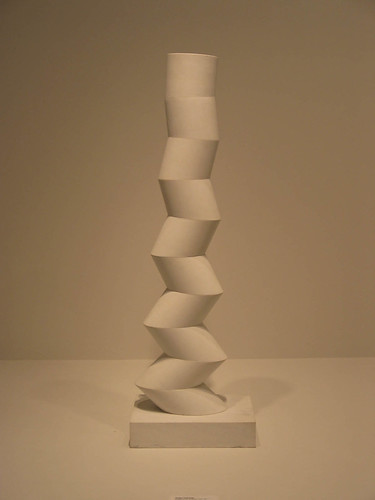
Trying to summarize:
The drawing of a distinction is a formative act. Drawing a distinction FORMS the space, constellates the infinitely possible unknown into spaces which are shaped by the particular WAY in which the distinction is drawn. The resulting spaces can not help but take the complementary shape of the distinction that defines them.
The drawing of a distinction is an INformative act. Drawing a distinction INFORMS the observer to distinguish the space like this. The resulting shape of any possible knowledge within the space cannot help but be informed (formed-in) by the particular way in which the distinction is drawn.
The distinction is an epistemological act that creates itself, and in so doing, is also the creation of the space in which the distinction occurs, as well as of the observer who makes the distinction.
There are levels of distinction; distinctions can be made about distinctions, and distinctions can be made about those distinctions…
Distinctions are atemporal and aspatial. They are the primitive act. The distinction between the distinction, the space, and the observer are all formally equivalent, just as the three interior angles of a triangle are all formally equivalent. In other words, they are interchangeable in any process that specifies ANGLE.
The only process that specifies distinction, space, and observer is DISTINCTION. The form (which is the same thing as the LAW of form) is an ouroboros.
Consciousness is the consciousness of distinction. That is to say, consciousness is distinction; it cannot be other than consciousness of distinction. Therefore consciousness is co-extensive with all distinction. What is distinguished is conscious of its distinction; this is why there is distinction; this is why there is consciousness.
Time is a higher order distinction that requires recursivity. It is a distinction about a distinction. Time is dependent upon the oscillation of distinction between two states made by that distinction. Time is the injunction to cross the boundary between the states, and once crossed, to cross again. The crossing is atemporal. Only the distinction of the crossing is temporal. The distinction of the crossing of the distinction is time.
<—————-distinction—————->
Now, I have no idea if any of the above is sensible or insensible <crossing boundary: its sensibility or insensibility is only possible on the basis of the distinction as such. In itself it is neither sensible nor insensible, but what it would be if it could> but it has raised some questions for me:
Is distinction ONLY binary? Is distinction always between this state and that state, that is, between one and another? Is it possible to distinguish not just between one:one, but between one:many, between one and another+another+another? In other words is this a binary reductionism? <crossing boundary: yes, if this binary distinction is made. now make another distinction.>
Okay, but what about the, um, distinction in quantum mechanics of the possible eigenstates of the wave function? There are an infinite number of possible eigenstates for any given system (even the simplest), and they must ALL be taken into account (their probabilities must be worked in to the equation). Then, out of the whole field of possibilities, ONE is observed. In the observation, all the other possible values have a probability of zero, while the observed value has a probability of one. This sounds an awful lot like the idea that the fundamental act of distinction creates the space and thus the values of any distinction in the space thus created. Does this have any validity, either as an analogue or at least a metaphor? <X: Do you distinguish it as such?>
…
Okay I have another question. What happens if we DON’T DISTINGUISH? I mean, we don’t un-distinguish and we don’t distinguish. Without distinction… what happens? Is this (GSB language) a marked empty mark?
Crap! And can making a distinction of a distinction actually be the same as not making a distinction in the first place?
Please, anyone, help?!
<X: >
So then to begin in the middle I have many questions:
What constitutes an observer? How do we think about what an observer is/does? Is it as simply complex as the recursive: “An observer creates distinctions; distinctions create observers.”?
What is a distinction? In order for it to occur, does it require only an observer, or is there also an ‘observed’? If so, what constitutes the observed if we are speaking of it before the act of observation? Or is there no such thing as an ‘observed’ before its being observed? Is it possible for the specific distinction within the observed to be meaningless before observation while still maintaining on a higher order level that there is a realm of the ‘unobserved-observed’?
I mean to think about this issue as much as possible without the benefit of assumptions, knowing this is impossible.
Does the concept of the complementarity of field/wave in quantum physics help conceptualize this problem? Physicists can speak of descriptions of … using words that evoke particulate metaphors or wave-like metaphors. The … is always …, although some like to speak of wavicles to try and express the idea that beneath (?) the individual descriptions of what happens in particle physics experiments as either particle-like or wave-like, some more encompassing ‘reality’ is manifesting in an either/or fashion while remaining singular in itself.
The epistemological issue of the observer/observed qua cybernetics thus seems analogically exact to the epistemological dilemmas raised in our attempts to understand the quantum mechanics. Both point to some aspect of recursion as a central feature of any potential ordering of knowledge.